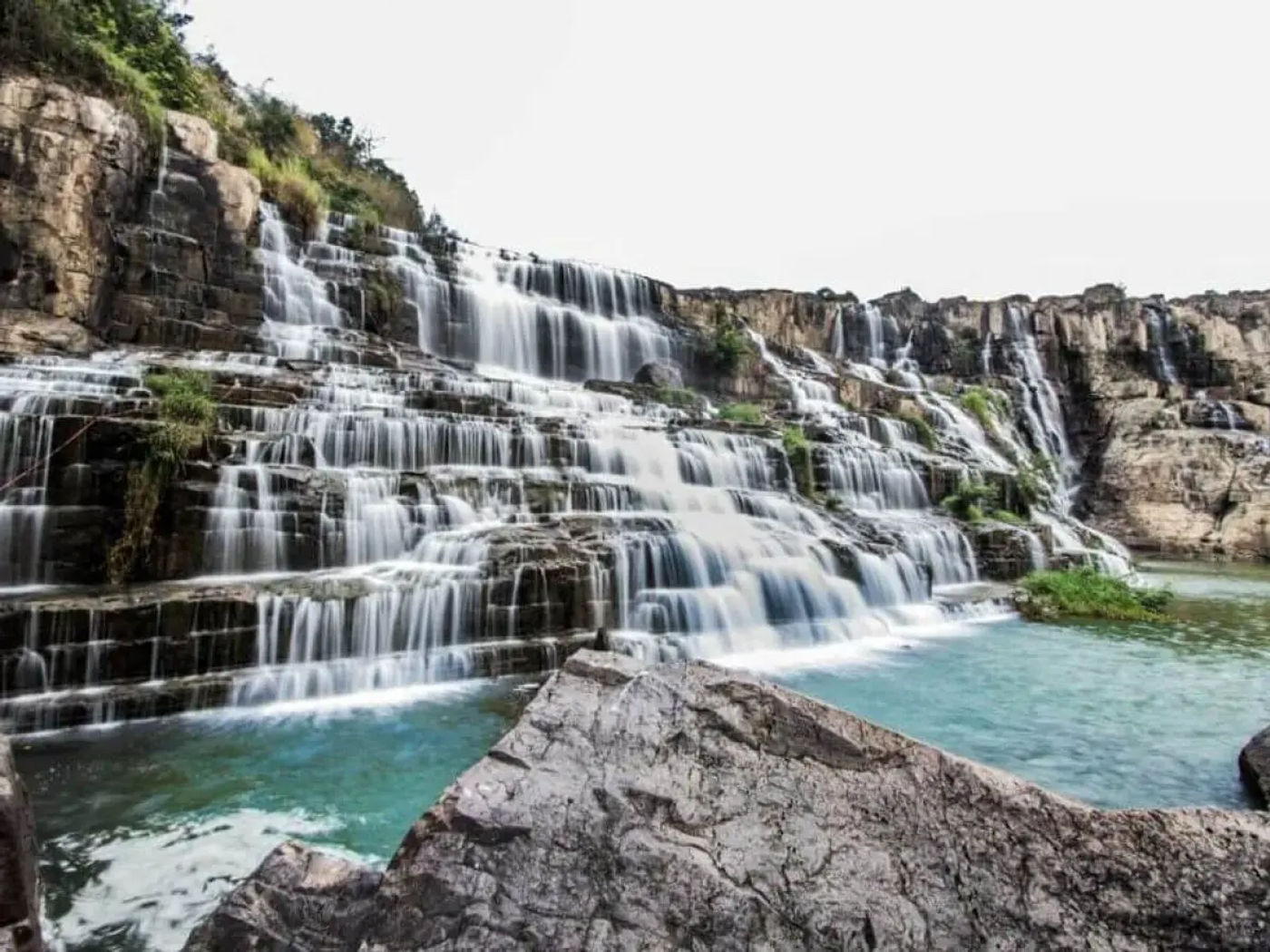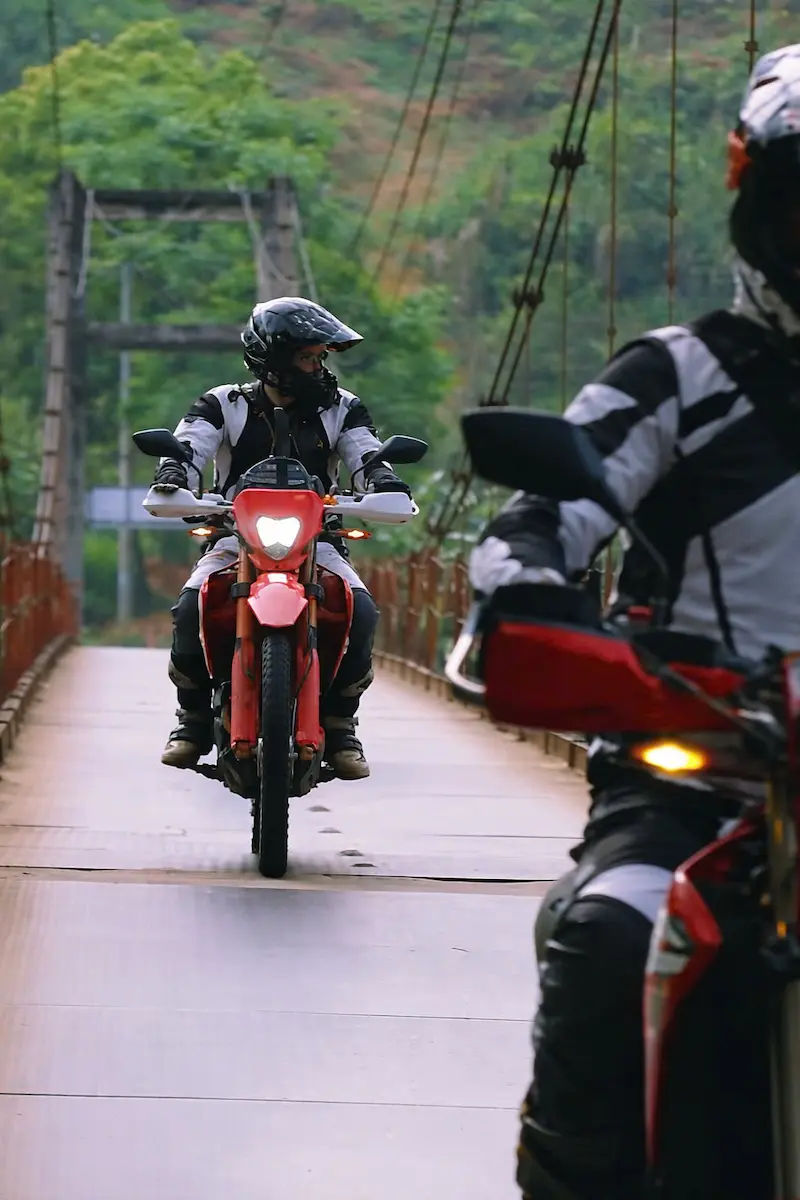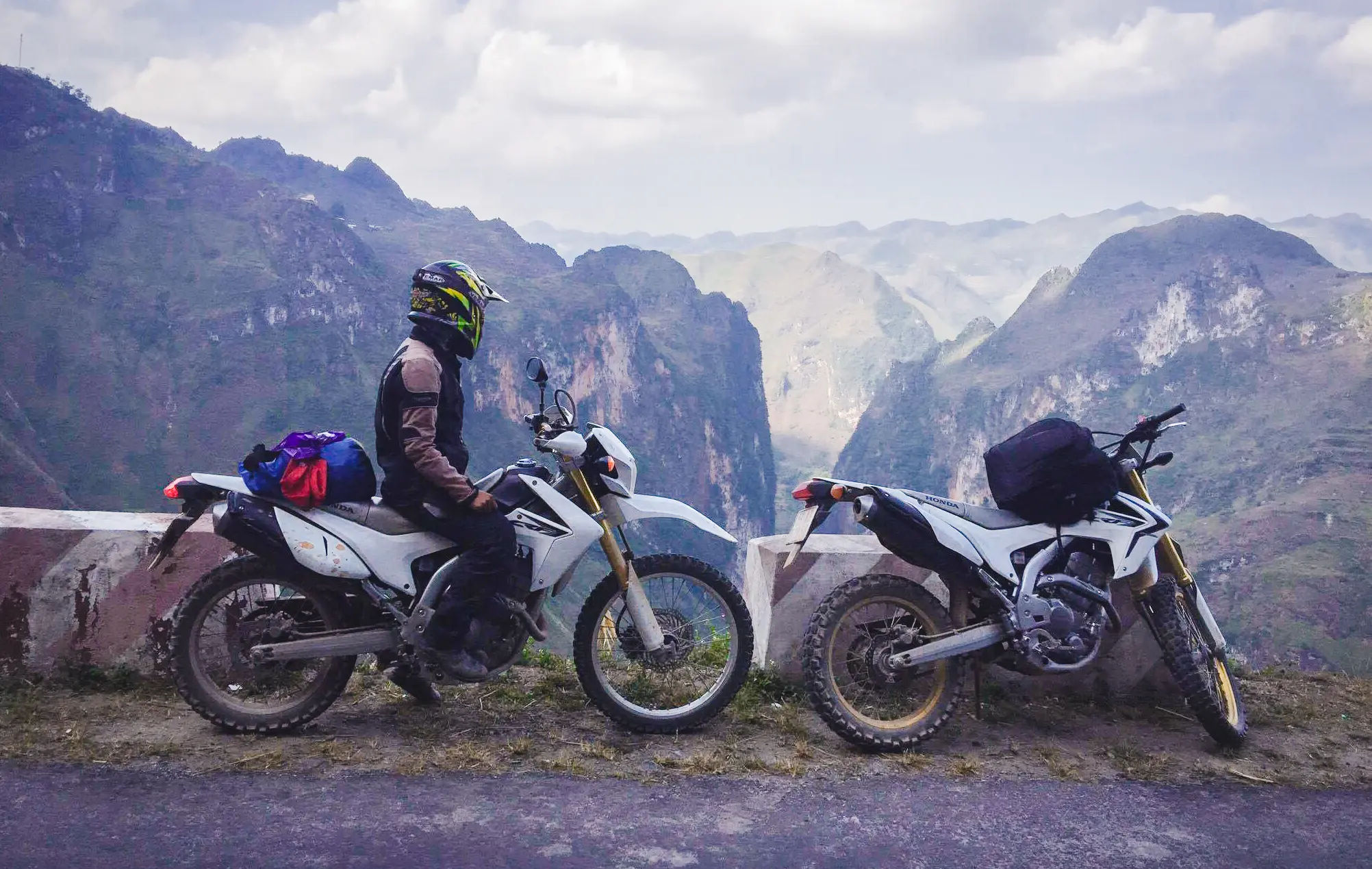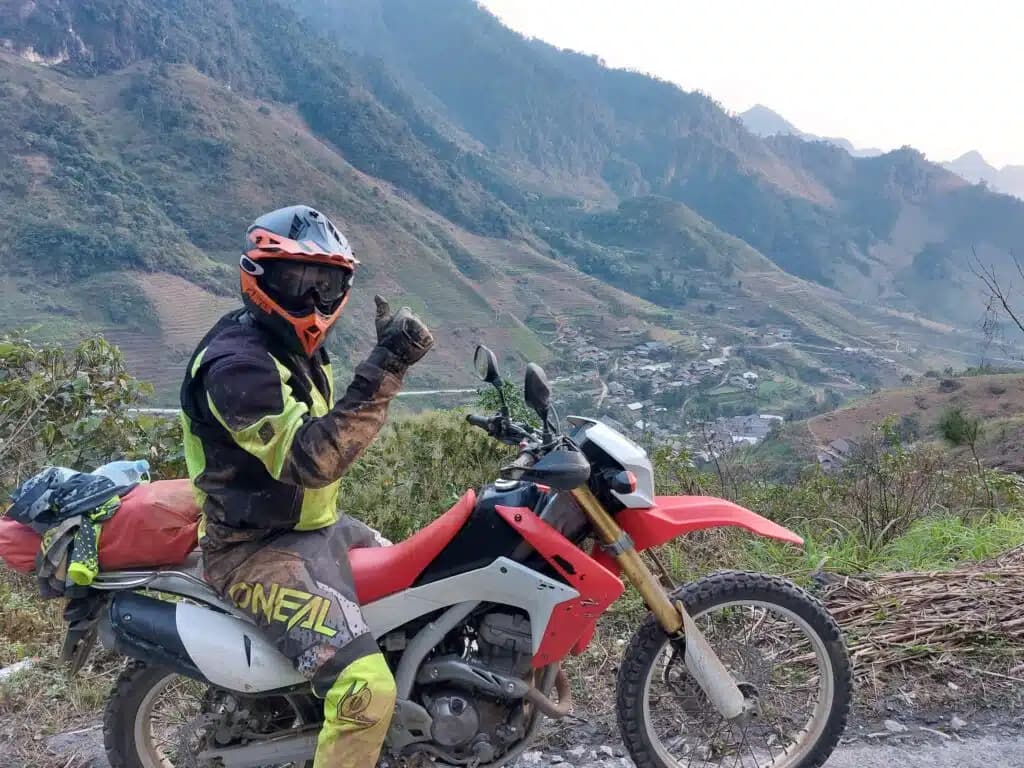
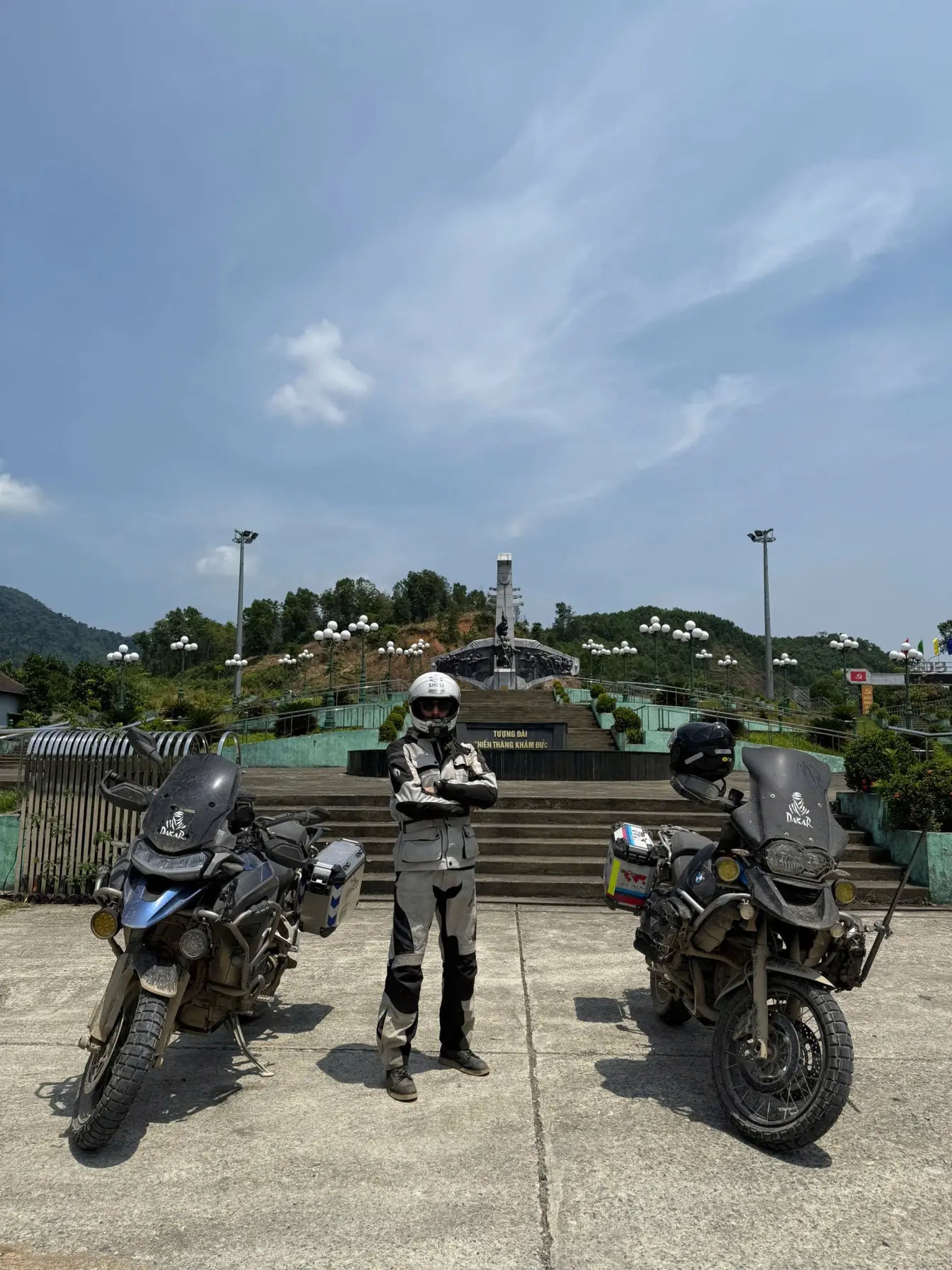
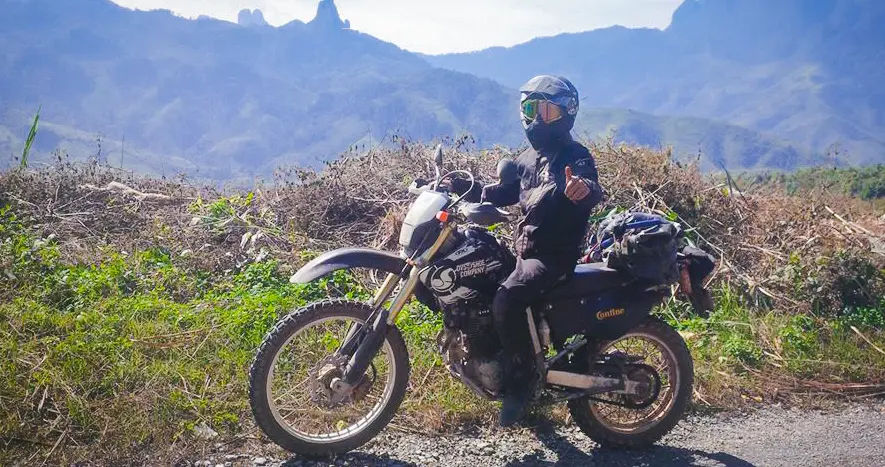
Off-road motorbike adventures in Ha Giang take you deep into Vietnam’s northern mountains, where the Loop winds through dramatic landscapes, remote ethnic villages, and viewpoints like the Ma Pi Leng Pass. Riders can choose routes ranging from the classic 350 to 400 kilometer loop to more rugged tracks in areas such as Hoang Su Phi, with trips lasting anywhere from 3 to 10 days. Tours usually include reliable bikes like the Honda CRF250L or XR150, knowledgeable guides, homestay accommodations, and options to add more off-road challenges. With waterfalls, river cruises, and untouched border villages along the way, it is a journey best suited for those comfortable handling varied terrain and riding with the proper motorbike license and IDP.
- Check out Off-road Vietnam motorbike Tours
| Section | What to Expect | Key Places & Roads | Practical Tip |
|---|---|---|---|
| Famous Routes | Mix of paved and rough tracks, varied scenery from pine forests to limestone ridges. Options for 3–10 day trips and guided or independent rides. | Ha Giang Loop (QL4C), Quan Ba, Yen Minh, Dong Van, Meo Vac, Du Gia | Start early, check tire pressure, carry a repair kit and water. |
| Dong Van – Meo Vac | Narrow mountain road carved into cliffs with sudden turns and loose stones; dramatic river valley views. | QL4C, Ma Pi Leng viewpoint, Nho Que River | Ride slowly on blind corners and stop at viewpoints for photos. |
| Hoang Su Phi Trails | Rough dirt tracks through rice terraces and remote villages; more off-road and quieter than the main loop. | Vinh Quang, Ban Phung, Nam Ty, Thong Nguyen | Use a light dual-sport bike with good suspension; expect slippery sections in rain. |
| Ma Pi Leng Pass | High ridge road with sweeping views over the Nho Que gorge; narrow sections and occasional broken pavement. | Ma Pi Leng, viewpoints on QL4C between Dong Van and Meo Vac | Visit early for low cloud and soft light; watch for vendors and pedestrians at viewpoints. |
| Off-road Challenges | Loose gravel, sudden weather changes, narrow cliffside stretches and livestock on the road. | DT176, QL4C, tracks near Yen Minh and Du Gia | Carry basic tools, spare plug and small pump; wear protective gear. |
| Must-see & Photo Stops | Scenic ridges, terraces, cultural stops and viewpoints that work well for wide-angle shots. | Quan Ba Heaven Gate, Lung Cu Flag Tower, Tham Ma Slope, Sung La Valley | Best light: morning or late afternoon; respect locals when photographing villages. |
| Seasons & Safety | Best months: Sep–Nov and Mar–May. Rainy season brings slippery clay and limited visibility; winter can be foggy and cold. | Routes across Hoang Su Phi, Yen Minh, Dong Van | Plan trips in shoulder seasons; avoid long dirt sections during heavy rain. |
| Local Rules | Occasional police checks in main towns; respect village customs and restricted border paths. | Yen Minh, Dong Van, Meo Vac, border areas near Lung Cu | Keep license, IDP, rental papers and passport handy; slow down in villages. |
Famous Off-Road Routes in the Ha Giang Mountains
Riding through the mountains of Ha Giang feels like stepping into a quieter side of the region, where limestone peaks rise above deep valleys and small villages sit along winding mountain roads. Many riders begin their trail riding in Ha Giang City before heading north toward Quan Ba and Yen Minh, where the terrain slowly shifts from smooth single paved roads to rough tracks covered with gravel and loose soil.
Local guides often mention how conditions change quickly on roads like DT176 and QL4C, which link the main towns across the province. These routes pass rice terraces, cornfields, and small Hmong hamlets, and you often meet farmers leading buffalo along the edge of the road.
Travelers who have spent several days on these trails say the best moments come when you stop at high viewpoints and watch the clouds move across the peaks. The area feels remote but still welcoming, and every corner brings a new landscape shaped by nature and the people who live here.
- Check out nightlife experience in Northern Vietnam
Dong Van to Meo Vac Route
The stretch from Dong Van to Meo Vac is one of the most talked-about routes in northern Vietnam because the scenery changes so quickly and the road feels like it was carved directly into the mountains.
Many riders start early from Dong Van Town after a bowl of hot pho in the old quarter, then follow QL4C through rocky limestone formations and narrow passes. The ride is steady but requires attention because some parts have loose stones and sharp turns that open suddenly to deep valleys.
Locals often wave from houses built along the cliffs, and you may pass herders guiding goats across the slopes. Riders who have completed this route say the highlight is stopping at small viewpoints before descending into Meo Vac, where you can see the Nho Que River cutting through the mountains. The route feels alive with movement, from the wind blowing across the sharp peaks to the busy morning market in Meo Vac waiting at the end of the ride.
- Check out Motorbiking along the Dong Van mountains

Hoang Su Phi Trails
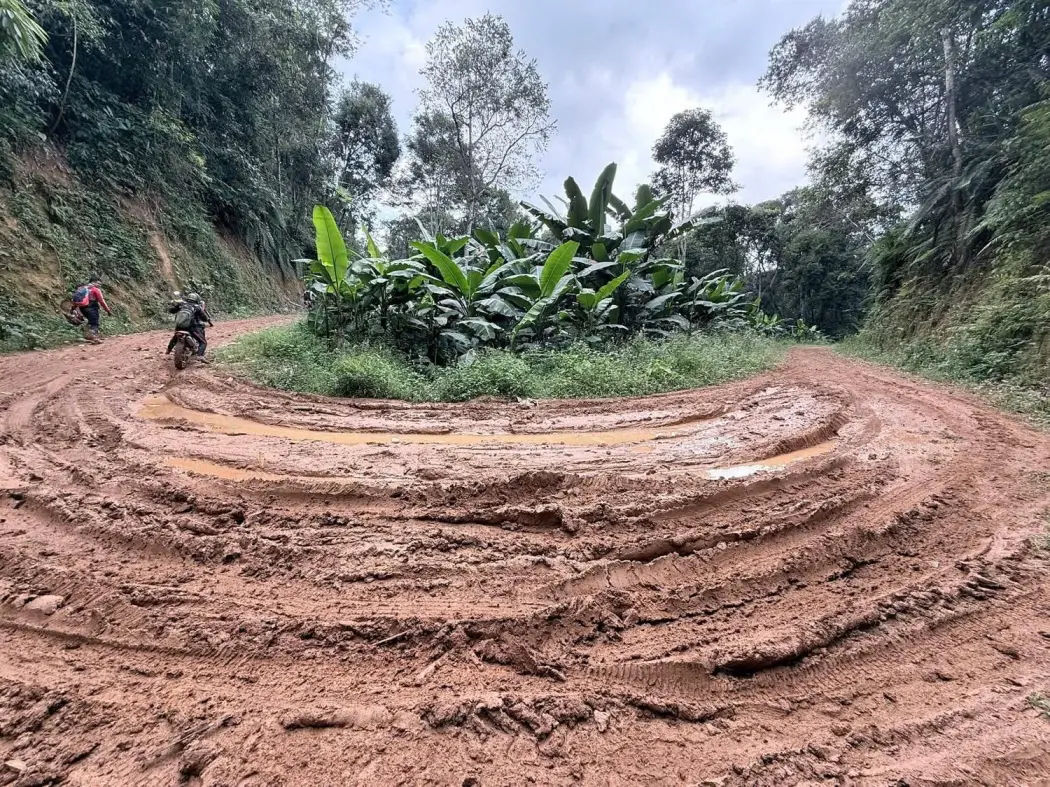
The ever wet muddy trails in Hoang Su Phi are known for their quiet atmosphere and rougher terrain, and many riders say this area feels more remote compared to the main loop. The journey usually starts in Vinh Quang Town before heading into villages like Ban Phung, Nam Ty, and Thong Nguyen.
The tracks run through steep rice terraces that glow gold during harvest season, and you often share the path with farmers carrying baskets or children walking home from school. Parts of the trail follow small dirt roads that twist through bamboo forests, and during the rainy months the ground can become slippery, making the ride more challenging.
Travelers who have ridden here often talk about the peaceful stops by small streams or roadside stalls where locals offer tea or grilled corn. The landscape opens in wide layers of terraces, and every ridge brings a quiet view of homes tucked into the hills.
Ma Pi Leng Pass
Ma Pi Leng Pass sits on the high ridge between Dong Van and Meo Vac, and many visitors say the views feel almost unreal when you first arrive. The road runs along the top of the limestone mountains, and there are several points where you can safely stop to take in the Nho Que River far below.
The pass is part of QL4C, and while most of it is paved, some sections can be narrow with small broken patches, so riders often go slowly to enjoy the scenery and stay safe. Locals sometimes set up small stalls selling sunflower seeds or hot tea, and stopping for a short chat gives you a better sense of how life works in these high mountains.
Riders who have crossed the pass say the early morning is the best time because the clouds sit low in the valley and the light touches the peaks softly. The landscape feels large and quiet, shaped by cliffs, sharp ridges and the green river far below.
Off-Road Challenges in Ha Giang for Motorbike Riders
Riders quickly learn that Ha Giang’s beauty comes with terrain that keeps you alert from the moment you leave Ha Giang City.
Roads like QL4C and DT176 change from smooth surfaces to rocky patches, and it is common to meet sudden dips or loose gravel when turning around a blind corner. Some sections around Yen Minh and Du Gia have narrow cliffside stretches that require slow riding and full concentration, especially when trucks come from the opposite direction.
Riders who have tackled these routes often talk about how weather plays a big role, since light rain can make the red soil slippery and create small muddy pools on the trail. You may also pass livestock wandering across the road or kids running from village to village.
Many travelers say the challenge is part of the experience, and the steady mix of climbs, descents and rough ground makes the ride feel rewarding without being too technical if you take your time.
- Check out Ha Giang loop map
Must-See Spots Along Ha Giang’s Off-Road Routes
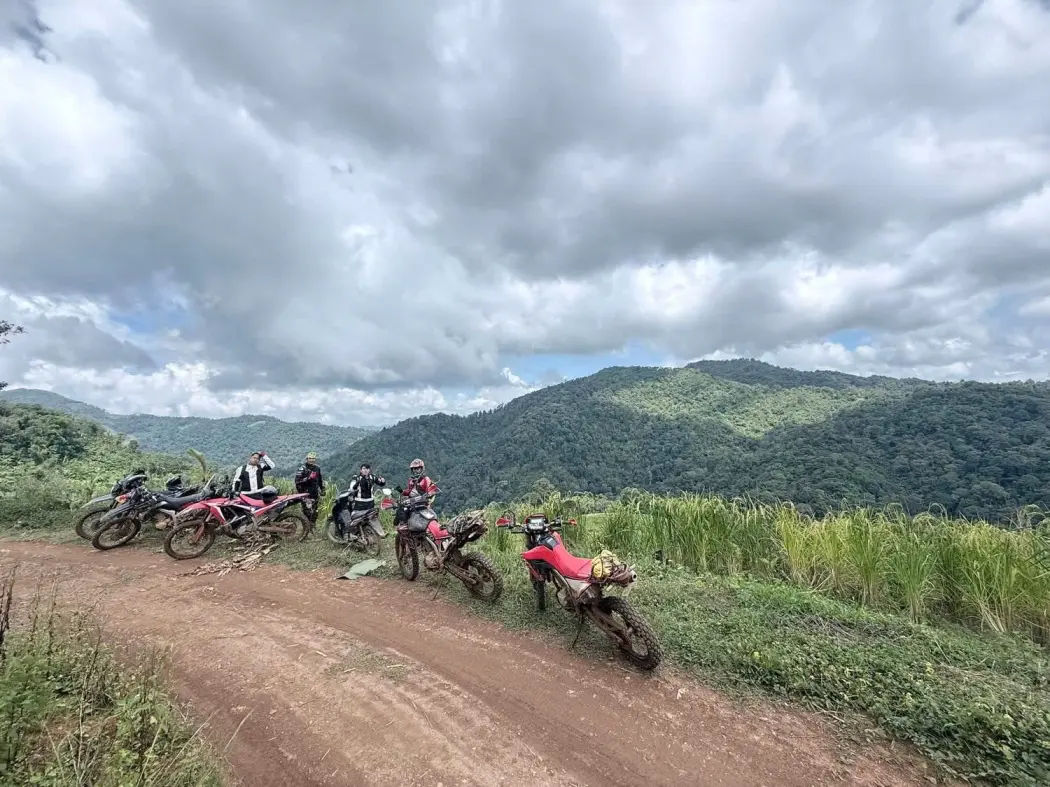
The region is filled with off-roads trails that make you want to stop and look around, whether you are following the main loop or exploring smaller tracks. Quan Ba Heaven Gate is a common first viewpoint, where twin mountains rise from the valley floor and clouds drift quietly between them.
Further along, places like Lung Cu Flag Tower give travelers a high vantage point over the border area. Riders who explore deeper routes often mention Du Gia as a favorite stop, with its green fields, waterfalls and slow village life.
The area around Tham Ma Slope is another highlight, and many riders pause at the top to watch the sunlight move across the sharp ridges. On the western side, Hoang Su Phi offers rice terraces layered across the hillsides. Each spot feels different, and the mix of nature, culture and mountain roads encourages slow travel so you can appreciate each stop fully.
Check out the route map: Mai Chau to Phu Yen
Ethnic Minority Villages and Their Unique Cultures
Many of the routes pass through small villages where Hmong, Tay, Nung and Dao communities live, and stopping in these places gives the journey a warm human side, these leading to the hidden off-road trails very well. Villages like Lung Tam, Pho Bang and Sung La are known for weaving, earthen houses and traditional clothing that you often see drying under the sun.
Riders who have stopped in these villages often say the best moments come from simple interactions, like being invited to drink corn wine or watching families work together in the fields. Children often wave as you pass and sometimes walk alongside the road carrying bamboo shoots or schoolbooks. In Hoang Su Phi, Red Dao families welcome travelers with herbal baths and simple meals made from local ingredients.
Each village has its own customs, language and rhythm, and spending even a short time there helps you understand how people thrive in the mountains and how deeply they are connected to the land.
Stunning Valleys and Mountain Ridges
The valleys and ridges of Ha Giang create some of the most dramatic landscapes in northern Vietnam. Riders often talk about the moment they first enter the valley near Yen Minh, where pine forests open suddenly to deep fields of corn and quiet villages. The climb toward Dong Van leads you across high ridges with sharp rock formations shaped by time and wind.
As you ride along QL4C, the road curves around cliffs that drop into the Nho Que River Valley, giving you wide views of green slopes and winding waterways. The western routes near Hoang Su Phi offer a softer landscape, with terraces that form smooth patterns across the hills. Many travelers who explore these ridges say the silence feels different here, broken only by wind or the sound of a distant motorbike. Every valley and ridge holds its own charm and makes the ride feel constantly fresh.
Best Photo Stops for Stunning Shots
Off-road riders in Ha Giang mountains who enjoy photography find the whole region full of spots where the light and landscape come together naturally. Ma Pi Leng Pass is one of the top stops because you can see the Nho Que River far below while limestone walls rise sharply on both sides.
Many riders pause at the small viewpoint before the pass where locals sell tea and sunflower seeds. Tham Ma Slope is another favorite, especially in the morning when the sun lights up the road’s sharp curves. In Quan Ba, the Twin Mountains offer a clear viewpoint with layers of hills stretching behind them. Hoang Su Phi is famous for its terraces, and riders say the best photos come in the late afternoon when sunlight turns the fields gold.
Even simple moments, like stopping by a wooden house in Sung La Valley or watching clouds drift over Dong Van, can become beautiful shots that capture the calm atmosphere of the mountains.
- Check out Comparison review of Honda CRF 300
Why Ha Giang Is Vietnam’s Best Destination for Off-Road Motorbiking
Ha Giang is an ideal region for off-road experience because the landscape changes constantly, giving riders a mix of rocky passes, valley floors and narrow trails that feel both challenging and peaceful. The region has far fewer tourist crowds than other northern provinces, so you often find yourself alone on mountain roads where limestone walls rise sharply on both sides.
Riders who have spent time here often say the freedom to explore different routes, from the main QL4C road to small dirt tracks near Du Gia and Sung La, makes the journey feel more personal. You can ride for hours and pass terraced farms, quiet villages and fresh mountain viewpoints without rushing.
Temperatures also stay cooler at higher altitudes, which helps during long riding days. Many travelers mention that the mix of nature, culture and wide mountain space sets the area apart from other regions. This is the main reason people look forward to Off-Road Motorbike Adventures in Ha Giang Mountains and return for longer rides later.
- Check out Y Ty Loop
Essential Gear for Off-Road Riding in Ha Giang
Proper gear makes the experience safer and much more comfortable because the terrain can shift quickly from smooth pavement to loose stones or wet mud. Riders usually start with a good-quality helmet that fits snugly and provides clear visibility in misty conditions.
A light jacket works well in the mornings around Quan Ba, while protective gloves help with grip during rocky climbs toward Dong Van. Knee and elbow guards are recommended because the stones along the cliff roads can be sharp. Waterproof layers come in handy during sudden afternoon showers, especially on trails near Hoang Su Phi.
Many experienced riders also carry a basic repair kit, spare spark plug and a small tire pump, since small shops outside the main towns can be limited. A hydration pack is useful too because long climbs can be tiring. The right gear keeps you steady on the trails and allows you to enjoy the ride without worrying about small mishaps.
Choosing the Best Motorbike for Off-Road Terrain
Picking the right bike makes a big difference on these long mountain routes, and many riders prefer something light but strong enough to handle steep climbs. Bikes like the Tenere700 for more experienced riders, as well as the Honda CRF250L, or CRF300, are popular because they offer good suspension for rough patches and enough power for long riding days.
The Honda XR150 is another common choice and works well for those who want something easy to control on narrow tracks. Riders who have spent weeks in Ha Giang often say the bike should feel comfortable in slow and fast sections since trails near Yen Minh and Meo Vac can switch quickly from paved roads to broken gravel. Fuel efficiency also matters because some remote areas have only small stalls selling bottled petrol.
A reliable engine, strong brakes and good tires help with the changing ground conditions. Most guides recommend testing the bike around Ha Giang City before setting off so you know how it handles before reaching the higher passes.
- Check out Ha Giang loop motorbike tours
Practical Tips for a Safe and Enjoyable Off-Road Adventure
Riders who spend several days in Ha Giang often say that a little planning goes a long way, especially when the terrain can shift from smooth roads to rocky paths within minutes.
Before leaving Ha Giang City, check your brakes, lights and tire pressure because repair shops become less frequent as you head toward Dong Van or Meo Vac. It helps to start early each day since morning roads stay less busy, and the cooler air around Quan Ba and Yen Minh makes the ride more comfortable. Slow down when approaching blind corners because livestock, trucks or even small landslides can appear without warning.
Carry enough water and light snacks since some stretches have no shops for long distances. Always let someone know your planned route and arrival time, particularly if you plan to explore dirt trails near Du Gia or Hoang Su Phi. These simple habits make Off-Road Motorbike Adventures in Ha Giang Mountains far smoother and safer for all riders.
- Check out our BMW GS motorbike tours
Best Season for Off-Road Trips in Ha Giang
Most riders agree that the best months for off-road travel are from September to November and from March to May. These periods offer cooler temperatures and clearer skies, which help when riding long distances along QL4C or exploring rougher trails near Thong Nguyen and Ban Phung.
The autumn months also bring golden rice terraces that brighten the western slopes of Hoang Su Phi. Spring has blooming flowers around Yen Minh and gentle breezes that make the valleys feel fresh. Riders who have visited during the rainy season from June to August say the tracks become muddy and more slippery, especially in areas with clay soil. Thunderstorms can also roll in quickly, reducing visibility on high mountain passes like Ma Pi Leng.
Winter is possible but cold, and mornings often start with thick fog that requires slower riding. Choosing the right season helps you enjoy longer riding days with safer conditions.
- Check out the best time to visit Vietnam in general
Night Riding and Harsh-condition Tips
Night riding in Ha Giang is possible but not recommended unless you have no other choice, because the mountain roads become very dark and road markings are limited.
If you need to continue after sunset, keep your speed low and use high beams on empty stretches to spot animals or fallen rocks ahead. Riders often mention that mist can appear quickly around Quan Ba and Lung Tam, so wiping your visor or using an anti-fog insert helps with visibility. During heavy rain, avoid the small dirt tracks because they can turn into slippery surfaces with hidden holes.
Wind gusts on higher ridges near Dong Van can push the bike slightly, so grip your handlebars firmly and ride closer to the inner side of the road when possible. Carrying a rain cover for your bag and an extra dry layer helps if the temperature drops suddenly. Staying alert and adjusting your pace to the weather makes the ride much safer.
- Check out Vietnam 54 groups of ethnic people
Local Rules and Mountain Road Regulations
Understanding the local rules helps you ride with confidence and avoid issues along the way. Ha giang traffic police is know for being so strict and they regularly check documents in towns like Yen Minh, Dong Van and Meo Vac, so keep your motorbike license, rental papers and passport easily accessible. Riders must stay on official roads near the China border because some small paths are restricted for safety and security reasons.
Speed limits are generally low in villages, and locals appreciate when riders slow down near schools or market areas where children and animals move unpredictably. Honking lightly before blind corners is common etiquette in Ha Giang and helps alert other drivers on narrow mountain stretches. When passing through ethnic minority villages, respect local customs and avoid photographing people without asking first. Sticking to these simple rules keeps you on good terms with the communities who live along these beautiful mountain routes.
- Check out speed limits ad traffic laws in Vietnam
Conclusion: Off-Road Motorbike Adventures in Ha Giang
Ha Giang rewards those who take the time to explore its quiet roads, high passes and small trails that lead into valleys shaped by nature and local life. Riders often say the journey feels richer with each stop, whether you pause at a hillside village, a windy ridge or a peaceful terrace in Hoang Su Phi.
The mix of landscapes, cultures and open space makes every day on the road feel different. With the right bike, proper gear and patience on the mountain roads, the experience stays both steady and enjoyable. It is a place that draws you in slowly and leaves a lasting impression. If you’re ready, check our Vietnam motorbike tours out today
FAQs: Off-road along the Ha Giang loop
Is the Ha Giang Loop Off-road?
Yes, parts of the Ha Giang Loop are off-road. While the main loop is mostly single track paved roads, several sections around Du Gia, Dong Van and Hoang Su Phi include dirt tracks, gravel paths and uneven mountain roads. Riders can choose easier or more rugged routes depending on their experience.
Can you ride your own motorbike in Ha Giang Loop?
Yes you can. Most of the solo riders and generally, the backpackers rent a scooter and ride the mountain roads, however, many of them never be able to reach the secret trails and the off-road sections, this is due to the local knowledge and, most of the trails aren’t show up on google map at all.
Are there police on the Ha Giang loop?
Yes, there are police on the Ha Giang Loop and many riders report encountering checkpoints.
How scary is the Ha Giang loop?
The Ha Giang Loop can feel scary at first because of narrow roads and steep drops, but most riders say it’s manageable if you go slow and stay alert. Many beginners complete it safely with a guide.
- Check out more on: Is Ha Giang loop safe to ride?
About the author
Hamid is an off-road and adventure rider with strong local knowledge of Vietnam’s mountain trails. He has spent years exploring remote routes, learning the terrain and sharing practical tips for riders who want real, grounded guidance on every journey.