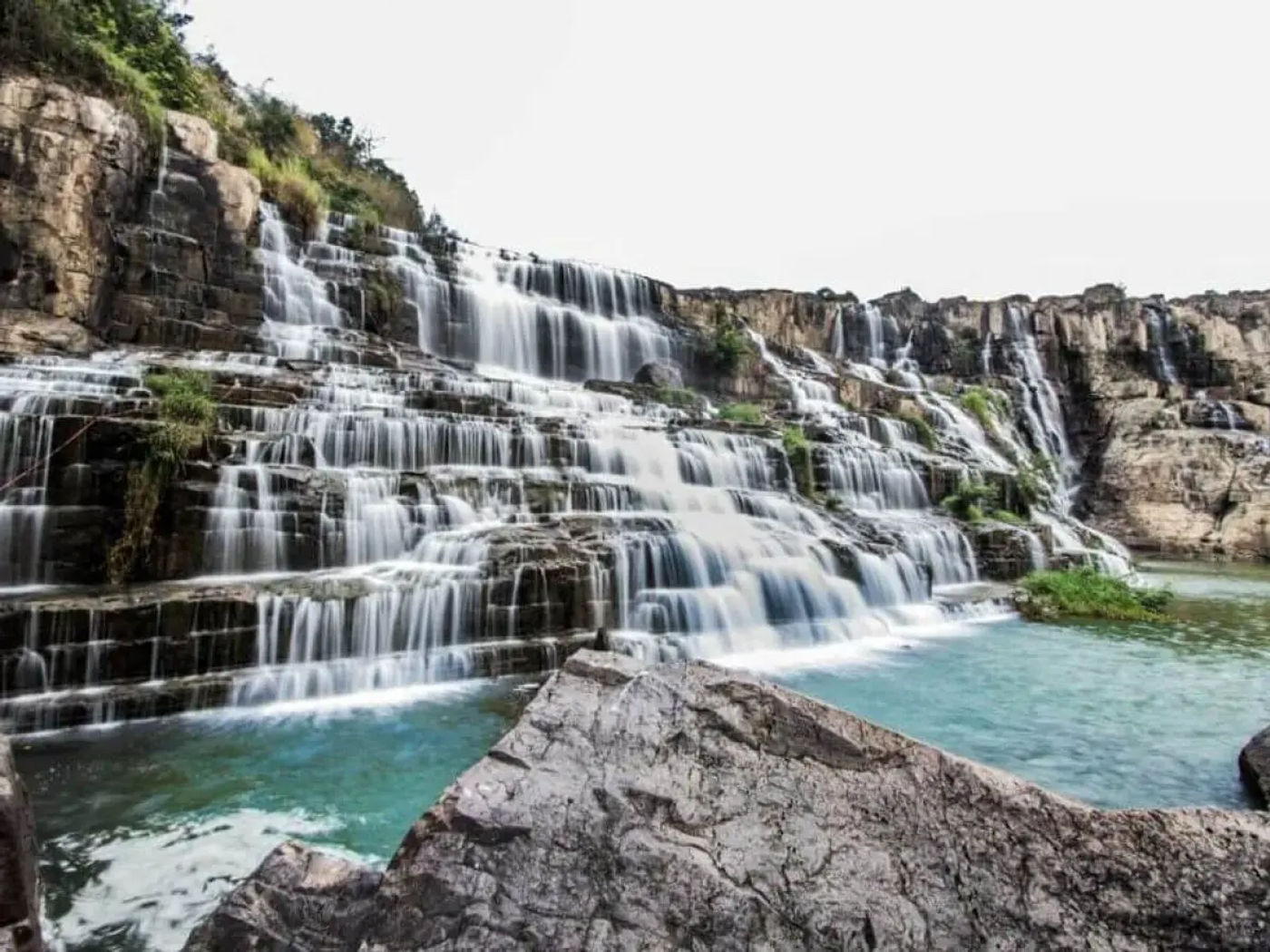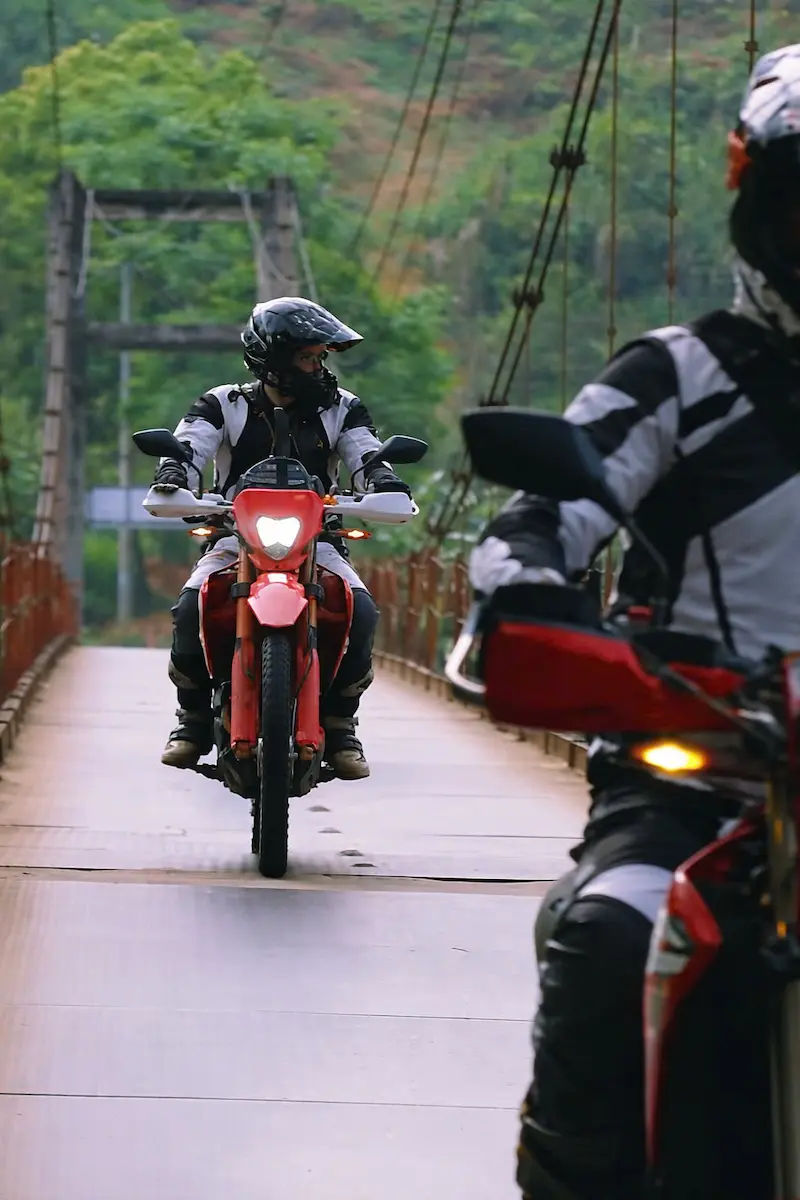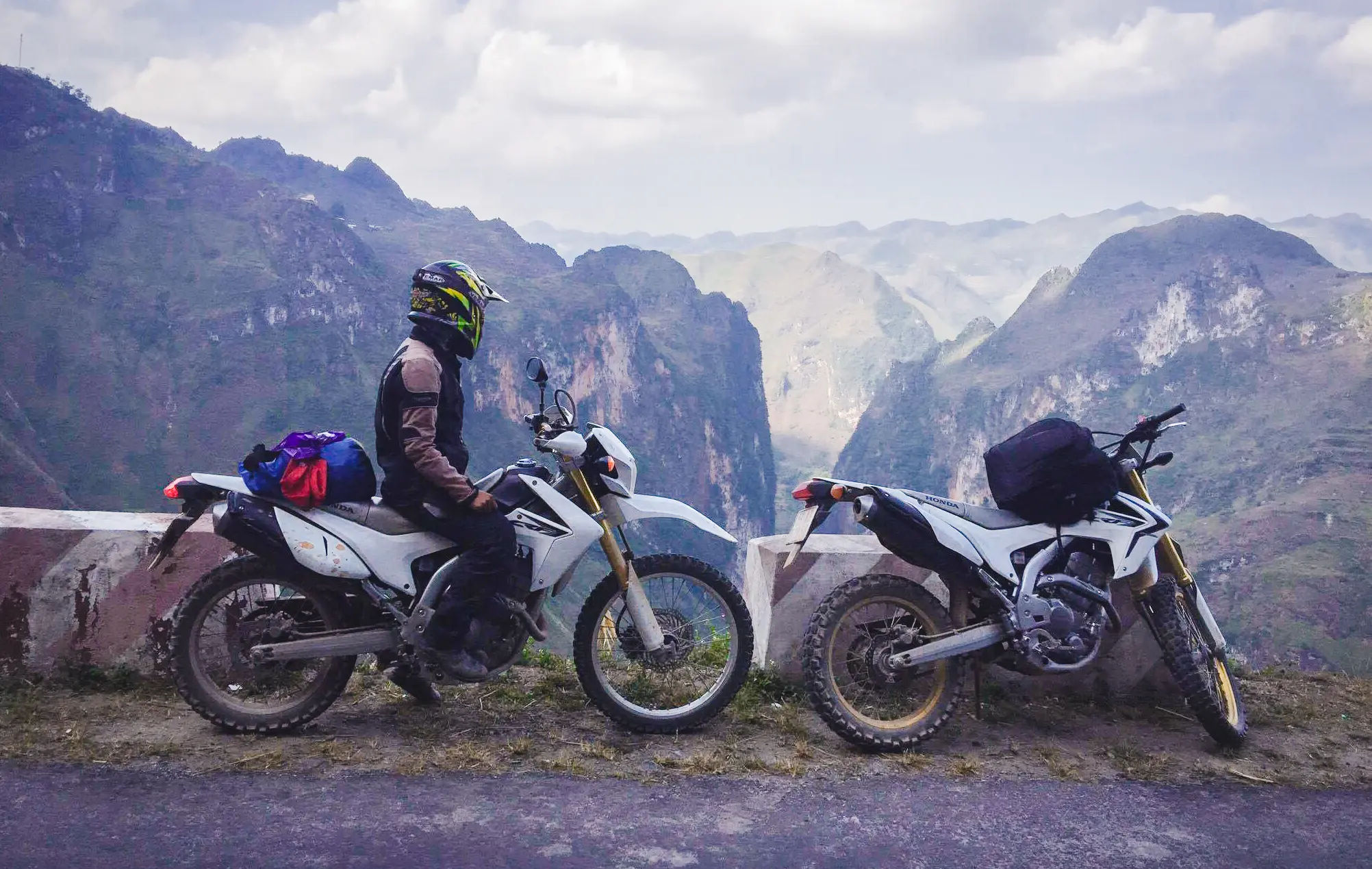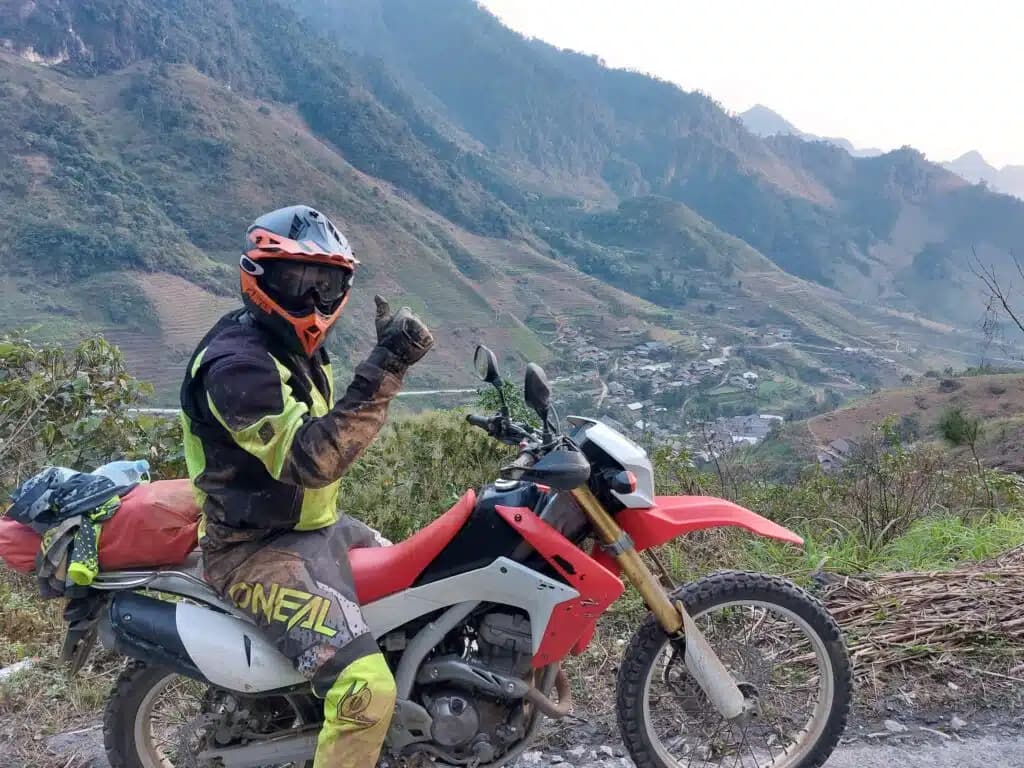
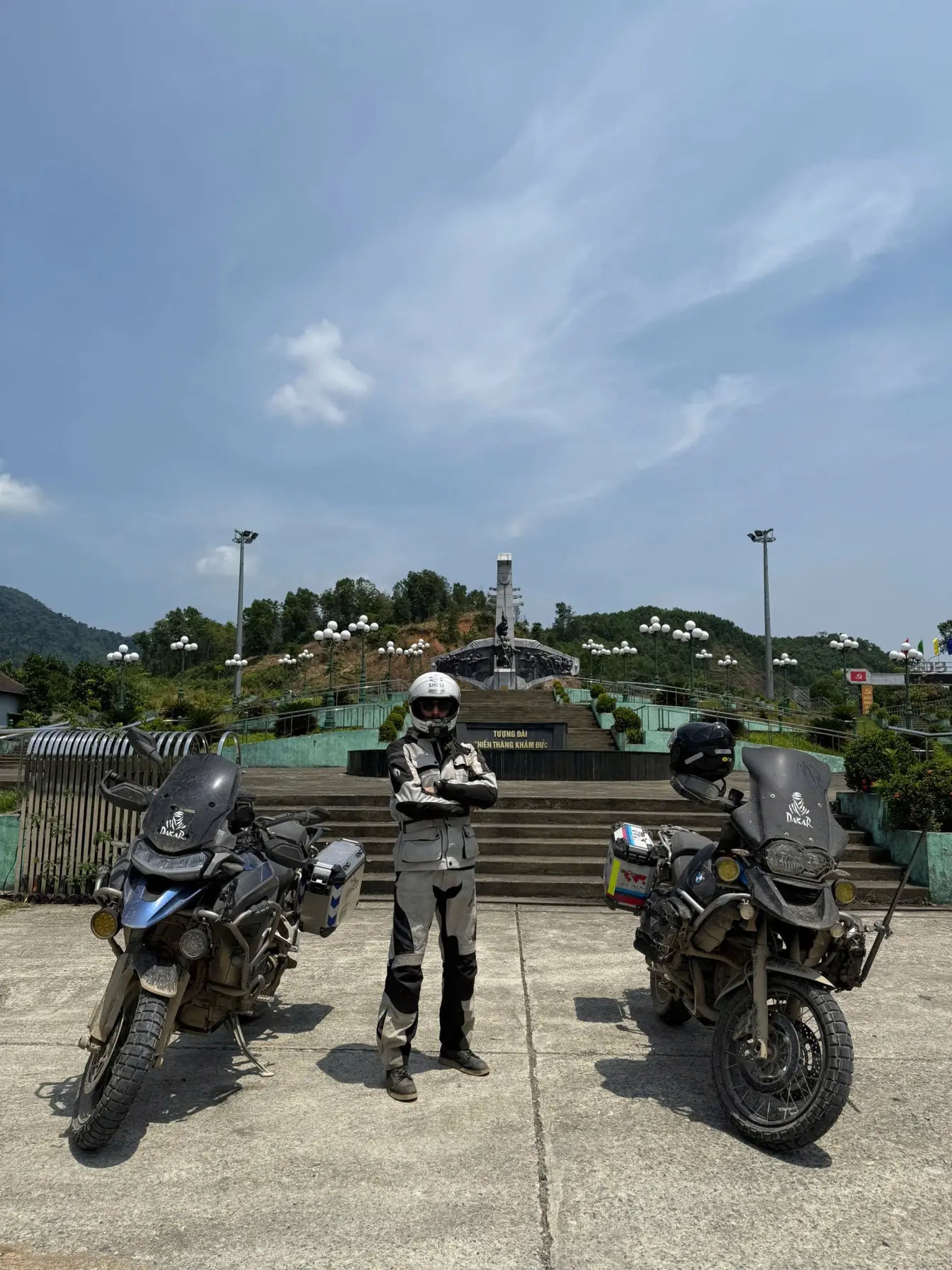
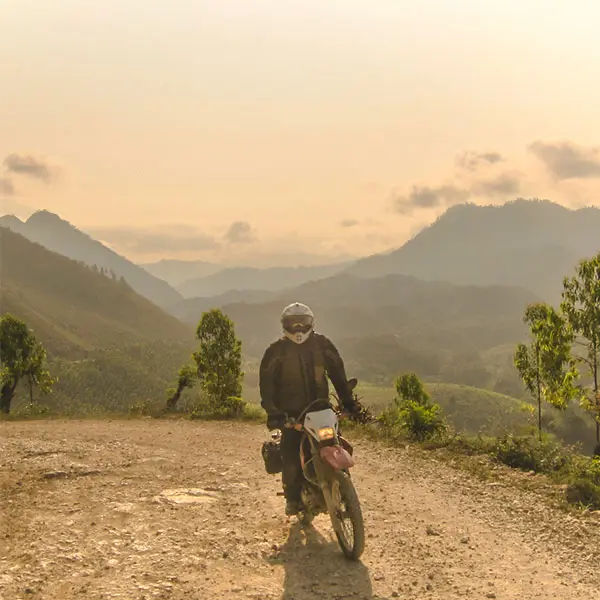
Riding on Rocky Trails in Northern Vietnam is an experience that blends challenge, adventure, and breathtaking scenery. The region’s rugged landscapes, from the jagged limestone peaks of the Ha Giang Loop to the hidden valleys of Pu Luong Nature Reserve, create the perfect playground for dirt bike enthusiasts. Enduro adventures here take you over rocky paths, across rivers, and through terraced fields, where every turn reveals remote villages and mist-shrouded mountains. In Cao Bang and the Dong Van Karst Plateau, the trails test your skill and patience, with mud, landslides, and unpredictable terrain adding to the thrill.
- Check out Northern Vietnam best motorbike tours
Famous Rocky Trails in Northern Vietnam for Motorbiking
Northern Vietnam’s rocky trails are a collage of limestone ridges, narrow passes, and hidden valley tracks that reward patience more than speed. Routes like the Ha Giang Loop, the Dong Van–Meo Vac road, and the lesser-known tracks around Pu Luong each have their own character: some demand careful line choice on loose shale, others call for steady throttle through river fords and rocky causeways. I found that riding here is as much about reading the land as it is about raw skill—you learn which corners hide loose stones, where rain turns clay into glue, and which village tea stalls offer the best shelter. For riders on a dirt bike, preparation matters: spare tubes, basic tools, and local knowledge go a long way. These trails connect remote communities and landscapes that linger in memory long after the trip ends.
- Check out off-road motorbike ride in Ha Giang

Dong Van to Meo Vac
The ride from Dong Van to Meo Vac is often remembered as one of the most dramatic stretches in North, not because it tries to impress but because the landscape does all the talking. Leaving Dong Van, the road climbs steadily, carving its way through cliffs that seem to fold endlessly into the distance. The karst towers rise like ancient guardians, and the villages tucked between them feel almost suspended in time.
The route can be slow going, with sharp bends and uneven patches that demand focus, especially after rain when the surface turns slick. During my last ride, I stopped more than planned, sometimes to let trucks pass, sometimes simply to take in the silence broken only by goats moving across the terraces. This trail rewards patience, awareness, and curiosity.
- Check out nightlife in Northern Vietnam
Ma Pi Leng Pass
In addition, riding across Ma Pi Leng Pass feels like moving along the spine of a giant mountain range, with the world falling away on both sides. The Nho Que River lies impossibly far below, a thin turquoise ribbon cutting through the gorge. The pass is narrow in places, and the drops are steep, but the views are so absorbing that it’s easy to forget how exposed the path can be. Morning mist adds a mysterious calm, while afternoons bring sharper shadows that highlight every ridge and cliff face.
On my most recent visit, a local Hmong woman guided her horses along the roadside, completely unfazed by the traffic. Moments like that remind you that this is more than a scenic route, it’s a lifeline connecting communities, markets, and traditions that have existed here for generations.
- Check out local festivals in Northern Vietnam
Hanoi to Ba Be Route
The route from Hanoi to Ba Be slowly shifts from urban ride to quieter countryside along the Bắc Kạn valley, and that transition alone makes the ride worthwhile. Once you clear the outskirts of the city, the road winds past rice paddies, tea plantations, and villages that seem to appear out of nowhere.
The approach to Ba Be National Park becomes increasingly scenic, with limestone outcrops rising above rivers and farmland. Traffic thins out, and the air feels noticeably cooler as the elevation changes. The final stretch into the park is filled with forested bends that offer glimpses of Ba Be Lake through the trees.
I remember stopping at a small roadside stall where the owner poured me hot corn tea and pointed out the best viewpoint on the route. It’s a ride that eases you into the mountains rather than confronting you all at once.
- Check out Historical sites in northern Vietnam
Challenges and Safety Tips for Rocky Trails
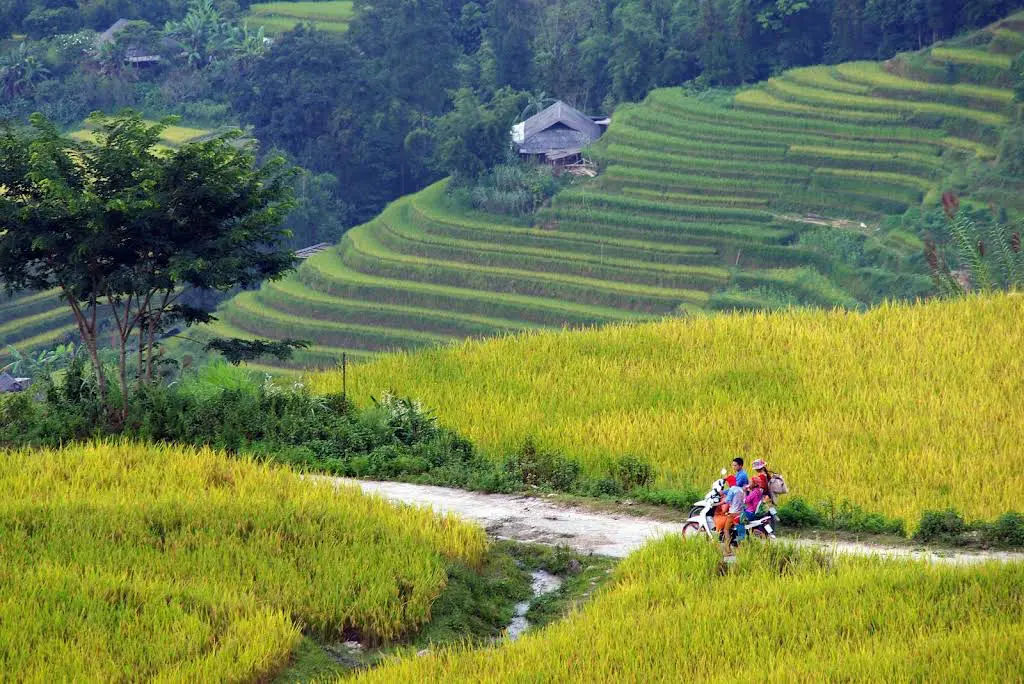
Riding rocky trails in Northern Vietnam means learning to expect the unexpected. Loose stones can shift under your tires without warning, rain can turn familiar stretches into slippery clay, and visibility changes quickly when mist rolls in from the mountains.
On some routes, herds of goats or buffalo wander across blind corners, and you often share narrow paths with local trucks that take up most of the space. The best approach is to keep your focus on the terrain and ride at a pace that allows room for quick reactions.
I always check weather updates before heading out and avoid riding after dark when the cliffs and drops are hard to read. Staying aware of road conditions and giving yourself time for safe stops makes the journey far more enjoyable.
Essential Gear for Safe Riding
Norther’s enduro routes demand gear that can handle abrasion, moisture, and sudden temperature changes. A sturdy helmet with good ventilation helps during long climbs, while gloves with proper grip make it easier to maintain control on uneven surfaces.
I always wear knee and elbow protection because unexpected falls often happen at low speeds on loose rock. Waterproof layers are useful even in dry months since weather shifts quickly in the mountains.
A small toolkit, spare spark plug, and tire repair kit can save hours in remote areas where workshops may be far apart. On my last ride near Cao Bang, a simple tube change kept the journey moving. Pack lightly but wisely, choosing items that enhance comfort and keep you prepared for rough terrain.
- Check out 12 day Northern Vietnam adventure ride
- Check out essential accessories needed for long motorbike rides
Top Experiences and Stops Along Northern Vietnam’s Rocky Trails
The joy of riding dirt bike on rocky trails here comes from the surprises along the way. The stretch near Lung Cu rewards anyone who stops to climb the tower and look across the borderlands. Villages around Dong Van offer markets where you can try local corn wine or warm bowls of buckwheat noodles.
Ba Be National Park is one of my favorite stops because the lake appears suddenly after forested bends, creating a peaceful break from the rugged ride. Pu Luong’s homestays sit above terraced valleys where you can rest and listen to the river running below. Many routes lead to small tea stalls where riders gather stories from locals who know every turn of the mountain roads. These encounters add depth to the journey.
- Check out 8 day northwest motorbike tour
Practical Tips for Riding Rocky Trails
A steady rhythm helps when navigating rough terrain. Instead of rushing, maintain a consistent pace that allows you to respond to changes in surface texture. Before starting long rides, I usually check tire pressure and chain tension because small adjustments make a big difference in control.
It helps to carry cash since remote fuel stations may not accept cards. Locals often point out sections affected by recent rain or construction, so asking for quick route updates is always worthwhile. Keeping water handy and taking breaks at scenic viewpoints prevents fatigue, especially on long climbs. When unsure about the stability of a rocky descent, I get off the bike and walk a few meters to inspect the line. A little caution goes a long way.
Best Time and Season for Rocky Trail Trips
The best months for rocky trail riding in Northern Vietnam are typically from September to April when temperatures are cooler and rainfall is lighter. Trails are more predictable in these seasons, especially around Ha Giang and Cao Bang where heavy summer rains can trigger landslides.
During the dry months, the views are clearer and long distances feel more comfortable. I enjoy riding in late autumn when harvest season fills the valleys with color and the air has a crisp feel. Early mornings can be chilly in high passes, so layering helps. While summer offers lush greenery, sudden storms can change conditions within minutes. Planning around weather gives you smoother rides and more time to enjoy each stop.
- Check out the best time to travel to Vietnam (in general)
Riding Techniques for Rocky and Uneven Trails
Good technique makes rocky terrain feel more manageable. I keep my weight slightly back when riding over loose stones and shift forward when climbing steep sections to maintain traction. Standing on the pegs helps absorb shocks from uneven ground and offers better balance during rough descents.
On tight corners filled with gravel, gentle throttle control prevents the bike from slipping. I learned to scan the trail several meters ahead instead of focusing directly in front of the wheel because it provides more time to react. When crossing shallow streams, a steady, deliberate pace avoids sudden dips that can throw you off balance.
These small adjustments make the ride smoother and help conserve energy over long distances.
Local Rules and Environmental Respect on the Trails
Vietnam’s enduro routes pass through protected landscapes and communities that rely on the land for daily life. Respecting the environment keeps these trails open for future riders.
Slow down when passing villages and give way to farmers guiding livestock, as these paths are working routes, not dedicated tracks. Avoid riding onto terraced fields or forest edges where plants and roots are fragile. I always carry small bags for my trash because waste bins are rare in the mountains.
Using homestays that support local families helps the community benefit from tourism. When speaking with villagers, a simple greeting in Vietnamese or a smile goes a long way. Treating the trails with care maintains the harmony between riders and the people who live along these roads.
The Best Enduro Ride in Northern Vietnam (Map+)
If you are passionate about traveling Vietnam by motorcycle, Northern region delivers the kind of terrain that riders talk about long after the journey ends. The region’s high passes, remote valleys, and ancient limestone ridges create conditions that challenge both confidence and technique.
Many routes here feel designed for those who enjoy the steady rhythm of an enduro ride, with constant changes in elevation and texture. This guide highlights four routes worth exploring, especially if you crave the feel of a rocky trail beneath your wheels or the satisfaction of steering a dirt bike through villages that seem untouched by time.
Each path has its own character, shaped by weather, local culture, and the landscape itself, making North Vietnam a destination where every ride becomes its own story.
- Check out our Vietnam best motorcycle travel
An Overview of Northern Vietnam Enduro Trails
The unspoken rule is that, the region is shaped by misty mountains, cloud-soaked passes, and terraced fields that shift in color with the seasons. Travelers often notice how ban flowers, peach blossoms, and apricot blossoms brighten entire valleys, while children in remote villages greet visitors with open, curious smiles.
The region’s food reflects the landscape itself, using ingredients gathered from forests and fields. Dried buffalo, Thang Co, Lon Cap Nach, and Tao Meo wine are dishes locals proudly share, each carrying the flavor of mountain life. Culture is equally captivating, with ethnic groups such as the Tay, Nung, Thai, Muong, Mong, and Dao preserving traditions through festivals, music, clothing, and architecture. Events like the Long Tong festival or the Khau Vai Market offer rare glimpses into daily life shaped by generations of heritage.
- Check out Popular motorbike routes in Vietnam
4 of the best rocky trails for enduro rides in Northern Vietnam
Northern Vietnam’s off-road network offers four standout routes, each with its own rhythm and scenery:
- Hanoi – Mai Chau – Pu Luong: Gentle valleys, stilt-house villages, and forested trails that ease you into mountain riding.
- Sa Pa – Ha Giang: High-altitude passes, sharp ridgelines, and rugged terrain that reveal the raw beauty of the far north.
- Bac Kan – Cao Bang – Lang Son: Lakes, limestone formations, and quiet borderland tracks perfect for slower, scenic exploration.
- Lao Cai – Lai Chau – Dien Bien: Remote mountains, sweeping valleys, and culturally rich stops that feel far from modern noise.
1. Route along Lao Cai, Lai Chau to Dien Bien Route
This map is often considered the most remote section of Northern Vietnam’s rocky enduro network, stretching from Lao Cai to Dien Bien through areas close to both the China and Laos borders.
Much of the journey crosses rugged, sensitive terrain where riders need to stay alert, especially in regions with steep mountains and narrow, twisting tracks. Landslides are common after heavy rain and can block access for hours or longer, which is why most travelers choose to ride between March and May or from September to October when the weather is more predictable.
Lao Cai offers several unforgettable stops, especially Y Ty commune with its vast terraced fields glowing gold during harvest season. Nearby Sa Pa sits between 1500 and 2000 meters above sea level and is known for ancient villages, cool forests, and viewpoints that feel suspended above the clouds. December brings misty winter scenery that gives the entire region a quiet, mysterious beauty.
The route continues over O Quy Ho Pass, a nearly 50-kilometer climb across the Hoang Lien Son range that skirts the base of Fansipan, the highest peak in Indochina. Reaching Dien Bien, riders can explore high mountain landscapes and make the rewarding trip to Pa A Chai, where the Zero Milestone marks the meeting point of Vietnam, Laos, and Cambodia.
2. Scenic Trails from Bac Kan, Cao Bang to Lang Son
Cao Bang sits in the far Northeast of Vietnam, framed by more than 300 kilometers of border shared with China and shaped by layers of limestone mountains. The ride from Bac Kan to Cao Bang is roughly 115 kilometers and generally smooth, though the road narrows and twists sharply after the Ngan Son area. These curves demand steady control, especially in early morning mist. Temperatures in the highlands can fall to around 15 or 16 degrees Celsius, so warm clothing and a rain jacket are useful for the cooler hours.
Many travelers begin their journey in Bac Kan with a stop at Ba Be National Park, home to dense forests and countless plant and animal species. Ba Be Lake sits at the center, a vast freshwater expanse often surrounded by soft clouds drifting above the water. Moving onward into Cao Bang, riders can follow the route toward Ban Gioc Waterfall, passing scenic points such as Ma Phuc Pass and Khau Lieu Pass, both known for sweeping views and tight mountain bends.
The stretch from Cao Bang to Lang Son leads through secluded valleys, thick jungle corridors, and rivers carving their way through the rocks. Back roads weave through hills and forests, paved yet inconsistent in quality, with occasional rough patches where recent rain has triggered small landslides. On clear days, this route becomes one of the most visually rewarding in the Northeast, with mountains stretching toward the horizon and quiet villages offering peaceful breaks along the way.
3. Enduro Rocky Trails from Sapa to Ha Giang
The enduro ride, let’s call it the rocky tails from Sa Pa to Ha Giang stretches for about 200 kilometers and is known for both its beauty and difficulty. The landscape shifts constantly between steep hills, narrow passes, and long zigzagging climbs where weather often changes without warning. Morning and evening fog is common, making visibility low, so riders need reliable safety gear and a well-maintained bike before setting out. The most rewarding line to follow runs through Bac Ha, Xin Man, Hoang Su Phi, Ha Giang, Dong Van, and Meo Vac, a sequence that blends dramatic viewpoints with quiet mountain villages.
Sa Pa itself offers memorable stops, especially Cat Cat village where wooden H’Mong homes sit along streams in the Muong Hoa Valley. Many travelers also try cloud hunting at the summit of Fansipan for sweeping views over the northern ranges.
Reaching Ha Giang, the scenery grows even more dramatic. Ma Pi Leng Pass delivers some of the most striking cliffs in Vietnam, while Lung Cu Flag Tower marks the country’s northernmost point. Riders often explore the Yen Minh pine forest and the stone formations of the Dong Van Karst Plateau, two landscapes that reveal why this region remains one of the most sought-after mountain journeys in the country.
- Check out out Sapa best motorcycle tours from Hanoi
4. The route from Hanoi, Mai Chau & Pu Luong
This off-road rocky trail enduro dirt route (yes I name it because you will experience them all in one loop ride) takes you through rugged mountains and remote valleys near the Laos border. The journey begins in Mai Chau, about 150 km from Hanoi, where steep terrain and long passes, like Cun Slope, Thung Khe Pass, and Mai Chau Pass—challenge even experienced riders. Morning and evening fog often reduces visibility, so ride slowly and stay alert. Mai Chau’s highlights include Lac Village, terraced fields, and peaceful Thai ethnic communities.
Next, continue 70 km to Pu Luong, known for cool air, golden rice terraces, and stretches of the historic Ho Chi Minh Trail. Don’t skip Ban Don, Ban Kho Muong, or a trek to Pu Luong Peak for sweeping mountain views.
- Mai Chau Valley
- Lac Village
- Thung Khe Pass
- Pu Luong Nature Reserve
- Ban Don & Ban Kho Muong
- Pu Luong Peak
Conclusion: Riding Enduro on Rocky Trails in Northern Vietnam
Riding through rocky trails suitable for dirt tide in Vietnam is absolutely worth it if you crave real adventure. In just 5–10 days, you can cross remote valleys, border-hugging mountain passes, and ethnic villages that feel untouched by time. Whether you follow the Sa Pa–Ha Giang loop, the Mai Chau–Pu Luong trail, or the jaw-dropping Cao Bang–Lang Son route, each journey offers its own mix of challenge and beauty.
The best time to ride is March–May or September–October, when the weather is cool and the scenery is at its peak. If you want a trip that feels raw, rewarding, and deeply memorable, Northern Vietnam delivers every single time.
About the author
Hamid is an adventure rider with years of experience exploring Vietnam’s most remote trails by enduro, dirt bike, and ADV motorcycles. He specializes in uncovering rugged routes, rocky passes, and authentic local experiences across Northern Vietnam. When he’s not guiding riders through challenging terrain, he’s documenting each journey to help travelers discover the country’s true off-road spirit.