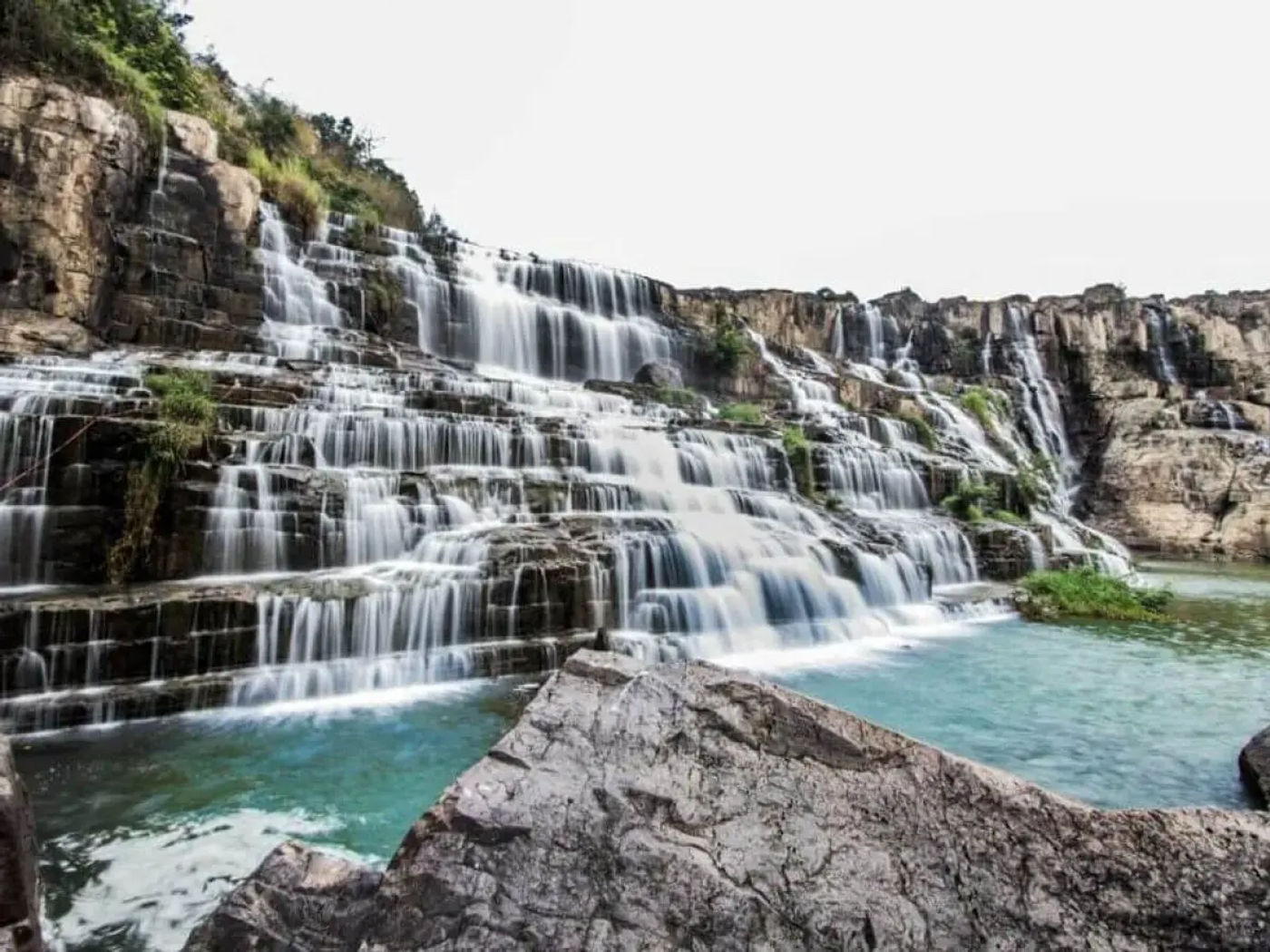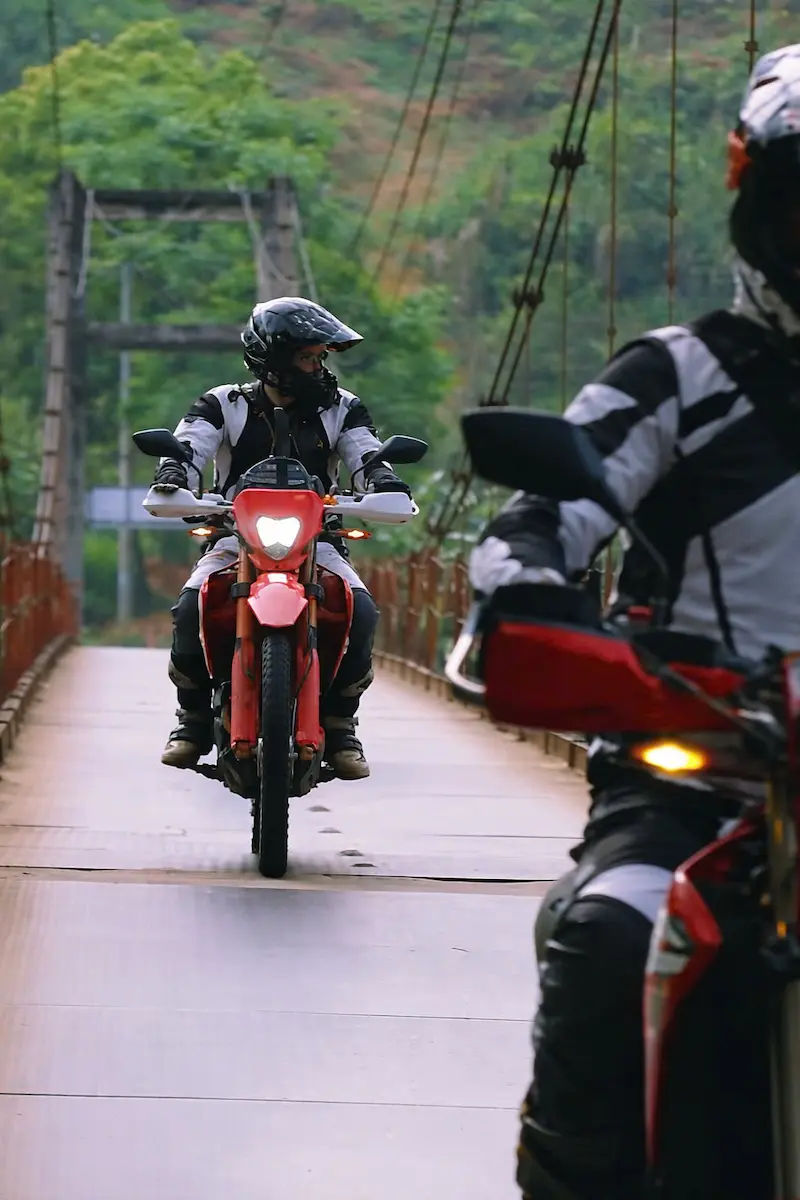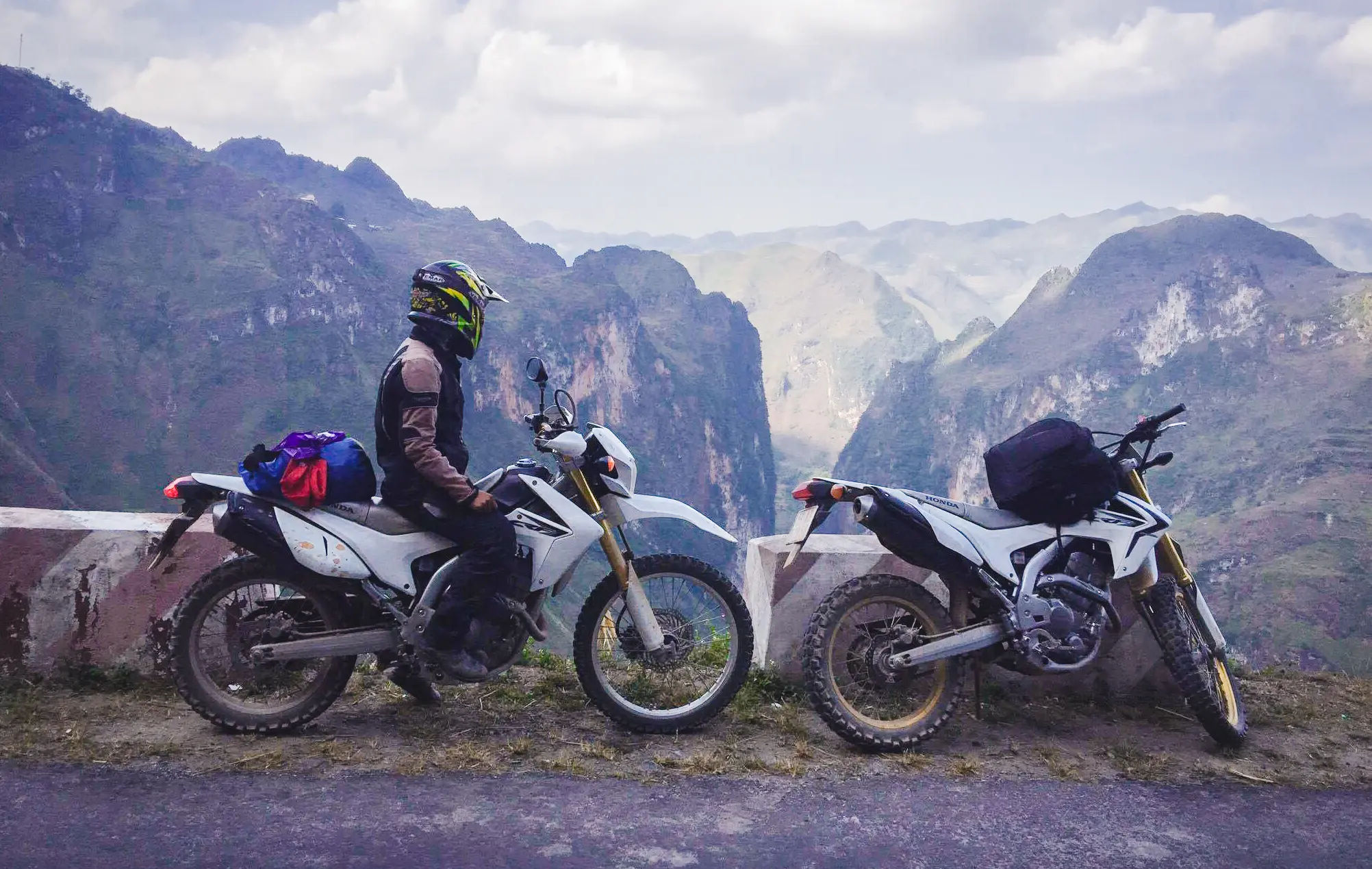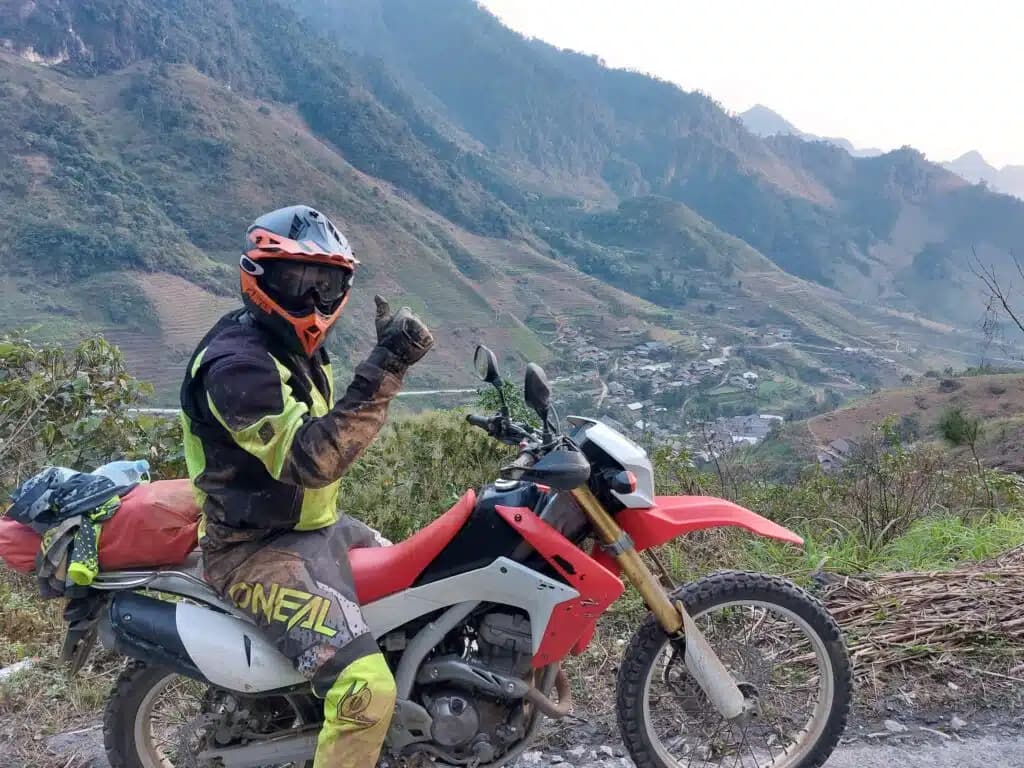
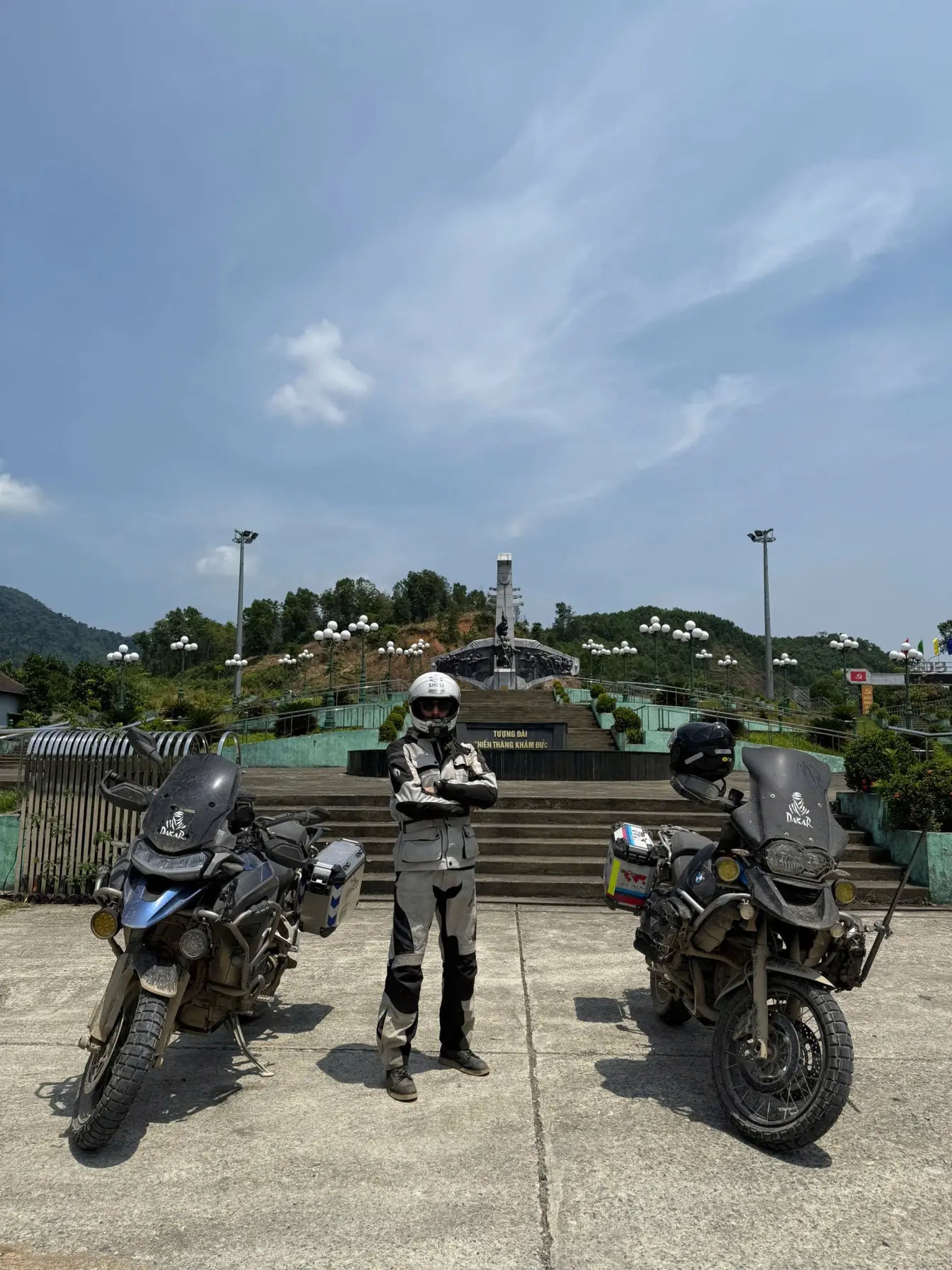
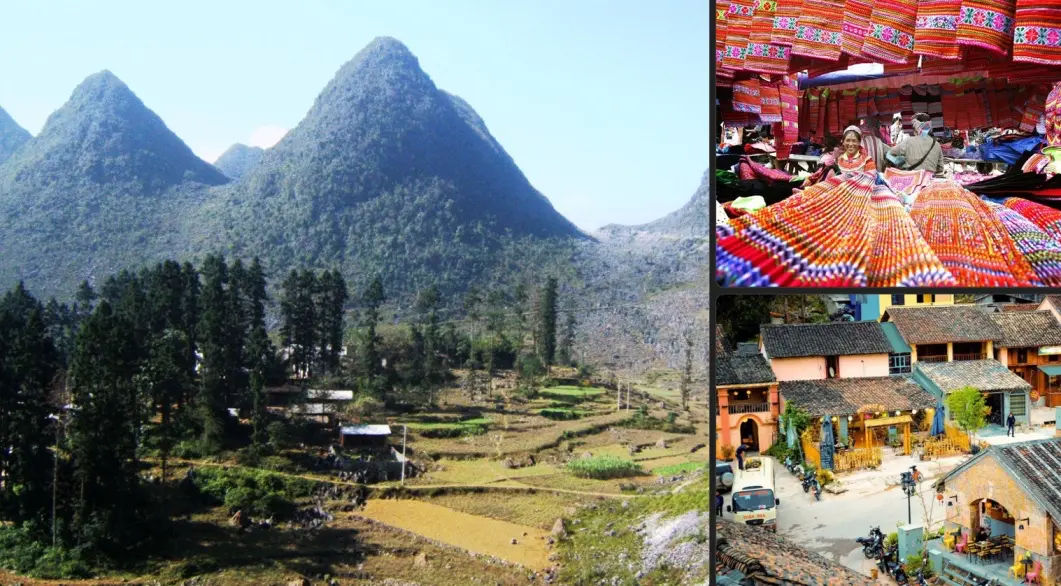
Riding a motorcycle through Northern Vietnam is one of the best ways to explore the region’s rich history. The road takes you to places like the historic Vuong Palace and Dong Van Ancient Town in Ha Giang, the 16th-century Mac Dynasty Citadel in Cao Bang, and the famous Chi Lang Pass battlefield along with a couple of great deep caves that used to deploy the army’s facility and machineries during the war.
I also loved riding through Ninh Binh, often called “Ha Long Bay on land,” with its calm rivers and limestone mountains. Even Dien Bien Phu feels different when you explore its old battlefields by motorbike. Each stop is easy to reach on a motorcycle, and every ride gives you a closer look at the stories that shaped Northern region.
- Check out Motorbike tours in Northern Vietnam
Why Riding a motorcycle Is the Best Way to Discover Vietnam’s History?
So you’ve decided to ride a motorbike across the northern regions and I confirm it as it will brings you a whole new experience, it gives you a closer look at history than any guided tour ever could.
The routes naturally slow you down, letting you notice things that most travelers pass by, but never stop to learn about it, whether is a stone markers in Ha Giang, quiet family temple beside rice terraces, or small villages in Cao Bang where daily routines haven’t changed in generations.
Arriving at places like the Vuong Palace, Dong Van Ancient Town, the Mac Dynasty Citadel, or Chi Lang Pass feels different when you’ve followed the same valleys and ridgelines that shaped their stories. In Ninh Binh, limestone towers rise above old temples and rivers once used as natural defenses. Dien Bien Phu carries a heavier atmosphere, especially when you approach through silent mountain roads lined with memorials. The journey itself becomes part of the experience, helping each site feel connected to the landscape around it.

Top Historical Sites in Northern Vietnam for Motorbike Travelers
Following the roads through this region gives you access to places that most travelers only read about. Many of the historical sites (including war sites), sit in valleys, old towns, or mountain passes that are easier to understand when you arrive at your own pace.
Riders often say the journey prepares them for what they’re about to see, quiet farmland before an ancient capital, winding mountain routes before an old frontier palace, or long river valleys before a former battlefield.
The experience becomes less like checking locations off a list and more like moving through layers of culture and memory. Local communities often share stories that never appear in guidebooks, and while many sites are well-known, reaching them by motorbike gives you a stronger connection to the landscape and the people who protect these places. It’s a slow, thoughtful way to explore history that still feels very alive.
- Check out my safety tips to ride in rain and fogs in Vietnam
| Historical Site / Route | Location | Highlight / Description |
|---|---|---|
| Vuong Palace | Ha Giang | Ancient palace in Dong Van Karst Plateau Geopark |
| Dong Van Ancient Town | Ha Giang | Historic town with preserved architecture and local culture |
| Mac Dynasty Citadel | Cao Bang | 16th-century citadel and former regional stronghold |
| Chi Lang Pass Battlefield | Cao Bang | Historic battlefield with scenic mountain roads |
| Hoa Lu Ancient Capital | Ninh Binh | Early dynasties’ capital with temples and valley views |
| Ha Giang Loop | Ha Giang | Scenic loop connecting historic sites, ethnic villages, and mountain passes |
| Trang An / Tam Coc | Ninh Binh | Waterways with limestone cliffs and historic temples |
| Dien Bien Phu Battlefield | Dien Bien Phu | Famous war site with memorials and historical significance |
| Vinh Moc Tunnels | Quang Tri | Network of war-era tunnels now a museum |
Ha Long Bay: A UNESCO Heritage with Ancient Stories
Riding along the red river delta toward the world famous site of Ha Long Bay by road gives you a sense of how the coastline has shaped life here for centuries. Fishing villages appear long before you reach the main harbor, and many families still use traditional tools passed down through generations.
Riders often stop at small piers where locals repair wooden boats, giving a glimpse of techniques that haven’t changed much over time. Once you reach the viewpoints, the limestone islands rise like a natural fortress, and guides often share legends about dragons, ancient naval defense, and early trade routes that relied on these waterways.
Exploring nearby caves adds another layer to the experience, especially when you see carvings and traces of early settlements inside. Even short coastal detours reveal small temples and shrines dedicated to fishermen lost at sea. The area’s history comes through quietly, shaped by both nature and the people who have lived beside the water for centuries.
- Check out how to rent a motorbike in Vietnam

Hoa Lu Ancient Capital: The Heart of Vietnam’s Early Dynasties
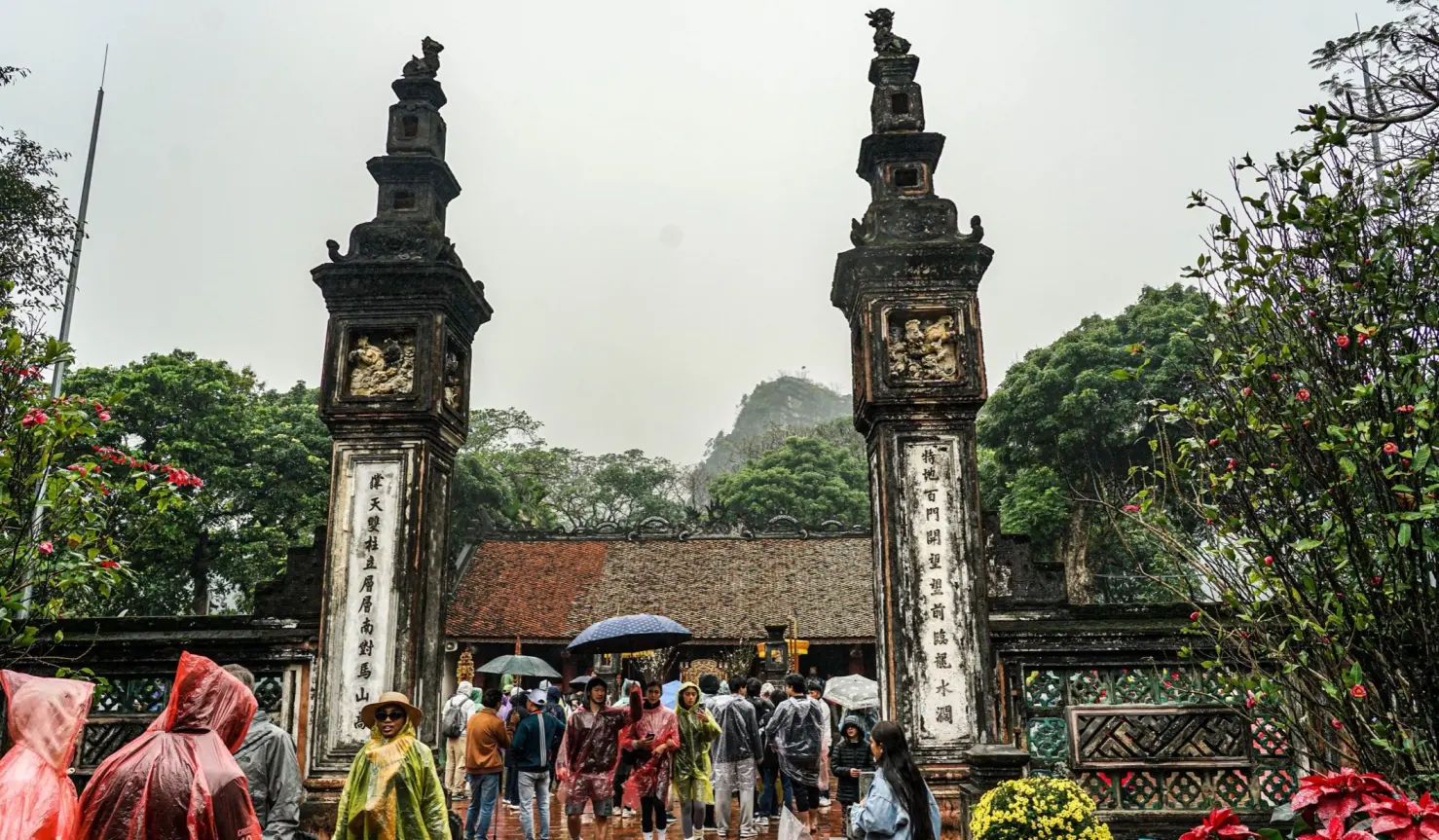
The road into Hoa Lu feels like an introduction to the country’s earliest political center. Ride through the amazingly shaped limestone mountains surround the area, creating a natural shield that once protected the first royal dynasties.
When you ride in, you can still see how the geography helped rulers defend their territory. Local farmers work the rice fields around the temples, and this contrast between present-day life and the remains of an ancient capital makes the site especially meaningful. Stone gateways, old citadel walls, and detailed carvings show the influence of the Dinh and Le kings, who unified regions and established early administrative systems.
Some riders explore the nearby valleys where hidden caves and lookout points once served military purposes. Stories shared by local guides help you imagine how difficult daily life was during the formation of the early state. It’s an area where history feels woven directly into the land and the daily routines of the community.
Sa Pa: A Blend of Ethnic Culture and Historic Landscapes
Many people miss the ride toward Sapa, they often take a night train and try to rent a scooter once in the town. However, the ride from Hanoi takes you through cool air, terraced valleys, and mountain passes where communities have lived for centuries.
This region is known for its ethnic diversity, and riders often learn more about history here than expected. Villages belonging to the Hmong, Dao, Tay, and Giay people reveal traditions tied to migration patterns, ancestral rituals, and agriculture methods shaped by the mountain terrain.
Old stone paths once used for trade still link villages today, and some routes date back to early exchanges between highland groups. You may pass remnants of French colonial influence, old stations, bridges, and viewpoints that once monitored the frontier. Local guides often share stories about how families settled these slopes and how cultural identity has survived political and environmental changes.
The area’s landscapes help explain why communities here developed such distinct customs, making the region feel like a living archive of cultural history.
- Check out out Best Motorbike tours to Sapa
Imperial Citadel of Thang Long: A Thousand Years of History
A must see, to which, a lot of tourists still miss this amazing site. The Thang Long Citadel welcomes you after riding through the capital provides an immediate shift from modern streets to a site layered with centuries of change.
This former political center served as the headquarters for emperors, regional rulers, and later, colonial and wartime administrations. Walking through the gates, you’ll see foundations from different dynasties stacked on top of each other, showing how each era modified or rebuilt the complex.
Archaeological areas reveal ceramics, military structures, and palace remnants that help explain how the city evolved. Guides often describe how the citadel functioned as a royal residence, ceremonial ground, and defensive hub. Visiting after a long ride allows you to take your time moving through courtyards and restored halls, absorbing how power, culture, and daily life shaped the capital across a thousand years. It’s a rare place where so many eras remain visible in a single location.
- Check out speed limits & traffic laws in Vietnam
Temple of Literature: Vietnam’s First National University
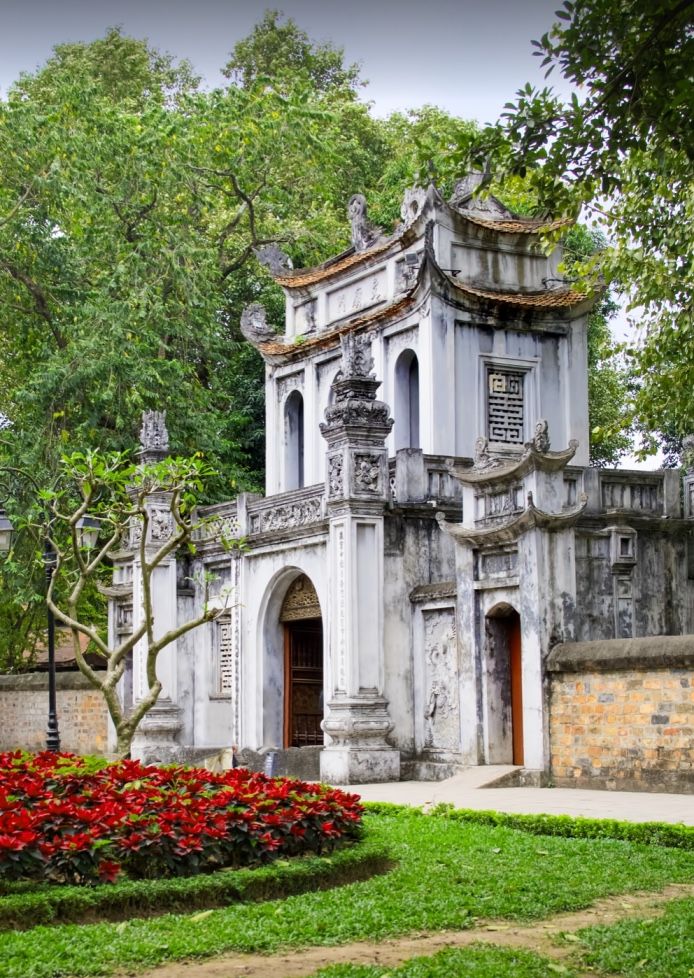
Visiting the Temple of Literature brings you into one of the most meaningful cultural sites in the country’s history of education. This former imperial academy trained scholars who later became advisors, leaders, and historians. The courtyards, ponds, and ancient trees create a calm environment that feels far removed from the busy streets outside.
Many riders take time to read the inscriptions on the stone turtles, which honor students who passed the royal exams, an achievement that once required years of dedication. Local students still visit to pray for exam success, linking past and present in a surprisingly natural way.
Guides often explain how Confucian values shaped political leadership and social norms, giving the site importance beyond its architecture. Spending time walking through the pavilions after arriving by bike helps you appreciate how learning and tradition influenced the development of many regions across the country.
- Learn about motorcycle insurance in Vietnam
Vietnam Museum of Ethnology: A Deep Dive into Cultural History
The museum offers riders a chance to understand the region’s cultural complexity before exploring more remote areas. Exhibits cover more than fifty ethnic groups, showing tools, clothing, rituals, and everyday objects that reflect how different environments shaped distinct identities.
The outdoor section is especially valuable traditional houses are reconstructed using original materials, allowing visitors to see how communities adapted to mountain climates, river plains, or forest regions. Many riders visit this museum early in their journey because it provides context for what they’ll see on the road: weaving patterns in hill villages, ancestral altars in stilt homes, or farming methods that vary from valley to valley.
The displays also explain migration histories and cultural exchanges that shaped the northern provinces. Spending time here deepens your understanding of the people you meet later, making every stop on your route feel more meaningful and connected.
- Check out popular motorbike routes in Vietnam
Best Motorbike Routes for Visiting Northern Vietnam’s Historical Sites
Travelers who want to explore the region’s history often find that the best routes are the ones that combine scenic riding with meaningful cultural stops, of course we follow the same for any of our motorbike rides.
Many of the old capitals, war era battlefields, and traditional villages sit along roads that naturally guide you through valleys, river plains, and mid-mountain passes. Riding these routes gives you enough time to understand how geography shaped earlier settlements, from defensive citadels in lowland basins to frontier outposts positioned between steep cliffs.
Locals along the way often share small details, family stories tied to an ancient temple, hidden shrines used during wartime, or village traditions maintained for generations. The best part is that each route connects several historical locations in a way that feels continuous rather than rushed. You move from one era to another while passing through landscapes that still reflect the past.

Hanoi to Ninh Binh Route: A Favorite for History Lovers
This route is popular and often taken by a lot of tourists as a day trip option from the capital city, the route is not really a very scenic as it blends urban area riding out of Hanoi, however, once pass it out of Giải Phóng highway, the ride become smooth with meaningful stops tied to early dynasties once reached Ninh Binh.
Leaving the capital, the scenery gradually shifts from city streets to open fields and limestone outcrops, giving you time to ease into the ride. Many travelers visit small villages along the way where families still make rice wine and traditional crafts, offering a quiet look into daily life.
Once you enter the Ninh Binh area, the historical sites sit close together, making exploration easy. Hoa Lu’s ancient temples lie in a protected valley, and guides often explain how natural defenses shaped the first royal capitals. Detours toward Trang An or Tam Coc reveal waterways once used for both transport and protection. The combination of cultural stories, dramatic landscapes, and historical significance makes this route ideal for riders seeking deeper context behind the region’s early political centers.
- Check out 4 best routes from Hanoi to Ninh Binh
Hanoi to Sa Pa Route: A Scenic Ride Through the Mountains
The ride toward Sa Pa offers a gradual climb into cooler air and terraced landscapes shaped by centuries of farming and migration. Riders follow highways and mountain passes that once connected lowland traders with highland communities.
Along the route, small markets appear at roadside junctions, giving you a chance to see how ethnic groups exchange goods much as they always have. As you enter the highlands, villages belonging to the Hmong, Dao, Tay, and Giay offer insights into long-standing cultural traditions.
Guides often point out remnants of early trade paths and colonial-era lookout points that lie just off the main road. The approach to Sa Pa becomes a blend of cultural learning and stunning scenery, with each stop helping you understand why communities here developed unique identities shaped by the mountain environment and long history of cross-valley movement.
Ha Giang Loop: A Mix of History, Culture, and Adventure
Riding the loop gives you a direct path through some of the Northern Vietnam’s most culturally rich and historically layered areas. The road winds through limestone mountains, high passes, and deep valleys where ethnic minority communities have lived for generations.
Many towns along the way, such as Dong Van and Meo Vac, still show traces of old trade routes and defensive positions used during border conflicts. The Vuong Palace, set in a quiet valley, reflects the influence of regional leaders who once controlled trade between the highlands and neighboring territories.
Local villages often welcome visitors with stories about farming traditions, clan histories, and the challenges of living in such rugged terrain. Each section of the loop combines dramatic scenery with meaningful cultural encounters, helping riders understand how history, geography, and community life remain closely connected throughout the region.
- Check out Ha Giang loop motorbike tours from Hanoi
Essential Tips for a Historical Motorbike Trip in Northern Vietnam
Planning a motorbike ride with attention to tik-off the historical attractions through Northern Vietnam requires preparation, planning, and the ability to adapt to changing conditions (if weather planning is in mind as well).
The region is filled with rugged mountain passes, ancient villages, and war-era landmarks that reveal Vietnam’s layered past. However, distances between sites can be long, and certain historical areas are tucked deep into the countryside. Before setting out, make sure your motorbike is in excellent condition, especially the brakes and suspension, because the northern terrain is noticeably steeper than other regions.
Pack light but carry essential items such as a waterproof jacket, sunscreen, a basic first-aid kit, and spare phone batteries. You should also download offline maps, since mobile service can disappear in remote valleys. Finally, take time to understand the cultural importance of the places you visit. Many northern sites hold deep meaning for local families, former soldiers, and ethnic minority communities, so approaching each location with respect will enrich your entire journey.
Best Time to Visit Historical Sites
To many, the best time to explore Northern Vietnam’s amazing terrains, including the historical sites is during the dry months from October to April, when the weather is cool, clear, and ideal for long-distance motorbike rides. During this period, visibility is excellent, which is important when visiting mountaintop relics, old military bases, and remote villages that offer panoramic views of valleys and river systems.
The cooler temperatures also make it easier to spend extended time outdoors while walking around old fortifications, tunnels, or cultural museums. Although the summer months from May to September deliver green landscapes, they also bring heavy rain, slippery roads, and sudden landslides conditions that can limit access to important historical locations. If you prefer mild weather paired with photogenic scenery, aim for late autumn or early spring.
These months offer blooming flowers, calmer winds, and vibrant festivals in many ethnic communities, allowing you to combine cultural experiences with historical exploration.
- Check out the best time of the year to travel to Vietnam in general
Road Safety Tips for Northern Vietnam
Riding in the region such as in Sapa, Ha Giang, Son La, Northwest and east in general, offers incredible scenery, but it also requires heightened road awareness due to narrow passes, sharp curves, and unpredictable weather.
Start by checking your motorbike thoroughly before each ride: tire pressure, headlights, horn, and brakes should function perfectly at all times. When navigating mountain roads, keep your speed moderate, especially on downhill sections where inexperienced riders often lose control. Because fog can appear suddenly in high-altitude areas, always use your headlights and maintain a safe distance from other vehicles.
Local drivers may ride slowly or stop unexpectedly, particularly in rural communities with livestock on the road, so remain alert. Another useful habit is honking lightly when entering blind corners, a common practice across Vietnam. You should also avoid riding after dark because lighting is limited in remote regions. With steady caution and patience, your historical motorbike journey will remain safe and enjoyable.
Cultural Etiquette When Visiting Sacred Sites
Northern Vietnam is home to many sacred locations, including century-old temples, hero memorials, military cemeteries, and ancestral altars linked to significant historical events. When visiting these places, it’s important to follow respectful cultural etiquette. Start by dressing modestly; long pants and covered shoulders are preferred at religious and memorial sites.
When entering temples or shrines, remove your shoes if signs indicate it. Keep your voice low, avoid blocking entrances, and do not climb on structures for photos. If you plan to burn incense, do so gently and place only one or two sticks to avoid overwhelming local rituals.
Many ethnic minority communities also have unique customs, so observe the behavior of local visitors and follow their lead. It’s also polite to ask for permission before photographing people or family altars. Showing respect helps you build genuine connections and ensures that the historical and spiritual importance of these sites is honored.
Local Experiences to Combine with Historical Exploration
Exploring history in this region is richer when paired with local experiences that reveal daily life, traditions, and culture. Many riders stop in small villages along historic routes, where you can see families farming rice terraces, making traditional handicrafts, or tending livestock just as their ancestors did. Markets are excellent for observing trade practices that have remained unchanged for decades, often set near ancient temples or war memorials.
Participating in local festivals, such as harvest celebrations or temple rituals, gives a glimpse of community life tied to historical cycles. Visiting local schools, craft workshops, or cultural centers also helps contextualize the stories behind historical landmarks. By engaging with these experiences, travelers gain insight into how people live today while still preserving the region’s history, making every ride more meaningful and connecting past and present in a tangible way.
Traditional Northern Vietnamese Foods for the Road
Riding through the north is also a culinary journey. Traditional dishes vary from one region to another, reflecting local ingredients and historical influences. In Ha Giang and Cao Bang, riders can sample corn and sticky rice dishes, often cooked over wood fires in mountain villages.
Ninh Binh offers river fish, freshwater shrimp, and tam coc-style goat dishes that have been prepared in similar ways for generations. Street-side stalls and small family-run restaurants along the main routes serve phở, bún chả, and bánh cuốn, giving travelers energy for long rides.
Trying fermented pickles, local herbs, and rice wine adds depth to the experience, linking food to regional history and farming traditions. Sampling these dishes during breaks between historical sites allows riders to connect with the local culture while staying fueled for the road ahead.
Homestays for an Authentic Cultural Experience
Homestays provide a unique perspective on local life and history that hotels cannot replicate. Many are located in small villages near historical sites, offering close interaction with families who have lived there for generations. Staying in a stilt house or a traditional courtyard home allows you to observe morning routines, cooking practices, and farming methods tied to centuries-old traditions. Hosts often share stories about their ancestors, local legends, or the significance of nearby temples and ruins.
Meals are usually home-cooked, featuring local produce and recipes passed down over generations. Spending the night in these homestays gives you time to absorb the environment fully, watch the sunset over rice terraces, and listen to the quiet rhythm of rural life. It’s an opportunity to connect history, culture, and daily living in a way that is immersive and personal.
FAQs: Historic sites to visit in northern Vietnam
What is the famous motorcycle loop in northern Vietnam?
The famous motorcycle loop in Northern Vietnam is the Ha Giang Loop, along with the Sapa and Cao Bang.
What're the Vietnam's UNESCO World Heritage Sites?
Motorbiking Vietnam’s UNESCO World Heritage Sites, visit following:
- Ha Long Bay: Famous for its limestone islands and karst landscapes.
- Phong Nha-Ke Bang National Park: Known for caves and underground rivers.
- Hue Imperial City: Former royal capital with palaces and temples.
- My Son Sanctuary: Ancient Cham temple complex.
- Trang An Landscape Complex: Scenic rivers, caves, and historical sites in Ninh Binh.
- Thang Long Imperial Citadel: Historic citadel in Hanoi.
- Citadel of the Ho Dynasty: Historic fortress in Thanh Hoa Province.
Best visiting historical sites in northern vietnam
Here are the best historic sites and attractions, to visit on a motorbike ride:
- Vuong Palace: Ancient palace in Ha Giang.
- Dong Van Ancient Town: Historic town in Ha Giang.
- Mac Dynasty Citadel: 16th-century citadel in Cao Bang.
- Chi Lang Pass Battlefield: Legendary battle site in Cao Bang.
- Hoa Lu Ancient Capital: Early Vietnamese dynasties’ capital in Ninh Binh.
- Trang An & Tam Coc: Scenic landscapes with historical significance in Ninh Binh.
- Dien Bien Phu Battlefield: Key historical site in Dien Bien Phu.
- Vinh Moc Tunnels: War-era tunnels in Quang Tri Province.
Conclusion: Visiting historic places In Northern Vietnam
Exploring Northern Vietnam by motorbike offers a unique way to connect with the region’s history, culture, and landscapes. Riding through ancient towns, mountain passes, and battlefields allows travelers to experience historical sites at their own pace, while engaging with local communities adds depth to every stop.
From the Vuong Palace and Dong Van Ancient Town in Ha Giang to Ninh Binh’s temples and waterways, and from Sa Pa’s ethnic villages to Dien Bien Phu’s battlefields, each route tells a story. Combining careful planning, respect for local customs, and scenic rides makes it a best motorbike tours in Vietnam
About an author
Hamid is an avid motorbike rider and travel enthusiast who has explored Northern regions extensively. Passionate about history and culture, he combines scenic rides with visits to ancient towns, battlefields, and local villages, sharing practical tips and personal insights for fellow travelers.