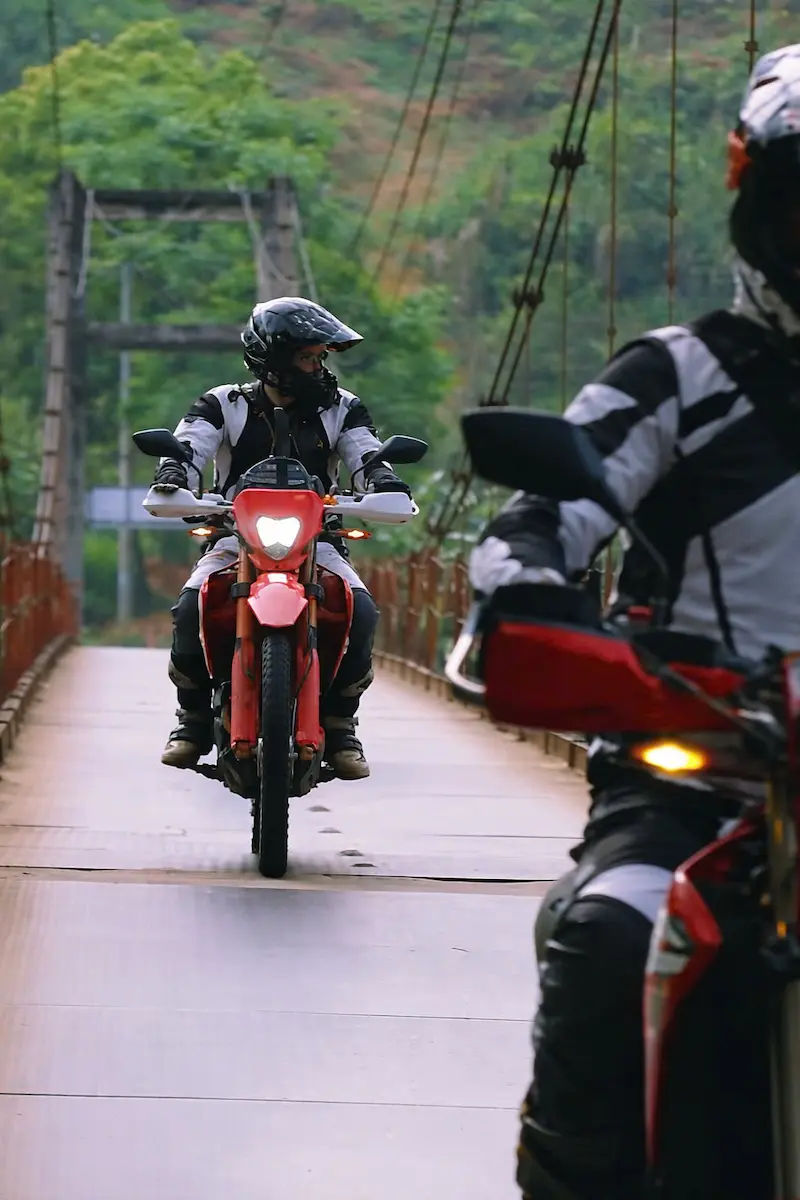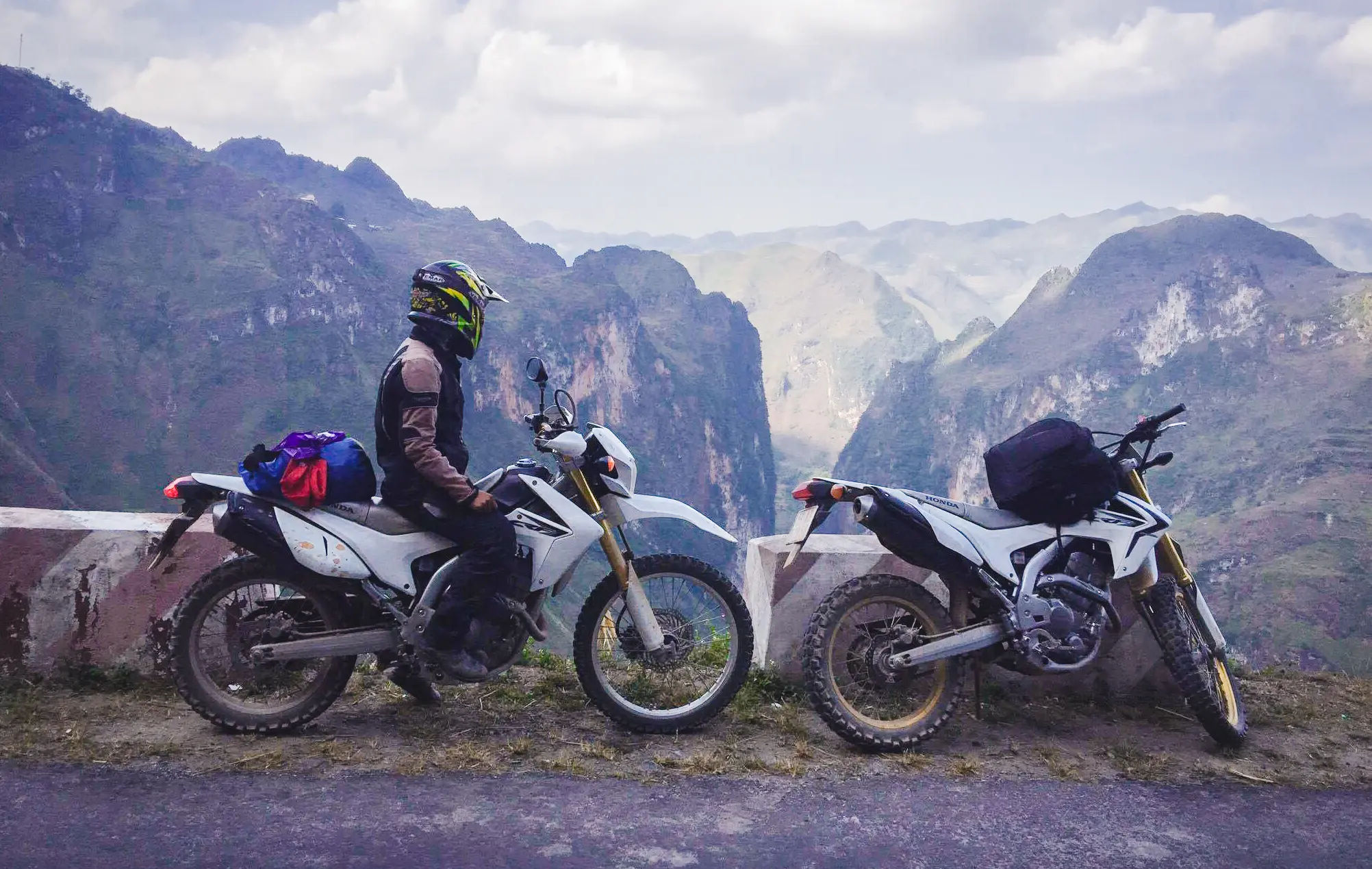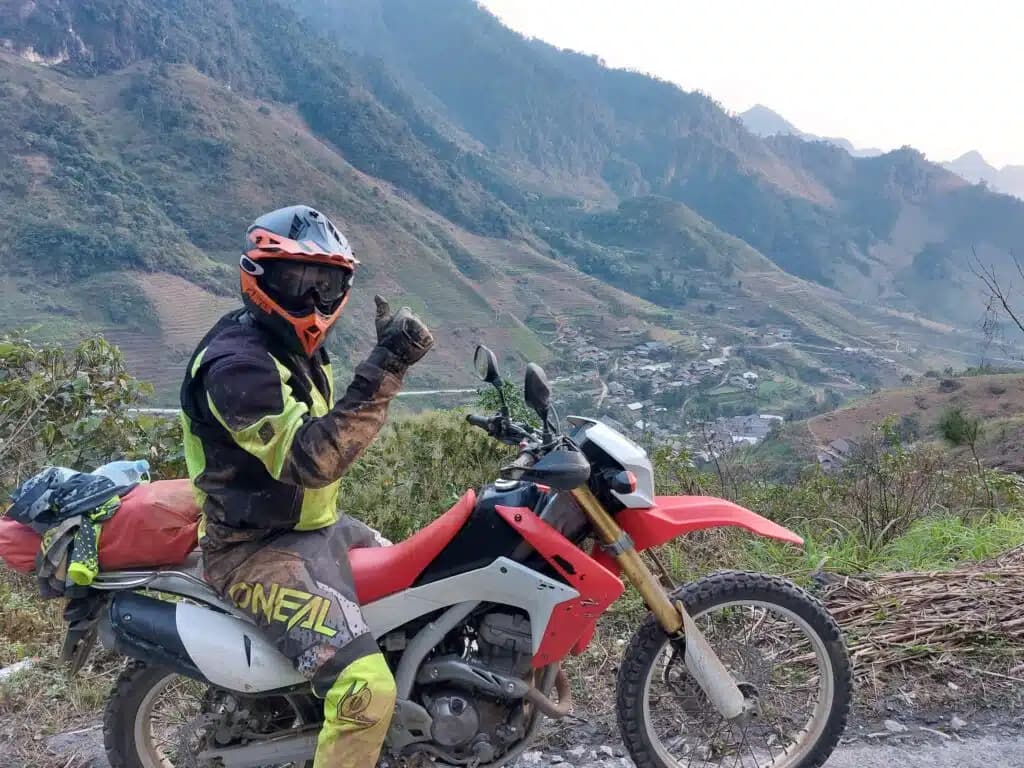
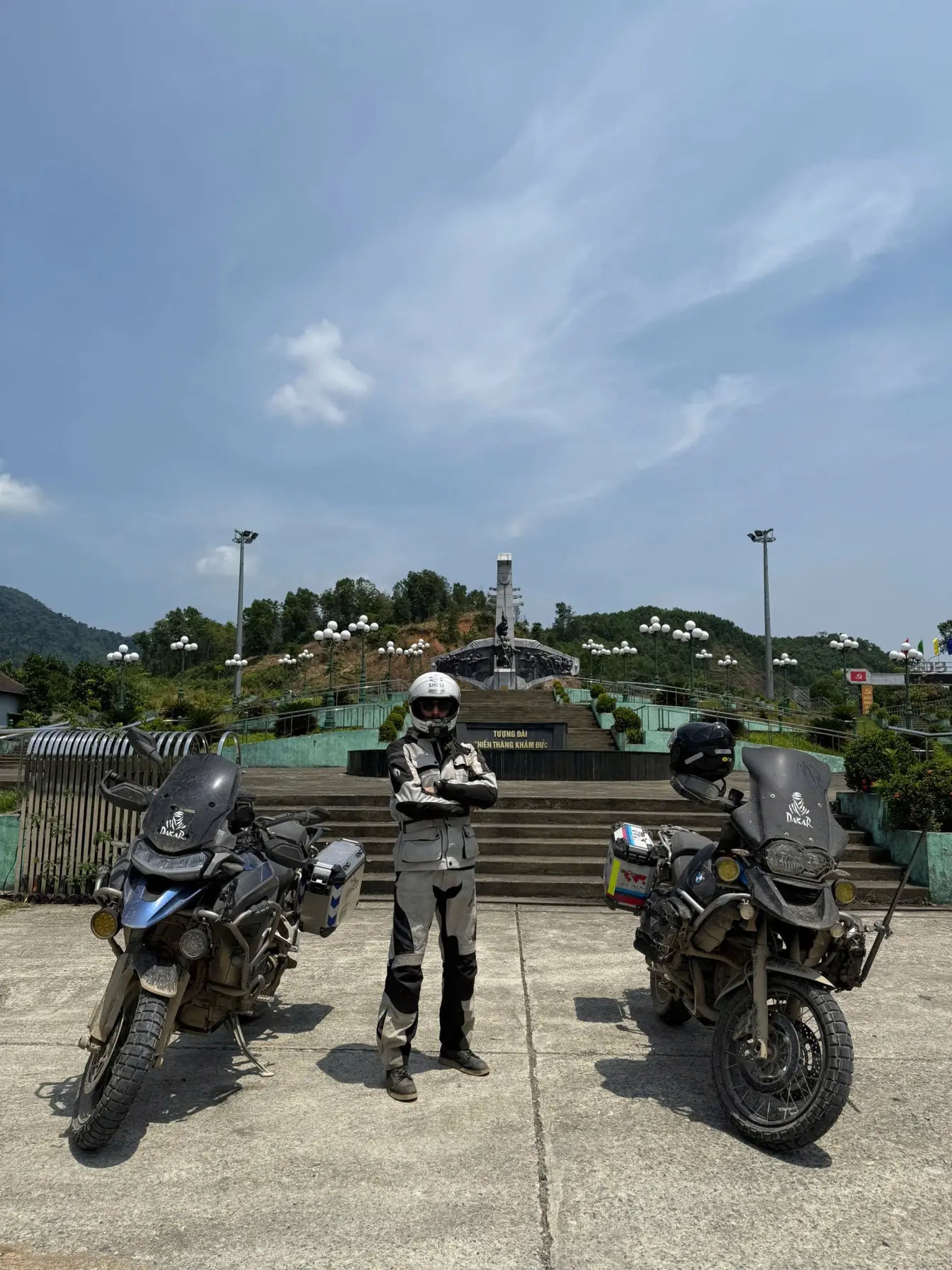
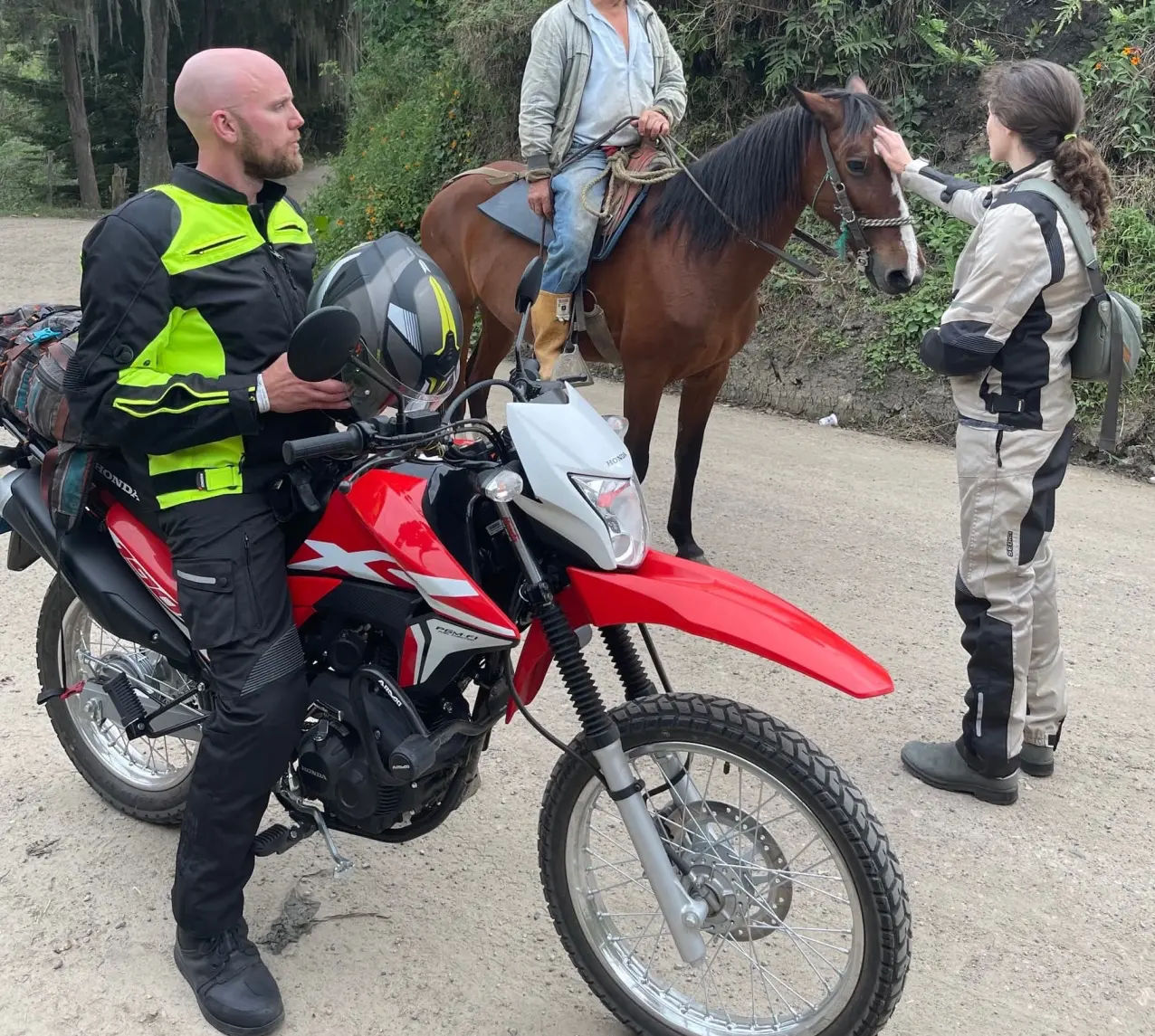
Riding a motorbike solo through Ha Giang gives you total freedom of adventure to explore some of Vietnam’s most stunning mountain roads at your own pace. You’ll navigate steep cliffs and sharp hairpin turns through landscapes that feel untouched by time. But here’s the reality: this route isn’t for beginners. The terrain can be unpredictable, help isn’t always nearby, and you need proper licensing to ride legally in Vietnam. If you’re an experienced rider who knows how to handle challenging conditions (in case of off-road), a solo trip can be incredibly rewarding. If you’re less confident on riding a motorbike, consider hiring a tour or bringing along a more experienced companion.
- Check out Ha Giang motorbike tours
| Category | Details | Tips |
|---|---|---|
| Documents | IDP 1968 version + national license required | Keep in waterproof bag, police checkpoints common near Ha Giang city |
| Duration | 3 days minimum, 4 days ideal | Don’t rush in 2 days, fatigue causes accidents |
| Best Season | June to August (rainy season) | Waterfalls at peak, lush landscapes, pack rain gear |
| Bike Type | Manual (XR150, CB500) | Test brakes and tires before accepting rental |
| Budget (Backpacker) | 2,000,000 VND ($77 USD) per day | Basic guesthouse, local meals, fuel included |
| Budget (Adventure Rider) | $150-300 USD per day | Better accommodation, quality meals, gear maintenance |
| Essential Gear | Aqua shoes, rain jacket, gloves, waterproof bags | Weather changes hourly, stay prepared |
| Route Options | Main highway (easy) vs backroads (challenging) | Backroads offer best scenery, require off-road skills |
| Accommodation | 150,000-250,000 VND per night, book via Booking.com | Book one night ahead, check secure bike parking |
| Police Checkpoints | Active 9 AM to 7 PM within 50km of Ha Giang city | Ride early/late to avoid, stay calm if stopped |
| Food | Basic local meals, limited options outside cities | Treat as fuel, bring snacks for the road |
| Key Route Highlights | Ma Pi Leng Pass, Dong Van, Meo Vac, village backroads | Skip touristy spots for authentic experiences |
Challenges of Solo Riding
Riding alone through Ha Giang means you’re your own mechanic, navigator, and decision-maker when things go sideways. I’ve watched solo riders struggle with flat tires on remote mountain passes where the nearest repair shop is 40 kilometers away.
Weather changes fast up here. You might start your morning in sunshine and find yourself in thick fog by noon, visibility dropping to just a few meters. Phone signal disappears for long stretches, especially between Yen Minh and Dong Van, so your GPS becomes useless exactly when you need it most. Mechanical issues hit harder when you’re alone.
A slipping clutch or sputtering engine that would be manageable with a companion becomes a real problem when you’re solo. The physical toll adds up too. Fighting wind on exposed ridges, maintaining focus through endless switchbacks, and carrying all your gear on one bike drains you faster than you’d expect. Budget extra time for everything and always tell your accommodation where you’re heading next.

Navigation Issues
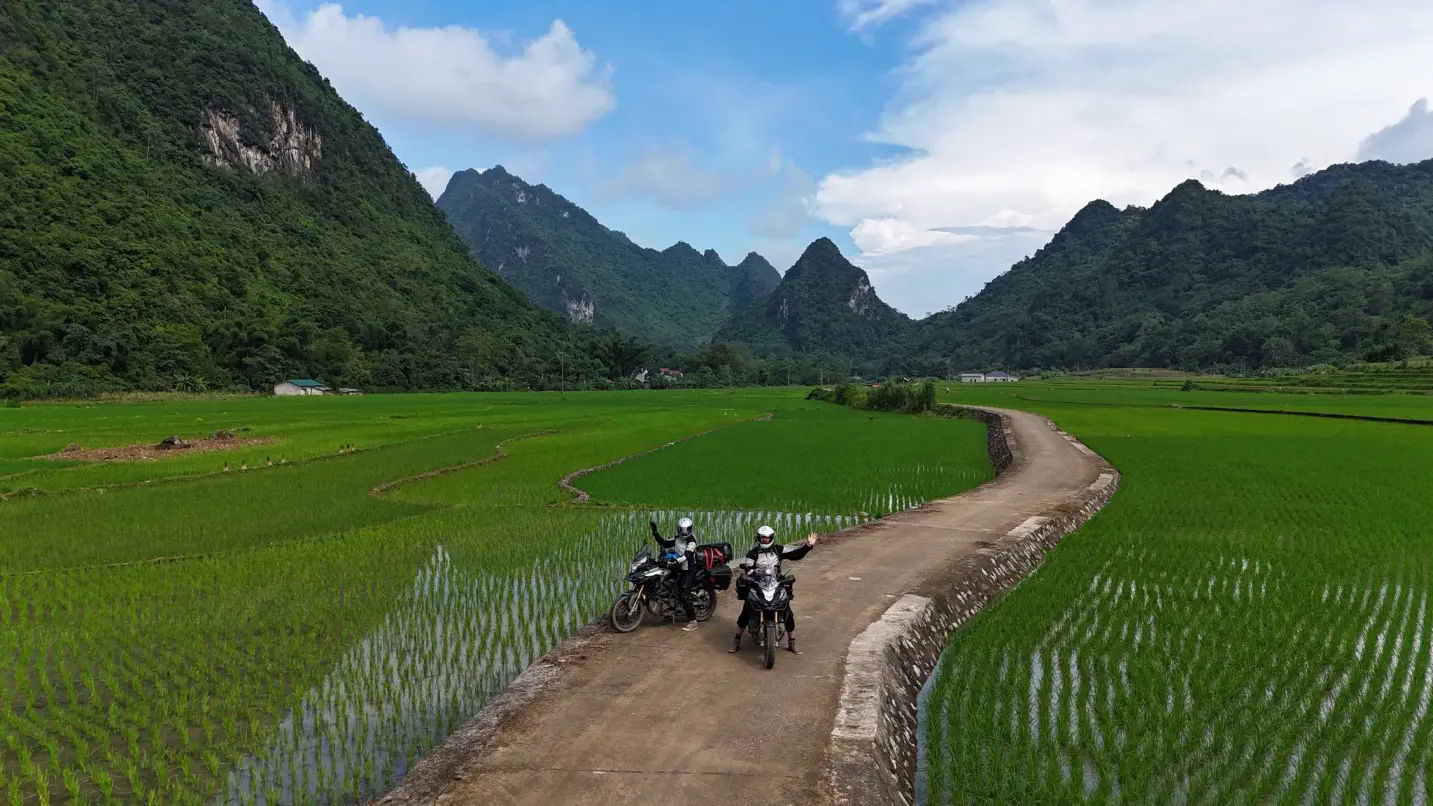
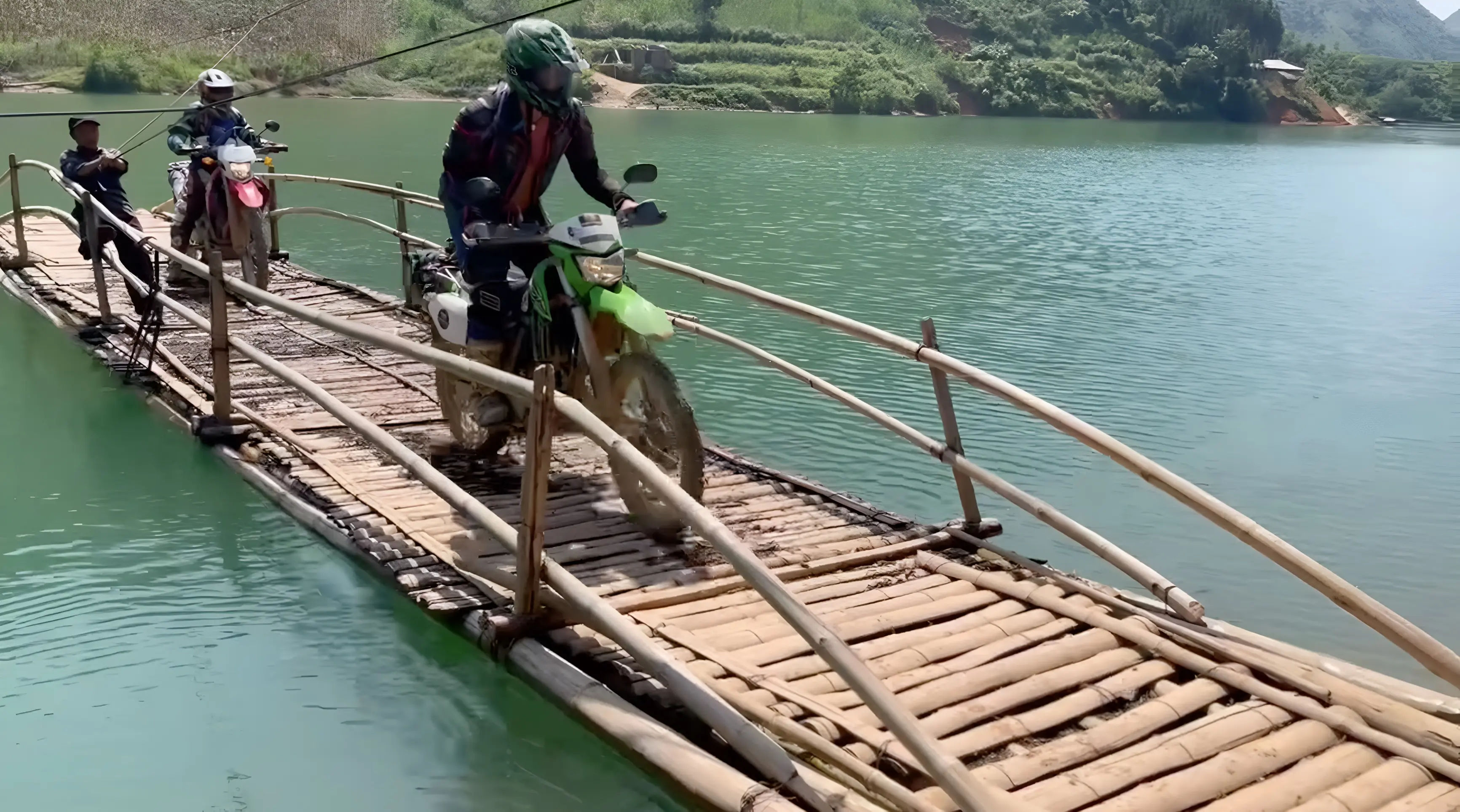
If your aiming the off-road, then Google Maps will betray you in Ha Giang, often suggesting routes that don’t exist or leading you down roads that turn into dirt tracks halfway through.
I learned this the hard way near Lung Cu, following a “shortcut” that added three hours to my day. Download offline maps before you leave, but don’t trust them completely. The classic loop goes Ha Giang City to Quan Ba to Yen Minh to Dong Van to Meo Vac to Du Gia and back, roughly 350 kilometers total.
Road signs exist but they’re inconsistent, sometimes in Vietnamese only, sometimes missing entirely at crucial junctions. Local people become your best navigation tool. Stop at roadside stalls and ask. Most shopkeepers know the routes well and can warn you about current road conditions.
Landmarks matter more than distances here. “Turn left after the big yellow house” works better than kilometer markers. Keep your phone charged with a portable battery pack and take photos of intersections so you can retrace your path if needed.
- Check out Alternatives routes to Ha Giang loop

Joys of Solo Motorbike Travel
Nothing compares to pulling over whenever something catches your eye without checking with anyone else first. I’ve spent an hour photographing terraced rice fields near Hoang Su Phi simply because I could. Solo riding puts you in direct contact with local life. Stop at a roadside pho stall and you’ll end up chatting with farmers heading to market, sharing stories through broken English and hand gestures. The riding itself becomes meditative when you’re alone.
Just you, the engine rhythm, and those endless mountain curves unfolding ahead. You make your own schedule completely. Want to watch sunrise from Ma Pi Leng Pass? Leave at 5 AM. Feel exhausted? Stop early and find accommodation.
Some of my best memories came from unplanned detours, following dusty paths to remote villages where curious kids gathered around my bike. Solo travel forces you outside your comfort zone in good ways. You solve problems yourself, building confidence with each challenge overcome. The sense of achievement when you complete the loop entirely on your own stays with you long after you’ve left Ha Giang.
- Check out off-road motorbike adventure in Ha Giang
Safety Tips for Solo Riders
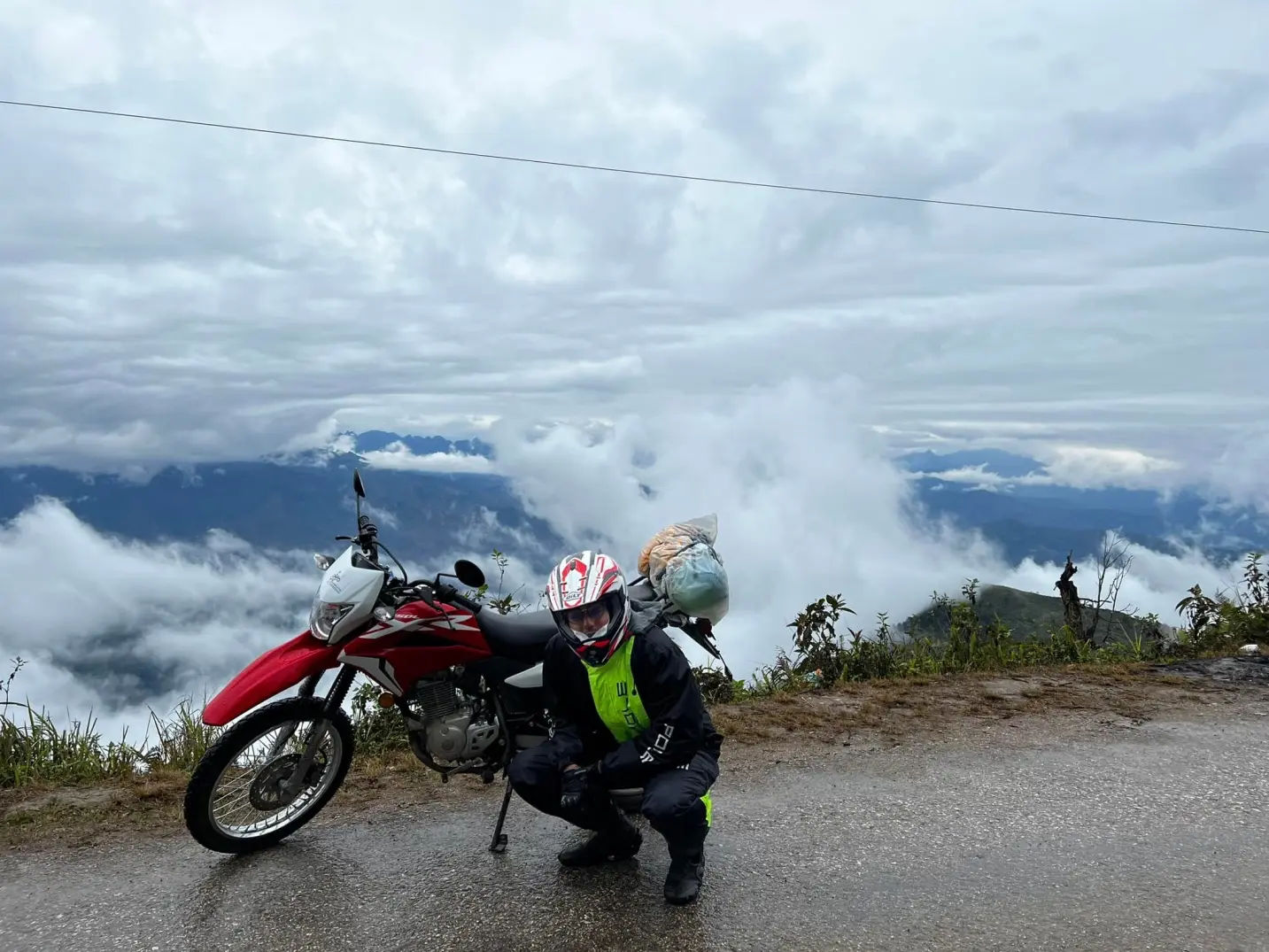
Wear proper gear always, even when it’s hot. A good helmet, gloves, and a riding jacket with padding can save your skin literally during a fall. I’ve seen too many riders in flip-flops and shorts regret their choices after even minor accidents. Start each morning by checking your bike thoroughly.
Tire pressure, brake fluid, chain tension, oil level. These five minutes can prevent breakdowns in remote areas. Ride slower than you think you should, especially on unfamiliar roads. Those hairpin turns tighten suddenly and gravel appears without warning.
Keep your bike’s tank above half full whenever you pass a petrol station. Stations are sparse and irregular. Carry basic tools, a spare tube, tire levers, and a pump. Even if you can’t fix everything yourself, having tools means a local can help you. Share your daily route with your hotel or hostel before leaving. Check in with them via text when you arrive at your next stop. Avoid riding after dark completely. The roads have no lighting, animals wander across unexpectedly, and potholes become invisible.
- Check out Staying in villages in Northern Vietnam
Best Solo-Friendly Routes
The classic Ha Giang loop takes three to four days and covers every major highlight without feeling rushed. Day one goes Ha Giang City to Yen Minh via Quan Ba, about 100 kilometers with the famous Heaven Gate viewpoint and Fairy Mountain included. Day two tackles Yen Minh to Dong Van, just 70 kilometers but you’ll want extra time at Lung Cu flagpole, Vietnam’s northernmost point.
Day three brings the showstopper, Dong Van to Meo Vac via Ma Pi Leng Pass, possibly the most dramatic 30 kilometers you’ll ever ride, with the Nho Que River carving through limestone far below. Day four closes the loop from Meo Vac back to Ha Giang City through Du Gia, roughly 150 kilometers of easier riding. For confident solo riders, add a fifth day to explore the less traveled route through Hoang Su Phi and its pristine terraced fields.
The roads see fewer tourists but require more technical skill. Each route section has accommodation options, though booking ahead during peak season (September to November and March to May) prevents last minute scrambling for rooms. Fuel up in bigger towns like Yen Minh and Dong Van.
Solo-Friendly Accommodation
Guesthouses and homestays dominate Ha Giang’s accommodation options, and most welcome solo travelers warmly. In Yen Minh, places like Phuong Thinh Hotel offer secure bike parking, hot showers, and basic rooms for around 150,000 to 200,000 VND per night. (USD 7-9)
Dong Van has more options concentrated near the old quarter, where you can park your bike in covered areas and walk to restaurants easily. I always choose places where I can see my bike from my room or where it’s locked behind a gate overnight. Homestays provide better cultural experiences but check their parking situation first.
Some family-run places in Meo Vac offer dinner included, which solves the problem of finding food after a long riding day when you’re exhausted. Book one night ahead during your trip rather than pre-booking everything. This flexibility lets you adjust if you’re behind schedule or want to stay somewhere longer. Many guesthouses have WhatsApp for easy communication.
Solo travelers often pay the same as couples since rooms don’t typically discount for single occupancy. Expect basic amenities, reliable wifi is rare, and hot water can be temperamental in smaller villages. The hospitality makes up for any lack of luxury.
My Solo Motorbike Adventure on the Ha Giang Loop
Getting Your Documents Right
Before leaving home, I got an International Driving Permit, specifically the 1968 version because that’s the only one Vietnam actually recognizes. This matters more than you think.
Police set up checkpoints all over the Ha Giang Loop, and they know tourists often ride without proper papers. I met riders who paid bribes at two or three different stops because they didn’t have an IDP. The cops are looking for easy money from foreigners. Carry your IDP and your regular license together, keep them in a waterproof bag because rain will destroy paper documents fast up here. Don’t think you can talk your way out of it without the right permit. You might get lucky once, but the checkpoints keep coming, especially near Ha Giang city.
- Check out How to get a Vietnamese Driving license
Gear That Actually Matters
I brought aqua shoes and they saved me multiple times. Regular sneakers turn into sponges when it rains, and wet feet on footpegs means less control. Aqua shoes grip wet surfaces better, they dry in like twenty minutes, and your feet stay comfortable even after six hours of riding.
Ha Giang throws sudden rainstorms at you without warning. You’ll be cruising in sunshine, then five minutes later you’re soaked. The mountains create their own weather patterns.
Pack a proper rain jacket (I used a GIVI set, a jacket and pant and cost 1700k VND = USD70, you can buy the cheap ones around USD5 as well), waterproof pants, and keep all your important stuff in plastic bags inside your backpack. I watched someone’s phone die completely because rainwater got into their bag. Also bring gloves with good grip, because your hands cramp up on long stretches and wet handlebars are slippery as hell.
Weather Changes Every Hour
The weather up here does whatever it wants. I started one morning in bright sun, hit thick fog by 10 AM where I could barely see ten meters ahead, then rode through heavy rain an hour later.
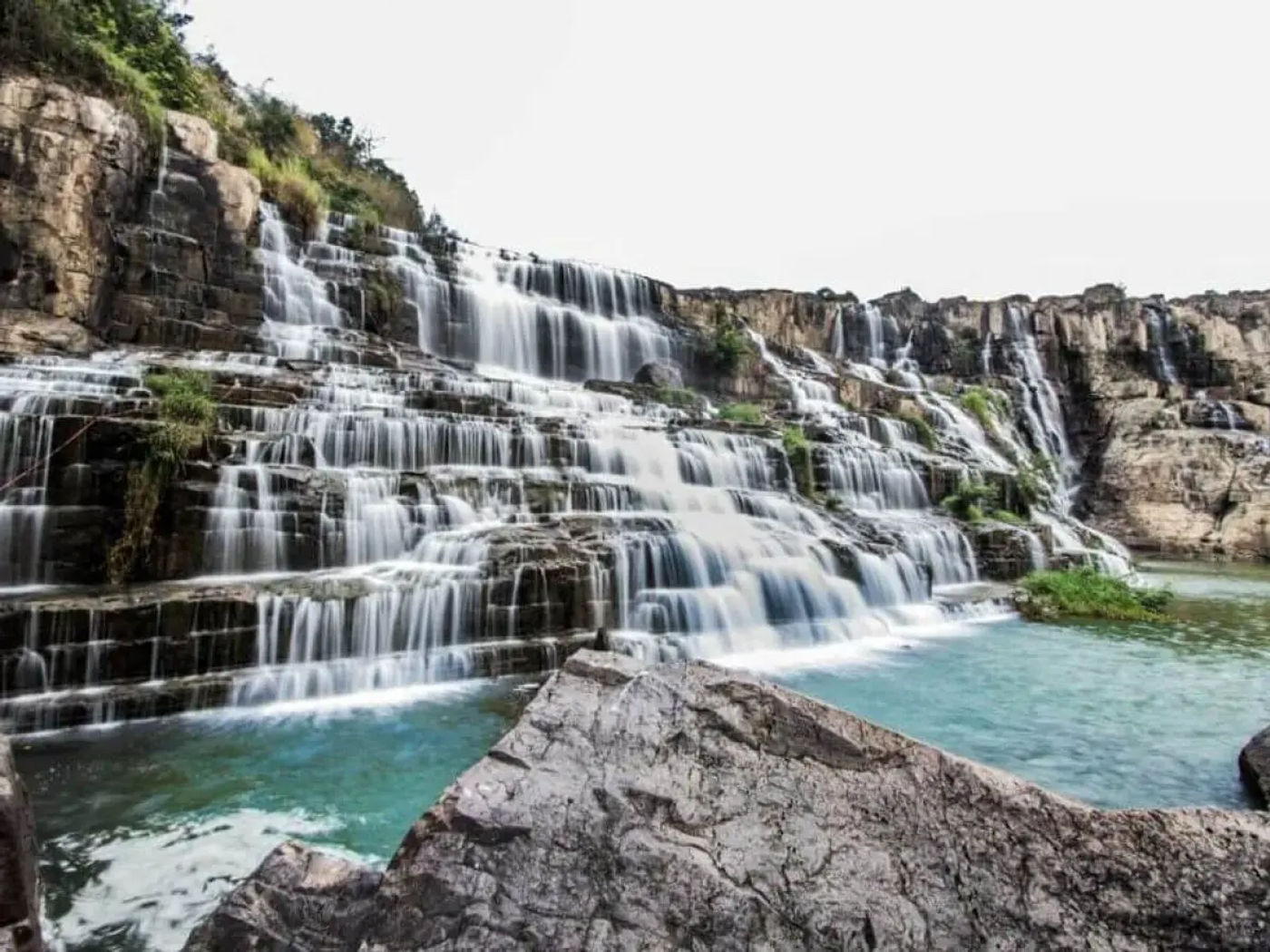
You can’t predict it and you can’t fight it. Just accept that you’ll get rained on, you’ll ride through fog, and you’ll probably deal with all four seasons in a single day. The wet season from June to August makes the waterfalls incredible though. Everything is green and alive, rivers are actually full instead of being dried up trickles, and the mist rolling through the valleys looks like something from another planet.
Dry season might have better roads, but you miss the landscapes at their best. Keep your documents in plastic bags like I mentioned. Paper turns to mush fast.
- Check out the best time to ride the Ha Giang Loop
- Details of best time to travel to Vietnam in general
Skip the Detailed Planning
If you’d like to ride solo, then forget making a strict itinerary. Google Maps shows all the main viewpoints and scenic spots already. The Ha Giang Loop isn’t about ticking off attractions like a normal tourist trip.
It’s about riding the road itself and stopping whenever something looks interesting. I took random turns down village paths that weren’t on any map and found rice terraces with nobody else around. The best moments came from spontaneous decisions, not from following a schedule. Just know your general direction for the day and where you need to sleep that night. Everything else can be flexible.
How Many Days You Actually Need For Ha Giang?
Three days minimum (if you only start from Ha Giang) gets you around the loop without killing yourself, but you’ll be pushing hard and missing a lot. Four days is perfect. You can explore side roads, take your time at viewpoints, and not feel rushed. Some people try to do it in two days and I think they’re crazy.
The roads are dangerous when you’re tired, and fatigue makes you sloppy with throttle control and braking. I watched exhausted riders make stupid mistakes on day two that could have ended badly. Give yourself four days. Your body and your bike will thank you. You’ll also have time to actually talk to local people instead of just blasting through.
Why I Skipped Easy Riders
Lots of backpackers hire Easy Riders from them hostel or dorm places where they stay, these local guys who drive you around on the back of their bike. I rode solo instead and I’m glad I did. We saw an Easy Rider crash his bike with a tourist on back because he was driving like an idiot, showing off. (I am not trying to ruin them businesses, search, you’ll see the videos).
The whole group had to stop. Nobody got seriously hurt but it could have been way worse. These guys ride beat up bikes that aren’t maintained properly, and some of them drive recklessly to impress clients or save time. You’re trusting your life to a stranger on dangerous mountain roads. If you’re going to do this trip, learn to ride properly first and take control yourself. Don’t hand over your safety to someone else just because it seems easier.
- Check out BMW motorbike Tours in Vietnam
Choosing Your Motorcycle
Semi-automatic bikes work best for solo riders and only if you stick to the paved roads. They’re lighter, easier to handle on steep sections, and you don’t have to worry about clutch control on tricky uphill sections. I saw many backpackers rode a semi-automatic Honda Wave and it could be perfect for the conditions.
Manual bikes are 100% a whole different experience, they have more power, which helps if you’re carrying a passenger or lots of gear, most professional motorbike tour organizers, offer Ha Giang adventure (not road trips at all), on a Honda XR150, CRF series and or CB500X.
- Check out the best Motorbike options for the Ha Giang Loop
Where to Sleep
I booked everything spot, sometimes literally standing outside a guesthouse on my phone. Accommodation exists everywhere along the loop, so you don’t need to reserve weeks ahead. Most places are very basic. You get a bed, a fan or air conditioning, and usually hot water.
Don’t expect luxury or fancy amenities. Think of it like mountain trekking, the rooms are just a place to crash after a long day. I always checked that the guesthouse had secure parking for my bike, either a locked gate or somewhere I could see it from my window. Homestays offer more cultural experience if you want to eat dinner with a local family, but check their parking situation first. Prices run around 150,000 to 250,000 VND per night. Book one night ahead while you’re riding, not your whole trip.
Food Reality Check
Outside Ha Giang city, food is basic and not particularly good. You’re in remote mountain villages, not Hanoi. Expect simple rice dishes, pho noodle soup, spring rolls, and not much variety.
I treated meals like fuel on a hiking trip, just something to keep me going. Don’t come here expecting amazing cuisine. Some guesthouses include dinner, which solves the problem of finding food when you’re exhausted at 7 PM and everything is closed. Bring snacks in your bag for the road. I carried protein bars and fruit because sometimes you ride for three hours without seeing anywhere to eat.
- Check out foods and restaurants in Ha Giang
Rainy Season is Actually Best
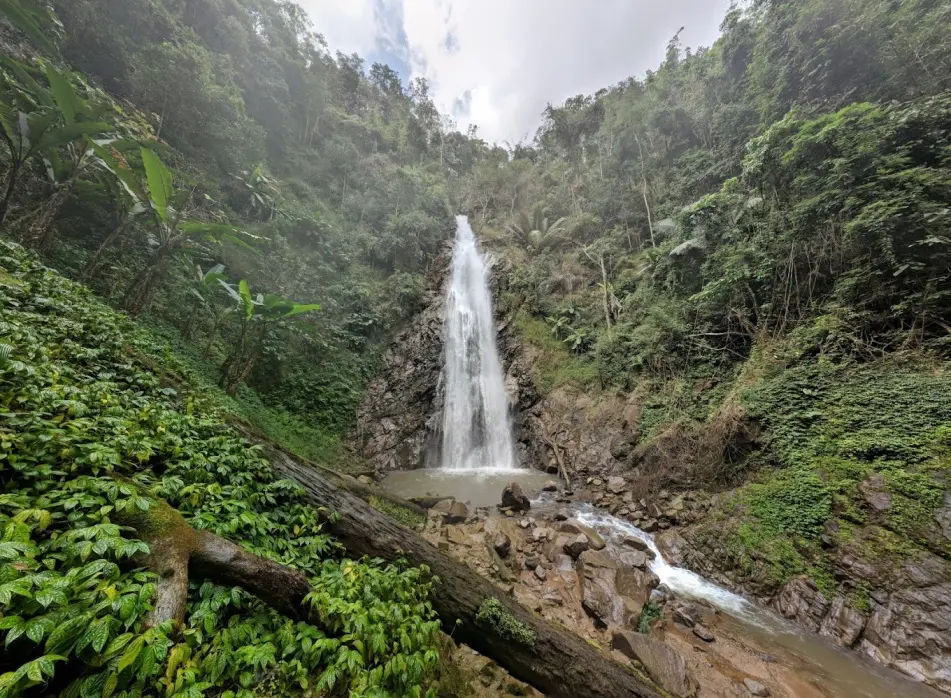
I ride the area in July, right in the middle of rainy season, and the waterfalls were massive. Every cliff face had water pouring down it. The landscapes were intensely green, rivers were full and powerful, and the whole place felt alive.
Dry season might give you better road conditions, but you trade that for dried up waterfalls and brown hillsides. The mist and clouds add drama to the scenery. Yeah, you get wet, but that’s what rain gear is for. Rainy season from June to August shows Ha Giang at its most spectacular. Just ride more carefully when the roads are slick.
- Check out Off-road motorbike trips
The Routes I Actually Took on my solo ride Ha Giang
Ha Giang has two types of roads. The main highway is paved, smooth, with guardrails and gentle curves. Safe and boring. Then you have backroads through villages, unpaved sections with gravel and mud, steep climbs, and no safety barriers. Way more challenging but the scenery is incredible.
I wanted adventure, not a Sunday cruise, so I skipped touristy spots like the flagpole and took as many backroads as possible. Here’s exactly where I went and what the roads were like.
- Check out the most scenic routes in Vietnam
Ha Giang to Thon Tha Village
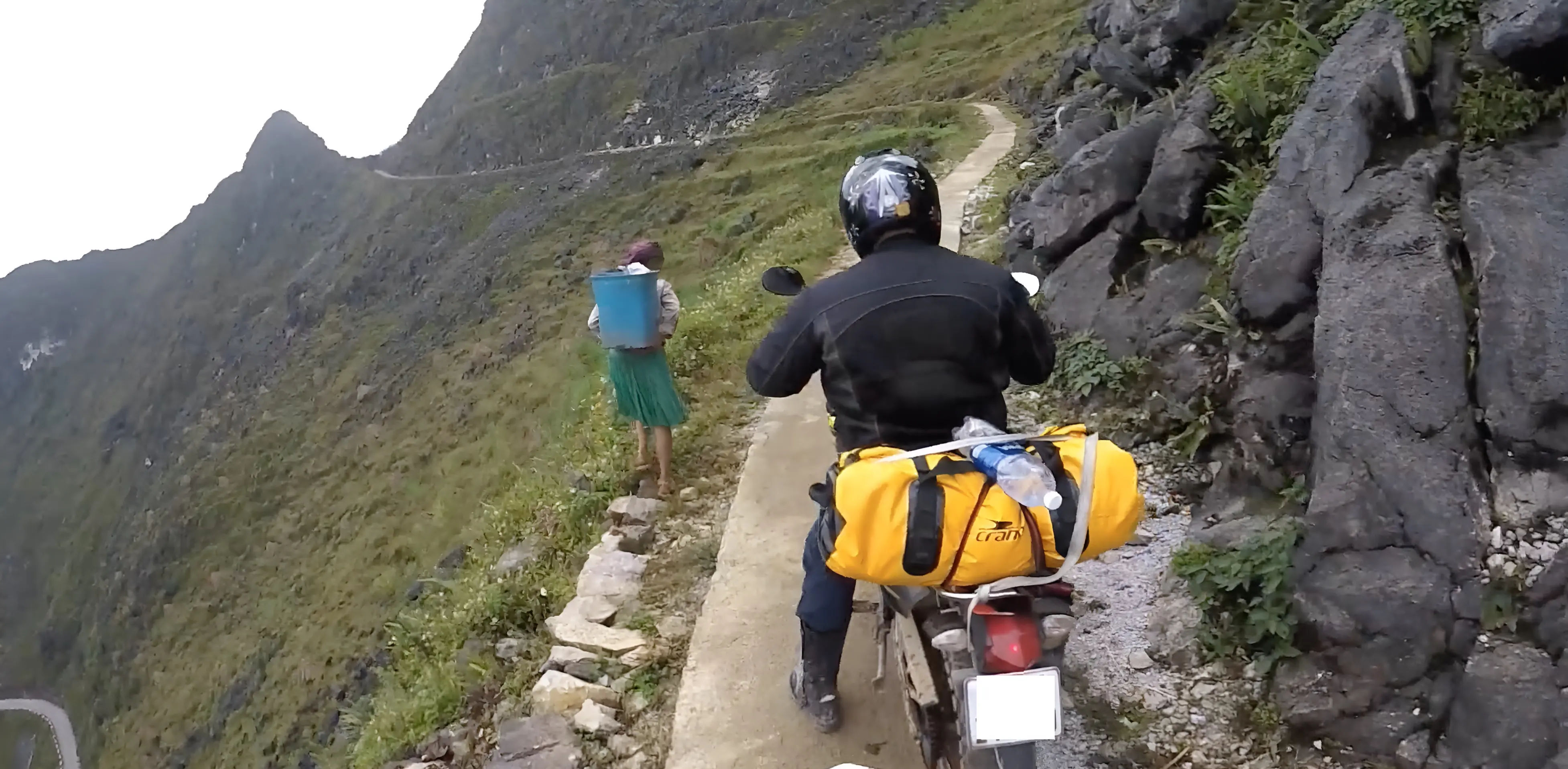
This was hardcore off-road riding. Gravel roads, patches of clay that got slippery in the rain, steep inclines where I had to keep momentum or I’d lose traction. Challenging as hell but worth every second. The terraced rice fields stretched out below me with nobody else around.
Remote villages where kids ran out to wave at me. This is what I came for. Ride slowly, don’t brake hard on loose surfaces, and keep your weight centered on the bike. If you’re not comfortable with off-road riding, skip this section and take the highway. But if you can handle it, this route shows you Ha Giang without the tour groups.
- Check out street vs off-road enduro bikes
Thon Tha to Yen Minh
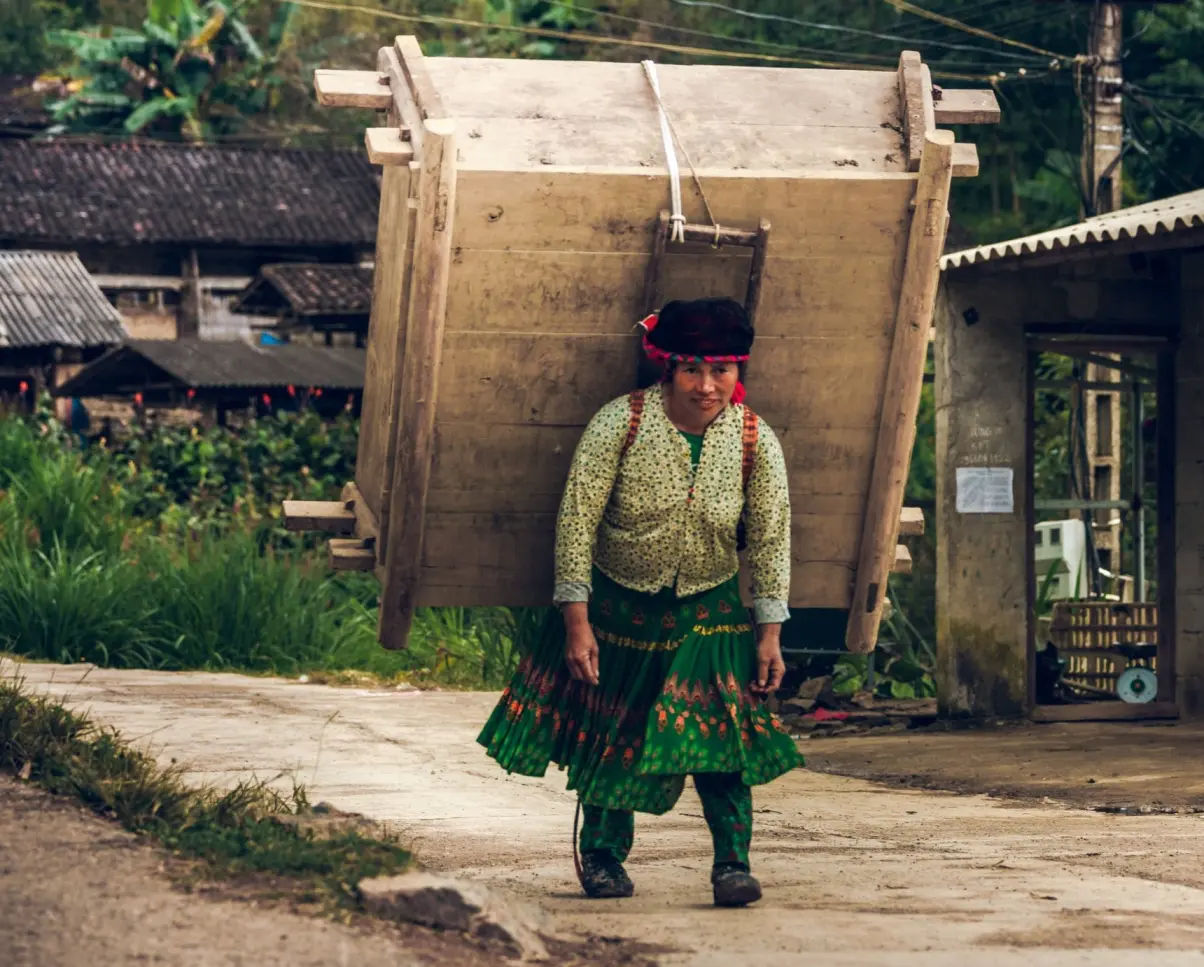
The roads improved here, mostly decent pavement with some rough patches. Less traffic than the main route, stunning karst mountains rising straight up from the valleys. You wind through ethnic minority villages where people are just going about their daily lives, not performing for tourists.
The riding is moderate difficulty. Anyone with basic motorbike skills can handle this section. I stopped at several viewpoints that weren’t marked on any map, just pulled over when something looked good.
Yen Minh to Dong Van
This stretch is one of the most beautiful sections of the whole loop. Smooth mountain roads, sharp cliffs dropping down to canyons, and traditional villages built into the hillsides. The riding is easy here, well maintained surfaces, clear roads.
You can relax a bit and just enjoy the scenery. Lots of photo opportunities. This is where the famous landscape photos come from. Even the main route through here is spectacular.
- Check out motorbiking in Dong Van Mountains
Dong Van to Meo Vac
The highway here is in great condition with guardrails and wide lanes. Easy riding but still gorgeous.
Ma Pi Leng Pass is the highlight, the road carved into the cliff face high above the Nho Que River. Everyone stops here for photos. The pass can get crowded with tour groups around midday. I rode through early morning and had it mostly to myself. This section doesn’t challenge you much as a rider, but the views make up for it.
Meo Vac to Du Gia
Good roads overall, but I took a detour to visit a cave system that required riding down a narrow village path.
That path turned into off-road conditions, gravel and mud, but it led to hidden waterfalls and cave entrances with zero tourists. Worth the extra effort. The main route from Meo Vac to Du Gia is straightforward and well maintained. Take the side trips if you see interesting paths branching off.

Du Gia Back to Ha Giang
The main highway here is boring. Flat, straight, just getting you back to the city. I took a rural detour instead, following backroads through villages. More waterfalls, thick green jungle, authentic village life. The road quality varies, some sections are paved and smooth, others are rough dirt roads.
This detour added two hours to my day but gave me better riding and better scenery than the highway. If you’re tired and just want to finish, take the highway. If you’ve got energy left, explore the backroads.
Dealing with Police Checkpoints around the Ha Giang
Police checkpoints appear mostly within 50 kilometers of Ha Giang city, especially when you’re heading out or coming back in. They operate from about 9 AM to 7 PM. After dark they’re gone. Days one through three riding in remote areas, I never saw police. Day four getting close to Ha Giang city, I got stopped twice.
First checkpoint, the cops were corrupt and looking for money, I saw they asked every one to pay. I had my IDP and my regular license, both valid, but they still tried to shake me down. I told them my embassy confirmed the IDP is legal in Vietnam. I mentioned my travel insurance covers motorbike accidents, which implies I’m riding legally. They argued for ten minutes, then let me go without paying anything. Stay calm and polite but don’t just hand over money immediately.
Second checkpoint was fine, just a quick look at documents and they waved me through. The key is having your IDP. Without it, you’ll probably pay bribes at multiple stops. Ride early morning before 9 AM or late evening after 7 PM to avoid checkpoints entirely. If you do get stopped, be respectful but firm. Mention your embassy or insurance if they push for money. Sometimes it works, sometimes you might still pay a small amount, but it’s better than paying full fake fines at every stop.
FAQs: Solo Motorbike Travel Experience in Ha Giang
Do you need an easy rider for the Ha Giang ride?
No. If you can ride a motorbike competently, go solo. Easy riders often drive recklessly on poorly maintained 110cc bikes, well, they’re catered to backpackers only. Ride your own bike and control your own pace. Only consider a guide and tour, if you’re looking for a quality and an entirely different experience, like Big Bike Tour experience
How hard is to drive the Ha Giang Loop solo?
Moderate to challenging depending on your route. The main highway is easy with paved roads and guardrails. Backroads get tough with gravel, mud, steep climbs, and no safety barriers. You need basic motorbike skills, confidence on mountain roads, and the ability to handle your bike when tired. Weather changes constantly and help isn’t always nearby.
How much money do you need for the solo ride Ha Giang?
Your budget depends entirely on your riding style and comfort expectations:
Backpacker Style (Basic Loop)
- Around 2,000,000 VND per day (roughly $77 USD)
- Includes: simple guesthouse bed, basic local meals, fuel
- Four days total: 8,000,000 VND ($308 USD)
- Plus scooter rental: 600,000-1,000,000 VND for the trip
Big Bike Adventure Riders
- $150-300 USD per day depending on your setup
- Covers: quality accommodation, quality meals, 150 -500cc motorbike, guide
- Four days total: $600-1,200 USD
- Higher end includes nicer hotels, restaurants, entry fees, off-road ride and more
Final Recommendations fo solo ride along the Ha Gaing
Best roads are the backroads, rough and challenging but that’s where the real Ha Giang experience lives. Worst roads are the main highway, safe but completely dull. Police risk is low except near Ha Giang city. If you’re comfortable with off-road riding and handling your bike on loose surfaces, skip the highway sections whenever possible and explore village paths. That’s where you find the magic. The smooth tourist routes show you Ha Giang, the backroads let you feel it.
- Check out Vietnam best motorbike tours
About the Author
Hamid is an adventure rider who tackled the Ha Giang Loop solo, choosing backroads over standard tourist routes. With experience handling off-road terrain and steep mountain passes, he rode through northern Vietnam’s challenging landscapes on a CRF300L as well as BMW GS & his own ride, the mighty Tiger 1200. His approach focuses on real riding conditions, practical gear, and navigating independently without guides. Hamid shares honest insights from his journey through Ha Giang’s remote villages, police checkpoints, and hardcore off-road sections that most travelers skip.