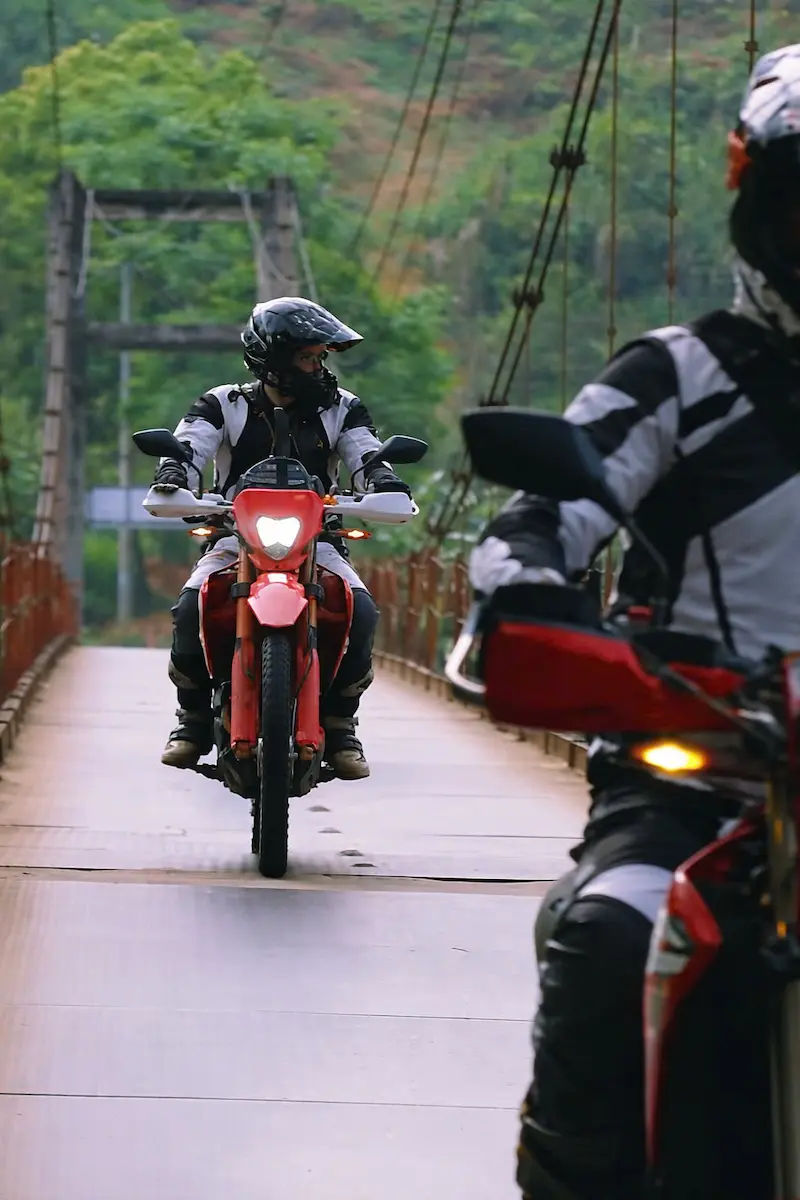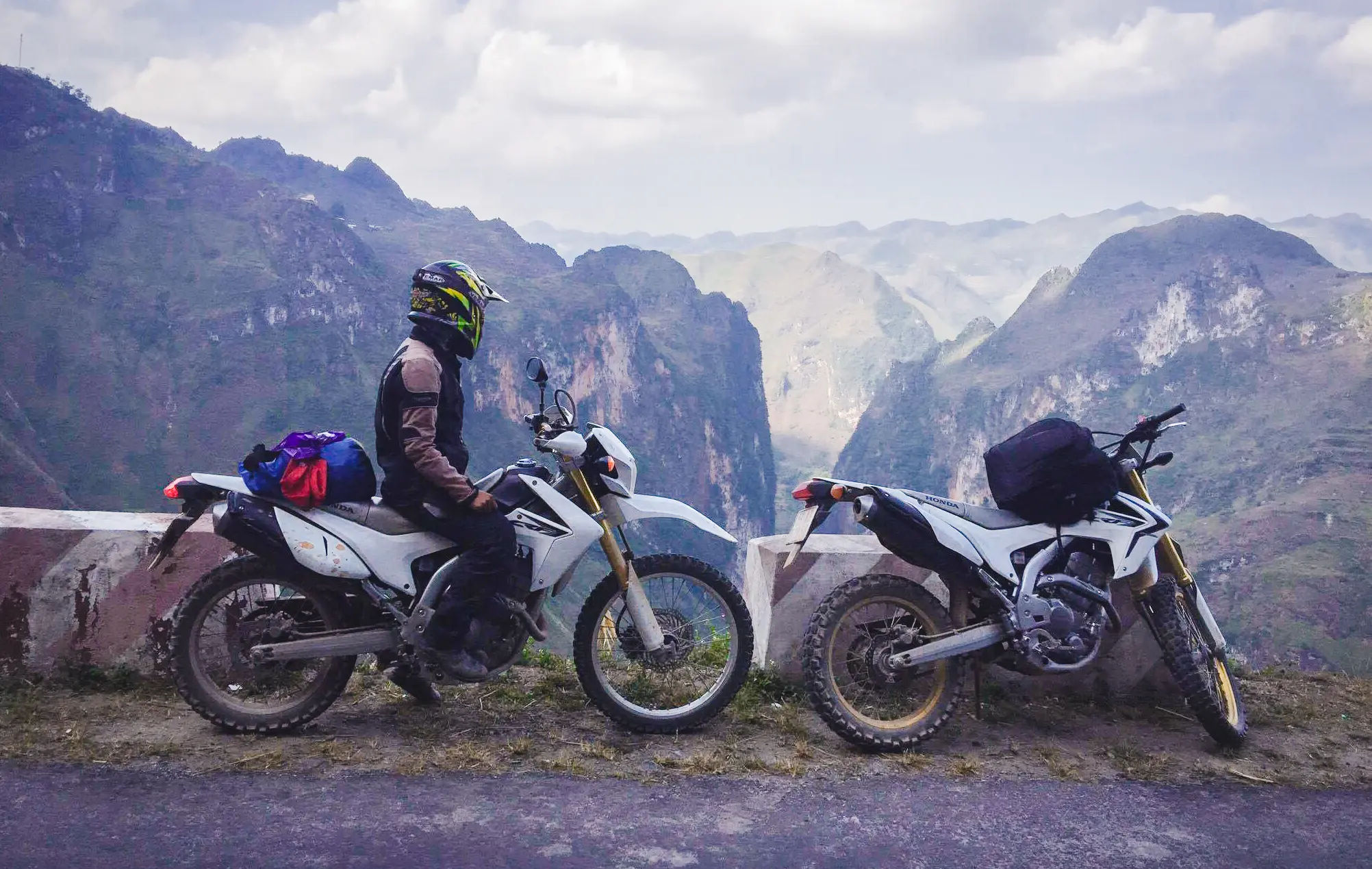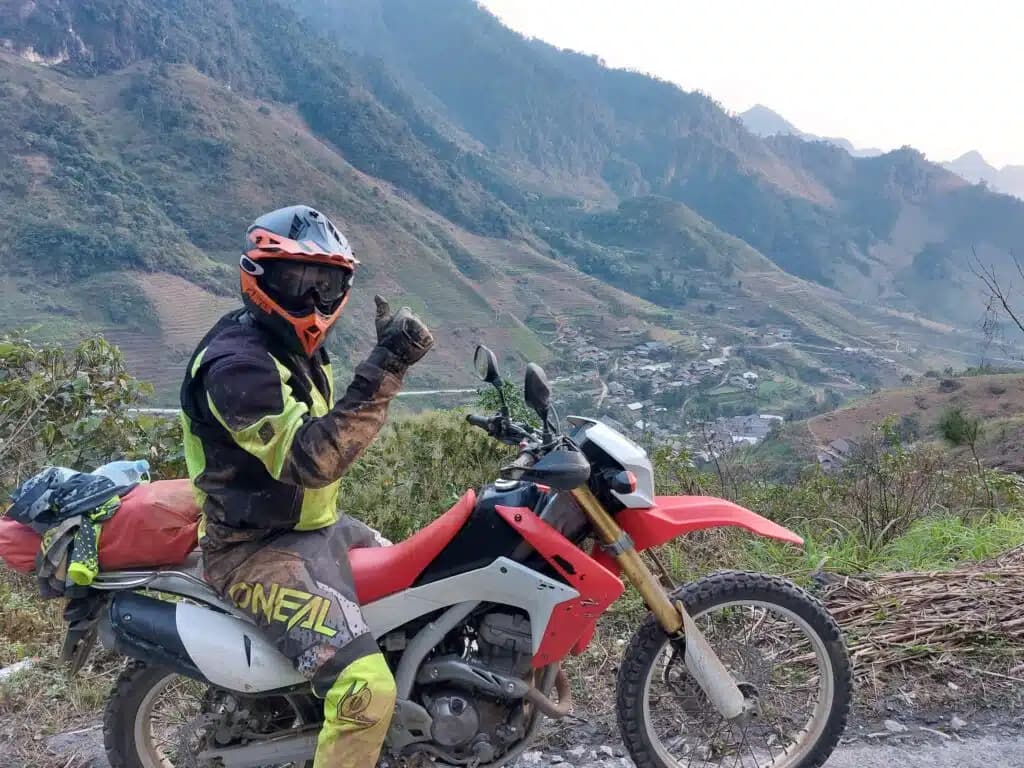
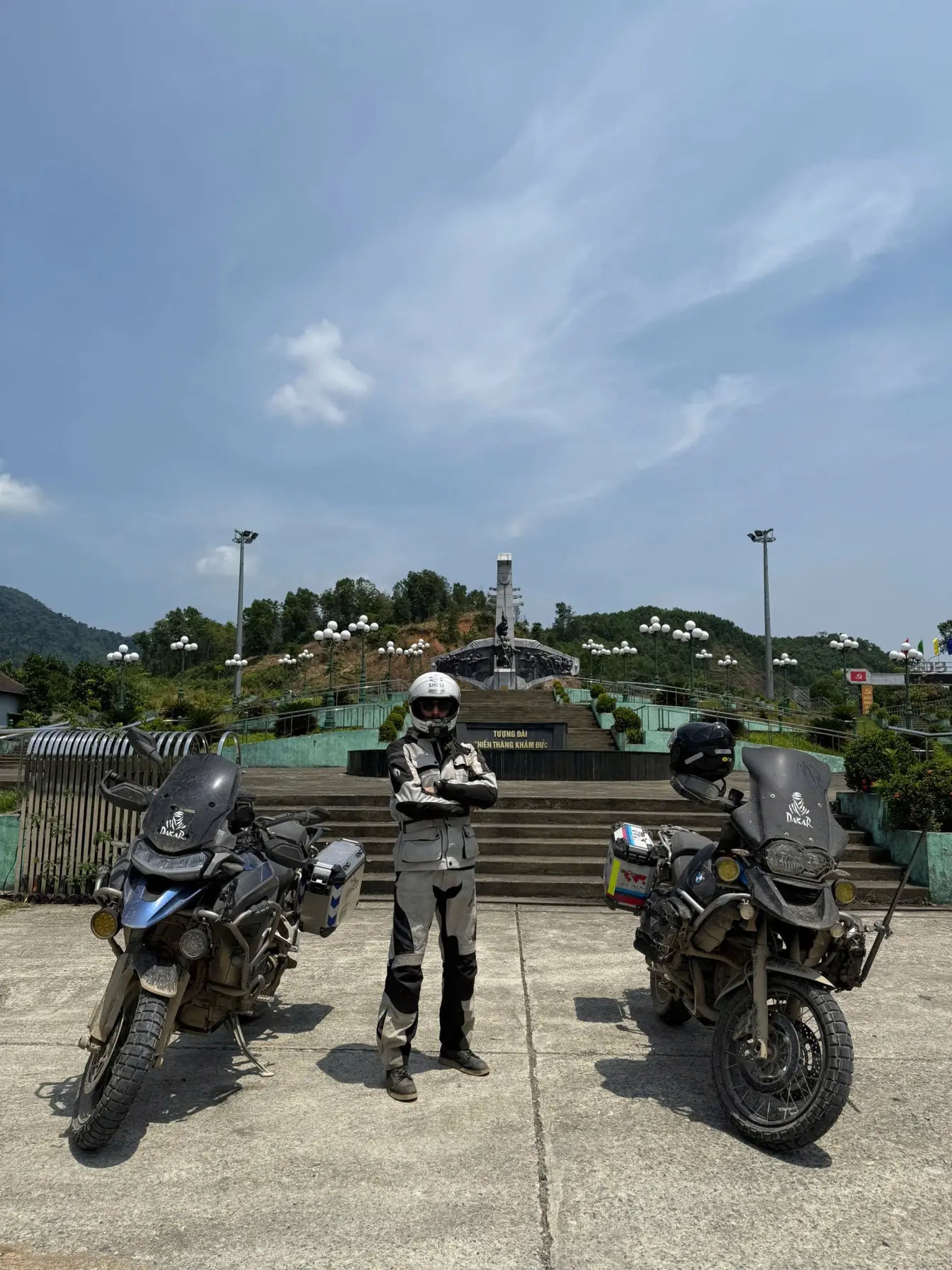
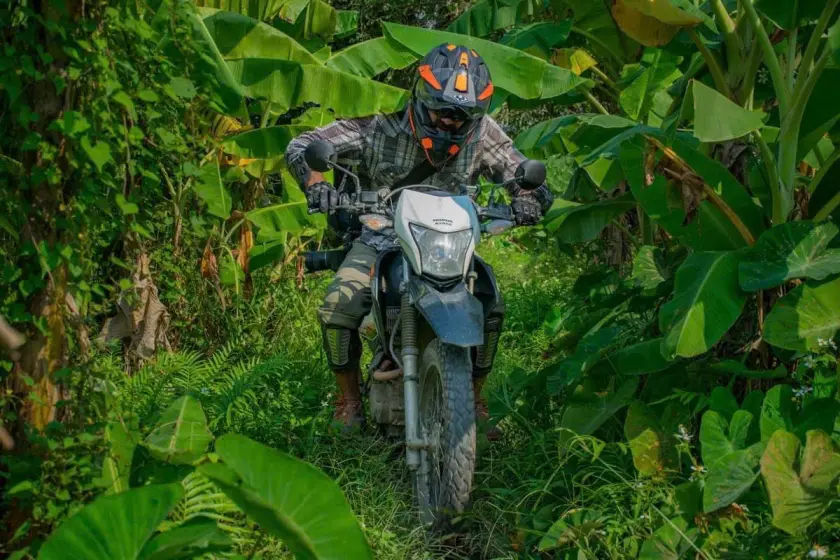
Riding motorbike in Vietnam can look wild at first, but beginners can ease into it with the right habits. Start with the basics: wear a proper helmet (full-face if you can), long sleeves, long pants, closed shoes, and gloves to protect yourself from sun, debris, and small accidents. Practice in quiet areas to get used to the bike, especially braking and using your horn, which is simply a friendly “I’m here!” in Vietnam. On the road, stick to the right, stay alert, and move with the traffic instead of fighting it. Use hand signals so others know what you’re doing, give way to big vehicles, and watch out for kids, animals, and potholes. Follow the speed limits, and never ride at night or after drinking.
- Check out Speed limits and traffic laws in Vietnam
Basic Riding Rules in Vietnam
As mentioned above,riding motorcycle in Vietnam feels easier once you understand the basic rules that locals follow every day. The first thing you notice is how everyone moves like one big slow-flowing river, so try to match their pace instead of stopping suddenly.
Keep to the right, check your mirrors often, and use your horn as a gentle way to say you are passing or approaching a corner. Hand signals help too because many riders barely look at indicators. When you merge, ease your front wheel into the gap with steady confidence and other riders will naturally adjust. Give trucks and buses plenty of space since they expect smaller bikes to move around them. Most important, stay alert. Kids, chickens, dogs, and potholes can appear out of nowhere, and staying calm keeps you in control.
| Topic | Description |
|---|---|
| Is it hard to ride a motorcycle in Vietnam? | It feels challenging at first, but most beginners adjust once they learn the flow, use the horn, and ride predictably. |
| What is a QL road in Vietnam? | A QL road is a “Quốc Lộ,” or national highway. These are major connecting roads with faster traffic and more trucks. |
| Tips for Beginner Riders | Wear proper gear, practice in quiet areas, ride with the flow, use your horn, stay alert, and avoid night riding early on. |
Key Traffic Laws
Vietnam’s traffic laws might feel relaxed when you first look around, but they matter more than most beginners expect. You need a valid license that matches the bike you ride, and police do check, especially in cities and on main highways. Helmets are mandatory and a good full-face one saves you from sun, rain, bugs, and the occasional flying pebble.
Speed limits change often, usually around 40 km/h in towns and 60 km/h outside, so keep an eye on signs because cameras are becoming more common. Red lights are real stops, even if a few impatient riders sneak through. Right turns on red are allowed only when a sign shows it. One rule locals follow even more than the written law is giving way to anything bigger than them. Respect that, ride steady, and you will blend into the flow much faster.

Choosing the Right Motorbike for Beginners
Picking your first motorbike in Vietnam is easier when you focus on comfort and confidence, not power. Most new riders start with something light, simple, and easy to control in slow city traffic. Automatic scooters like the Honda Vision or Yamaha Janus are popular because you can just twist and go without worrying about shifting gears. If you want a bit more stability, semi-automatic bikes like the Honda Wave or Future give you better control on hills and rough roads, and they’re cheap to maintain almost anywhere in the country.
Before you decide, sit on the bike and check whether both feet touch the ground comfortably. A bike that feels too tall or heavy becomes stressful fast, especially when navigating tight alleys or crowded intersections. Test the brakes, the mirrors, and the throttle response. You want something predictable that helps you focus on the road rather than fighting the machine.
Recommended Dual-Sport Bikes
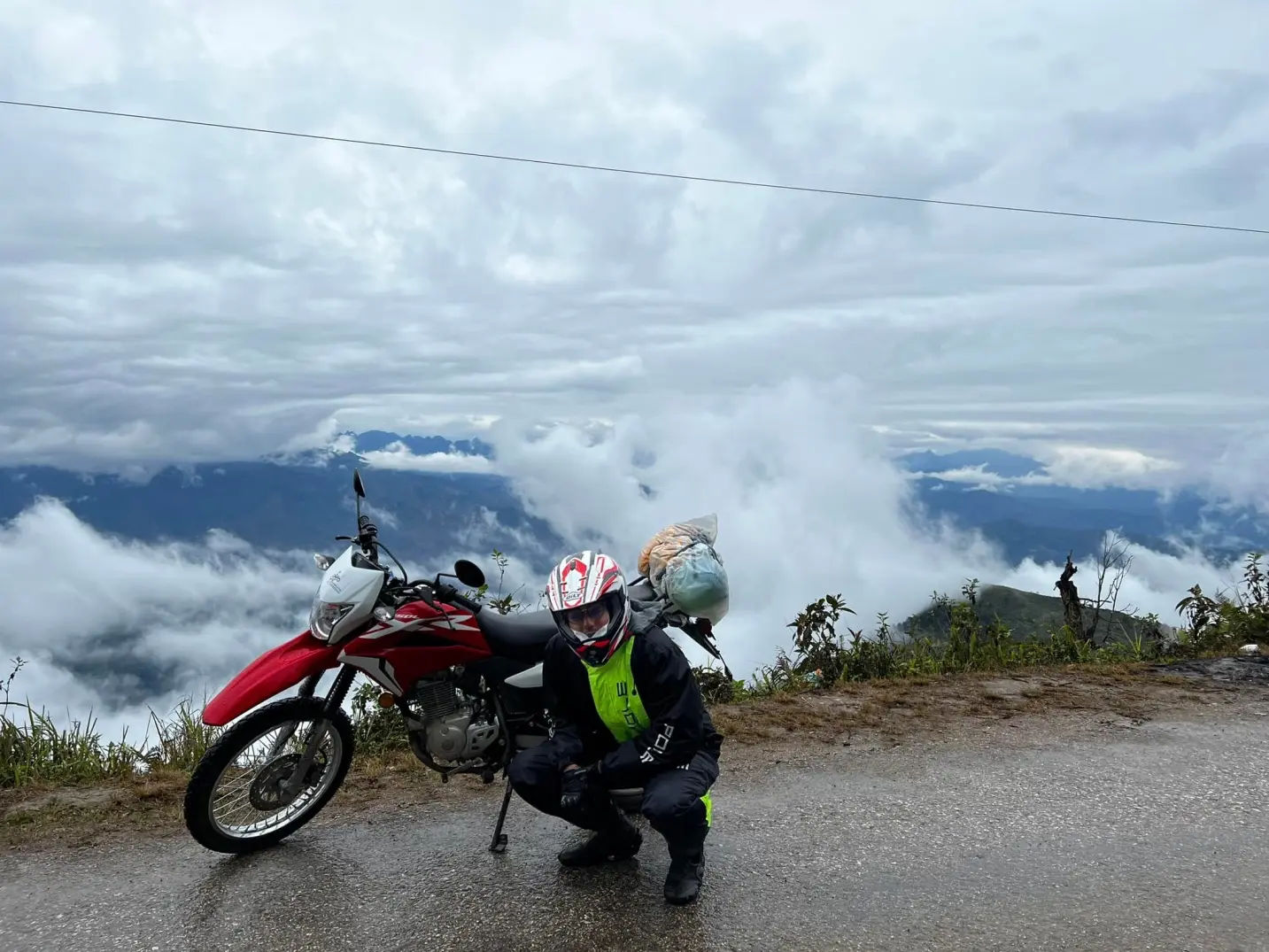
If you plan to mix city riding with weekend trips into the mountains, a dual-sport bike makes the journey far more enjoyable. These bikes handle potholes, gravel, and steep village roads better than scooters, yet they are still light enough for beginners. The Honda XR150 is the go-to choice for many new riders.
It is simple to maintain, comfortable for long rides, and easy to control on rough terrain. Another solid option is the Yamaha WR155, which has a bit more power but still feels friendly for learners. Both bikes offer higher ground clearance that keeps you from scraping the underside on rocky trails, and their upright riding position gives you a better view of the road ahead. If you rent first, you will quickly feel the difference a dual-sport makes when you leave the main highways and start exploring rural Vietnam.
Essential Safety Tips
Safety on a Vietnamese motorbike starts long before you turn the key. The roads can surprise you at any moment, so building good habits from day one makes a huge difference. Always wear a proper helmet that actually fits your head, not the flimsy street-market ones that bounce around. Long sleeves, long pants, and closed shoes protect you from sunburn and small accidents, which are more common than people think.
Keep your mirrors wide so you can see scooters squeezing in from both sides. When you ride, stay loose on the handlebars and look far ahead, because traffic tends to shift in waves rather than in clean lanes. Use your horn as a friendly “coming through,” especially near corners or when overtaking slower riders. Avoid riding at night until you are fully comfortable; visibility drops fast and many vehicles use weak lights. Staying alert, predictable, and calm will always keep you safer than trying to be fast.
Common Beginner Mistakes
Most beginners who attempt to ride in Vietnam, make the same handful of mistakes, usually because they try to ride the way they would back home. The first is hesitating too much. If you stop in the middle of an intersection, you confuse everyone around you. Move steadily, even if it’s slow. Another common mistake is gripping the handlebars too tightly, which makes the bike feel shaky. Staying relaxed helps you react to sudden changes around you.
Many new riders also forget how important the horn is here. Locals expect you to use it to announce your presence, not as a sign of anger. Another issue is following Google Maps too literally. Sometimes the app sends you down tiny alleys or roads that don’t feel safe, so trust your eyes and choose the clearer route. And finally, beginners often ride at night too soon. It is better to build confidence in daylight before dealing with poor lighting and unpredictable traffic.
Braking Issues
Braking is where many beginners run into trouble because Vietnamese traffic rarely moves in straight lines. You need smooth, steady braking rather than sudden squeezing. Most bikes here rely heavily on the front brake, but slamming it can cause the wheel to lock, especially on dusty roads. Practice using both brakes together by gradually pulling the front while pressing the rear.
It keeps the bike balanced and helps you stop without skidding. Another habit to build is looking where you want to go while braking. If you stare at the obstacle, you may drift toward it. In the city, expect quick stops from riders in front of you, so keep a safe distance instead of tailgating. On downhill mountain roads, brake early and lightly instead of dragging the brakes the whole way down. With consistent practice, stopping becomes smooth and predictable, even in crowded traffic.
- Checkout the lesser known routes along the Ha Gaing loop
Practice on Simple Routes
The best way to build confidence is by starting on simple, low-stress routes. Early mornings in quieter neighborhoods are perfect for practicing turns, slow-speed control, and gentle braking. Choose roads where you can ride without pressure from buses or fast motorbikes.
As you get more comfortable, try short stretches with light traffic to learn how to merge and maintain a steady pace with local riders. Practicing small loops around your block helps you get used to the flow without worrying about getting lost. Once you’re confident with basic movements, try roads with a few intersections so you can learn how traffic “negotiates” itself in Vietnam. Don’t rush to tackle busy roundabouts or highways. Build up slowly, one new challenge at a time, until you feel fully in control.
- Check out 8 day Northwest Vietnam motorbike tours
FAQs: Beginner Guide to Motorbiking in Vietnam
Is it hard to ride a motorcycle in Vietnam?
It can feel challenging at first because the traffic looks chaotic, but most beginners adjust quickly. Once you understand the local flow, use your horn, and ride predictably, it becomes much easier. Starting in quiet areas helps you build confidence before joining busy streets.
What is a QL road in Vietnam?
A QL road sign you see on google map or in the roads in Vietnam, is a “Quốc Lộ,” which means national highway. These are major roads connecting cities and provinces. They usually have heavier traffic, faster speeds, and more trucks, so beginners should take extra care or avoid them until they’re more confident.
Best motorbike tips for beginners in Vietnam?
Wear proper safety gear, start practicing in quiet areas, use your horn as a friendly signal, ride with the flow, keep to the right, and be predictable with your movements. Stay alert for potholes, kids, and animals, and avoid riding at night until you’re fully comfortable.
Conclusion: Riding in Vietnam for beginners
Riding a motorbike in Vietnam becomes easier once you know where to practice, what gear to wear, and how the traffic naturally flows. Start in quiet neighborhoods where you can learn at your own pace before moving into busier streets. Ride during the day when you can clearly see obstacles and understand how locals move around each other.
Pay attention to why certain habits matter, like using your horn to signal presence or keeping to the right to let faster bikes pass. With steady practice, good awareness, and the right mindset, Vietnam’s roads become far less intimidating and much more enjoyable to explore.
- Start your adventure by looking at our best motorbike tours in Vietnam
About the author
Hamid is a traveler and motorbike rider who has spent years exploring Vietnam’s roads, markets, and hidden corners. He writes practical, experience-based guides to help newcomers feel confident and prepared, whether they’re navigating Hanoi’s tight alleys or cruising along coastal highways. His goal is simple: make travel in Southeast Asia easier to understand through clear advice, real observations, and local insight.