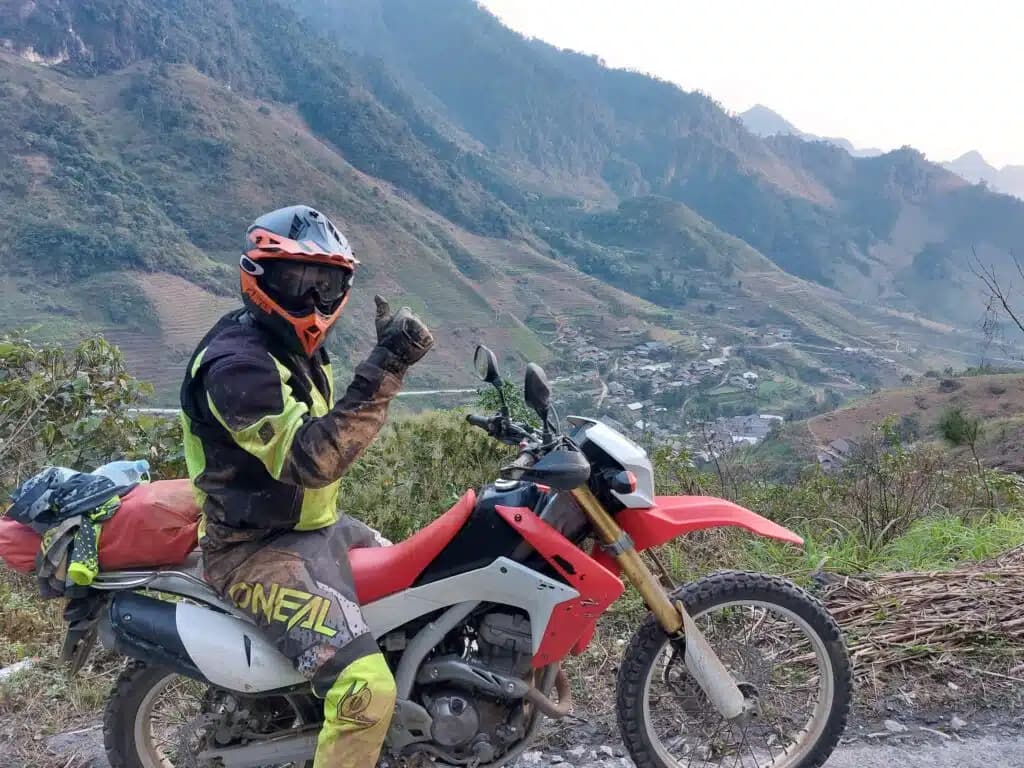
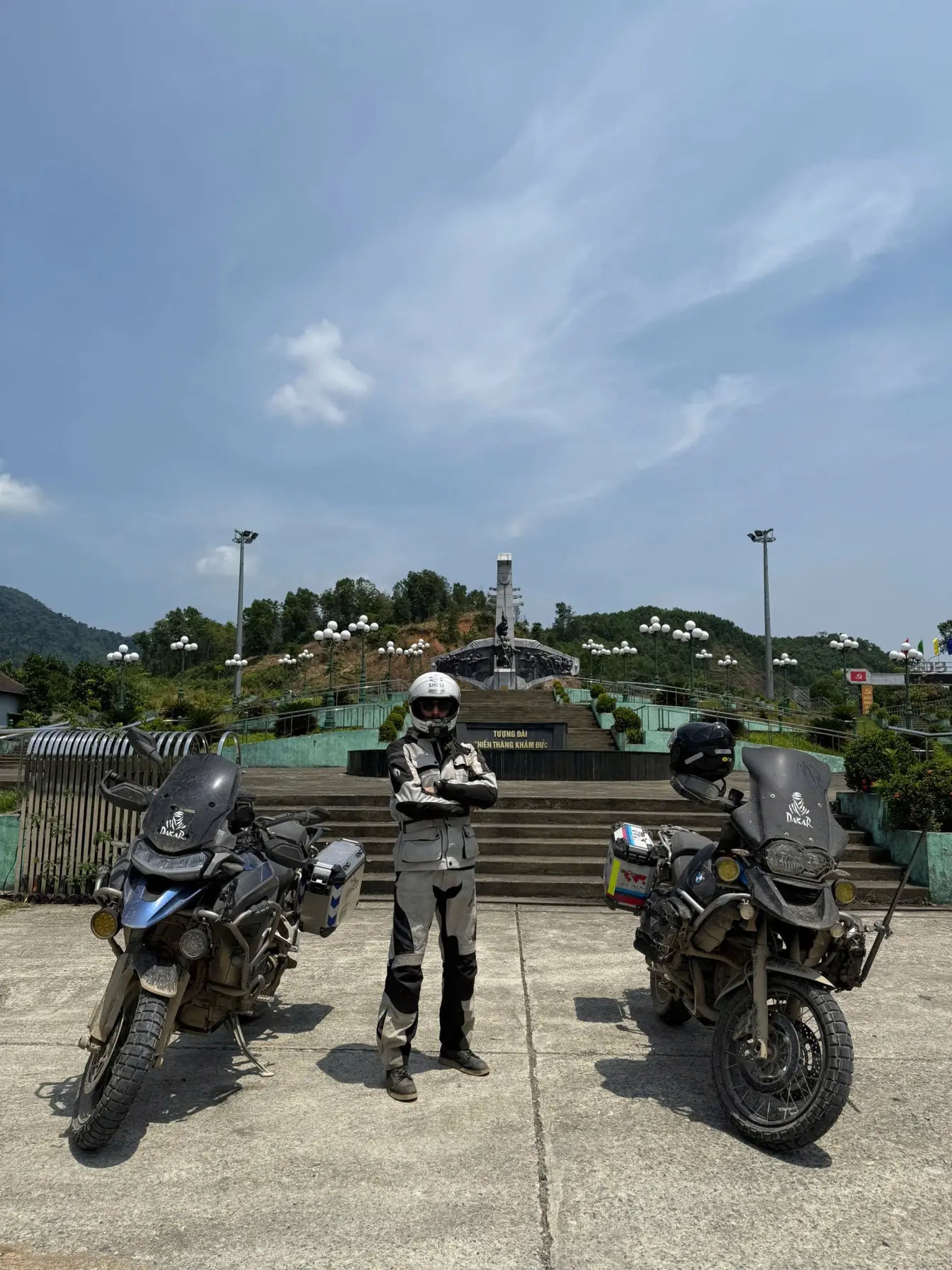

Southeast Asia delivers exceptional motorbiking adventures along winding river valleys and dramatic bridge crossings. Vietnam’s Ha Giang Loop showcases the stunning Nho Que River canyon at Ma Pi Leng Pass, while the Mekong Delta offers unique waterway navigation across the Tien and Hau Rivers, including crossings at Can Tho Bridge and My Thuan Bridge. Laos’ Thakhek Loop follows Mekong tributaries through limestone karst, and the Bolaven Plateau features waterfall-rich routes near the Xe Kong River. Thailand’s Mae Hong Son Loop winds through mountains, crossing the Pai River and Salawin River with over 1,800 curves connecting hill tribe villages across jungle terrain.
Southeast Asia’s Top River Crossing Bridges for Motorcycle Adventures
The thrill of riding across a river bridge combines engineering spectacle with natural beauty, and Southeast Asia offers some spectacular crossings. Vietnam’s Can Tho Bridge spanning the Hau River stands as the region’s longest cable-stayed bridge at 2.75 kilometers, offering sweeping views of Mekong Delta life below.
Further north, the Hai Van Pass route includes viaduct sections hugging cliffs above the South China Sea near Da Nang. In Laos, the Japanese Bridge (Luang Prabang Bridge) crosses where the Nam Khan meets the Mekong, providing photo opportunities with mountain backdrops.
Thailand’s Nawarat Bridge in Chiang Mai spans the Ping River through the old city center, while the Saphan Mon (Mon Bridge) in Sangkhlaburi stretches 850 meters across Songaria River as one of the world’s longest wooden bridges. Cambodia’s Kizuna Bridge over the Mekong at Neak Loeang handles Highway 1 traffic between Phnom Penh and Vietnam.
- Check out Best rest stops in Northern Vietnam for motorbike riders
- See 12 day northern Laos motorbike adventure
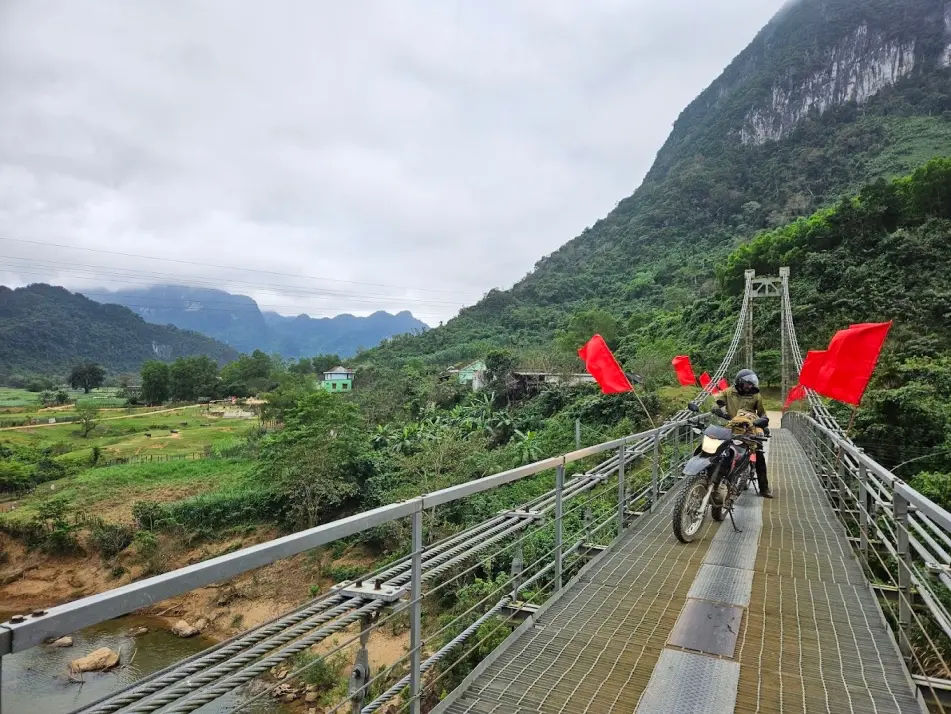
Iconic Bridges That Every Motorcyclist Should Ride
Some bridges transcend mere infrastructure to become destination rides themselves. Vietnam’s Thi Vai Bridge connecting Long Thanh to Cat Lai crosses the Thi Vai River with dramatic cable-stayed architecture visible for kilometers. The Golden Bridge near Da Nang, held by giant stone hands, offers a short but unforgettable ride 1,400 meters above sea level with Ba Na Hills views.
Northern Vietnam’s Bac Luong Bridge over the Red River represents colonial French engineering still serving modern traffic. In Thailand, the Bridge over the River Kwai in Kanchanaburi carries deep World War II history along the Death Railway route, where riders pause at memorials before continuing. Laos’ First Thai-Lao Friendship Bridge spanning the Mekong between Nong Khai and Vientiane serves as a symbolic gateway between nations.
Myanmar’s U Bein Bridge near Mandalay, though officially closed to motorbikes, remains a pilgrimage site where riders park to walk the 1.2 kilometer teakwood span across Taungthaman Lake at sunset, mingling with monks and locals in one of Southeast Asia’s most photogenic settings.
- Check our: Lesser-known routes in Northern Vietnam for riders
- 7 Day motorcycle adventure tour in far North Vietnam
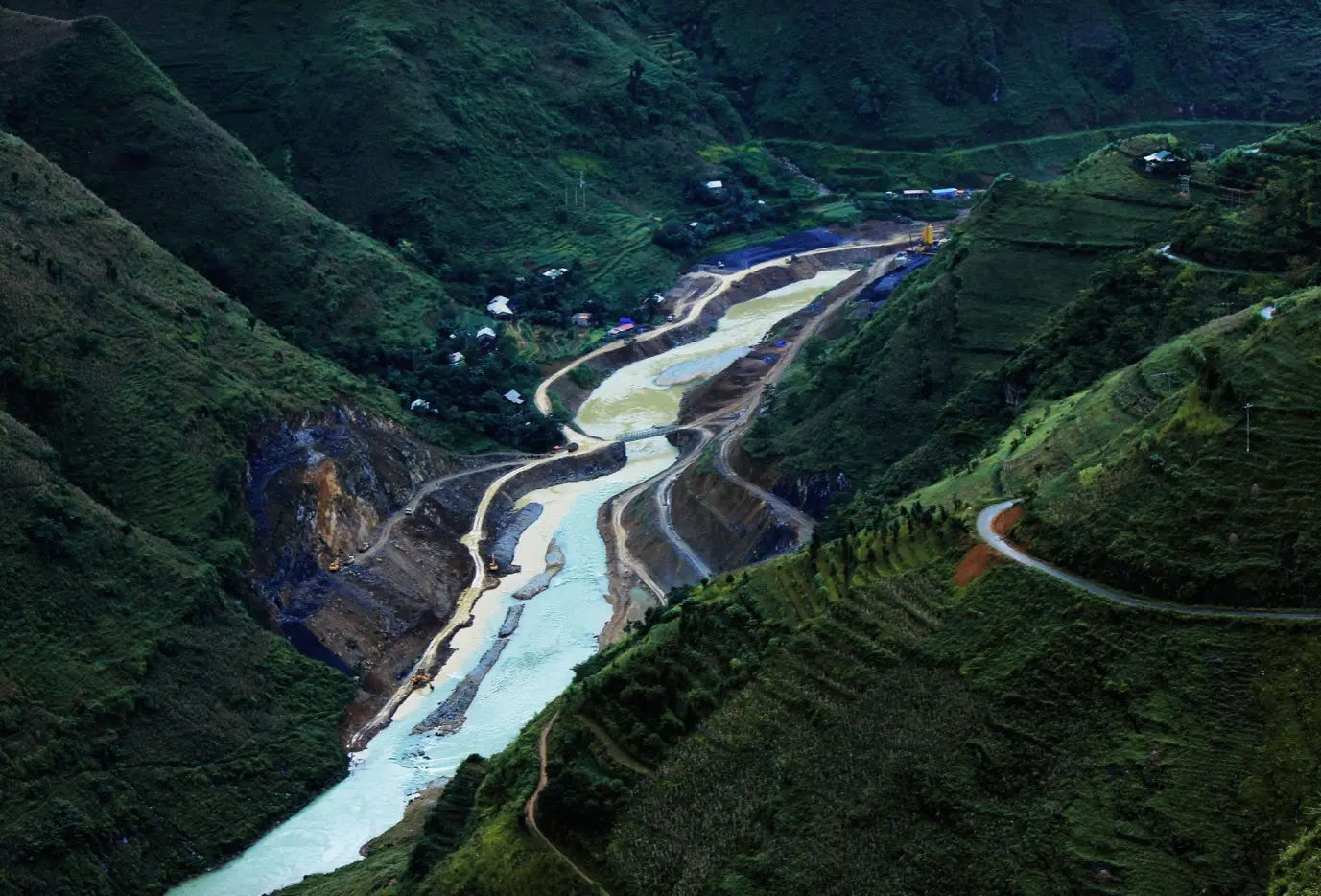
Historic vs Modern Bridges: What Makes Them Special
Historic bridges carry stories in their weathered stones and creaking timbers, while modern spans showcase engineering ambition. Vietnam’s Long Bien Bridge over the Red River in Hanoi, built by French engineers in 1903, still carries motorbike traffic alongside trains, its steel trusses bearing bullet holes and bomb scars from multiple wars. Riding across feels like traveling through history itself.
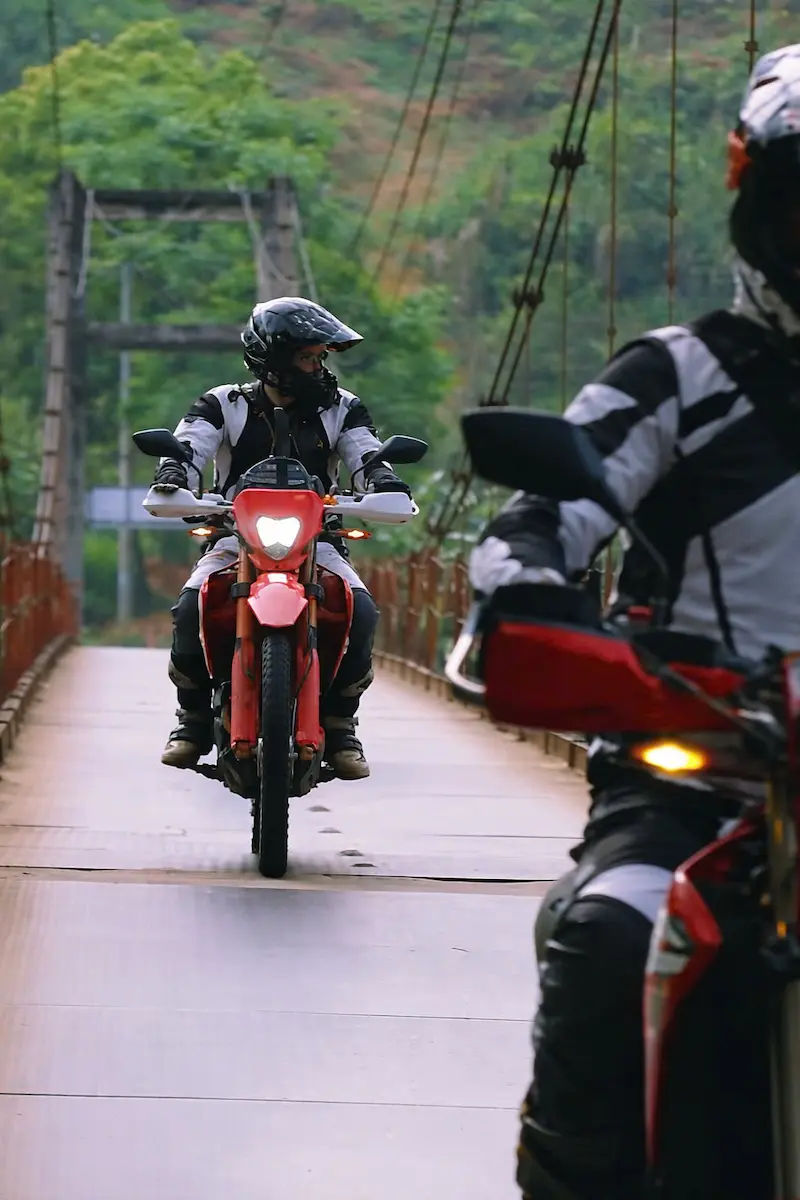
Contrast this with the sleek Thuan Phuoc Bridge in Da Nang, Vietnam’s longest suspension bridge at 1.85 kilometers over the Han River, where smooth asphalt and LED lighting create an entirely different experience. Laos preserves bamboo and wooden bridges across smaller tributaries where locals still collect tolls, offering authentic rural crossings.
Thailand’s Rama VIII Bridge over the Chao Phraya River in Bangkok represents contemporary cable-stayed design with a distinctive single pylon, popular for night rides when illuminated. Historic bridges demand careful navigation around potholes and narrow lanes, rewarding riders with character and authenticity. Modern bridges provide speed, safety, and often spectacular views from greater heights. Both types deserve attention in any serious riding itinerary across the region.
- Check out: Comparing Ha Giang & Sapa routes by difficulty
- Sample ride: 14 day motorbike ride from Saigon to Hanoi
Safety Tips for Motorbiking on River and Bridge Routes
Riding along rivers and across bridges in Southeast Asia requires different preparation than standard highway touring. Weather patterns near waterways change rapidly, with morning fog common along the Mekong River valleys and sudden afternoon storms rolling up river canyons in places like Ha Giang. Always check your bike’s brakes before descending to river crossings, as many approach roads feature steep grades.
The Thakhek Loop in Laos includes several river fords during dry season where you’ll need to assess water depth before committing. Carry a waterproof phone case and keep important documents sealed, as spray from rivers can soak you unexpectedly on windy bridge crossings. Local knowledge matters enormously. Chat with guesthouse owners about recent bridge conditions, as monsoon damage can make older structures unsafe.
Vietnamese rural bridges sometimes have weight limits posted only in Vietnamese, so learn to recognize the characters. Thailand’s wooden bridges may close during heavy rains when rivers rise. Always reduce speed approaching any bridge, especially in rural areas where livestock, pedestrians, and market vendors often use bridges as gathering points rather than just crossings.
What to Carry on River Routes
Pack strategically for river valley riding where services spread thin between towns. A basic toolkit becomes essential when the nearest mechanic sits two hours away across three river crossings. Include tire repair supplies, spare inner tubes, and a pump, as sharp rocks along riverbeds puncture tires frequently. Bring extra engine oil since dusty riverside roads accelerate consumption.
A quality headlamp or flashlight proves invaluable when exploring caves like Kong Lor on the Thakhek Loop or when unexpected delays leave you riding after dark along unlit riverbanks. Water purification tablets let you safely refill from streams rather than riding dehydrated between villages. Local SIM cards with data allow GPS navigation, crucial where riverside roads fork without signage.
Pack a lightweight rain jacket even during dry season, as river valleys create their own microclimates. A basic first aid kit should include antiseptic for cuts from falls on wet bridges. Ziplock bags protect electronics from moisture. Energy bars or dried fruit sustain you between meal stops in remote areas. Finally, carry more cash than usual, as riverside villages rarely have ATMs and some bridge tolls only accept local currency.
- Check out Routes with stunning natural views in Vietnam
- See 9 day Ho Chi Minh Road Ride form Hanoi to Hoi An
Bridge Crossing Hazards
Bridges present unique dangers that catch inexperienced riders off guard. Metal grating on older bridges like Long Bien in Hanoi becomes incredibly slippery when wet, causing bikes to slide unpredictably. Approach these slowly and avoid sudden braking or turning. Wooden plank bridges common in Laos and rural Thailand often have gaps between boards wide enough to catch a tire.
Ride carefully centered and maintain steady throttle rather than accelerating midspan. Strong crosswinds on high bridges like Can Tho affect stability, especially for lighter bikes and riders. Lean slightly into the wind and grip the tank firmly with your knees. Pedestrians and vendors use bridges as shortcuts and market spaces throughout the region. Expect children, dogs, and fruit sellers appearing suddenly. The transition from rough approach roads onto smooth bridge surfaces can cause loss of traction if you’re braking hard. Always brake before reaching the bridge deck. Some bridges have raised edges or barriers that create narrow lanes barely wider than your handlebars.
Go slow and don’t fixate on the barriers. Watch for oncoming traffic that drifts into your lane while drivers photograph river views. Finally, older bridges may have loose planks or damaged sections. If locals bypass certain lanes, follow their lead rather than assuming the whole bridge is safe.
- Check out Multi-day adventure routes in Northern Vietnam
- See North Vietnam and Ha Giang loop motorbike tour
Scenic River and Bridge Motorbike Routes
Southeast Asia’s most memorable rides follow rivers through landscapes that shift from jungle gorges to agricultural valleys to coastal deltas. The visual drama of water cutting through mountains creates natural corridors where roads cling to cliffsides or meander through rice paddies.
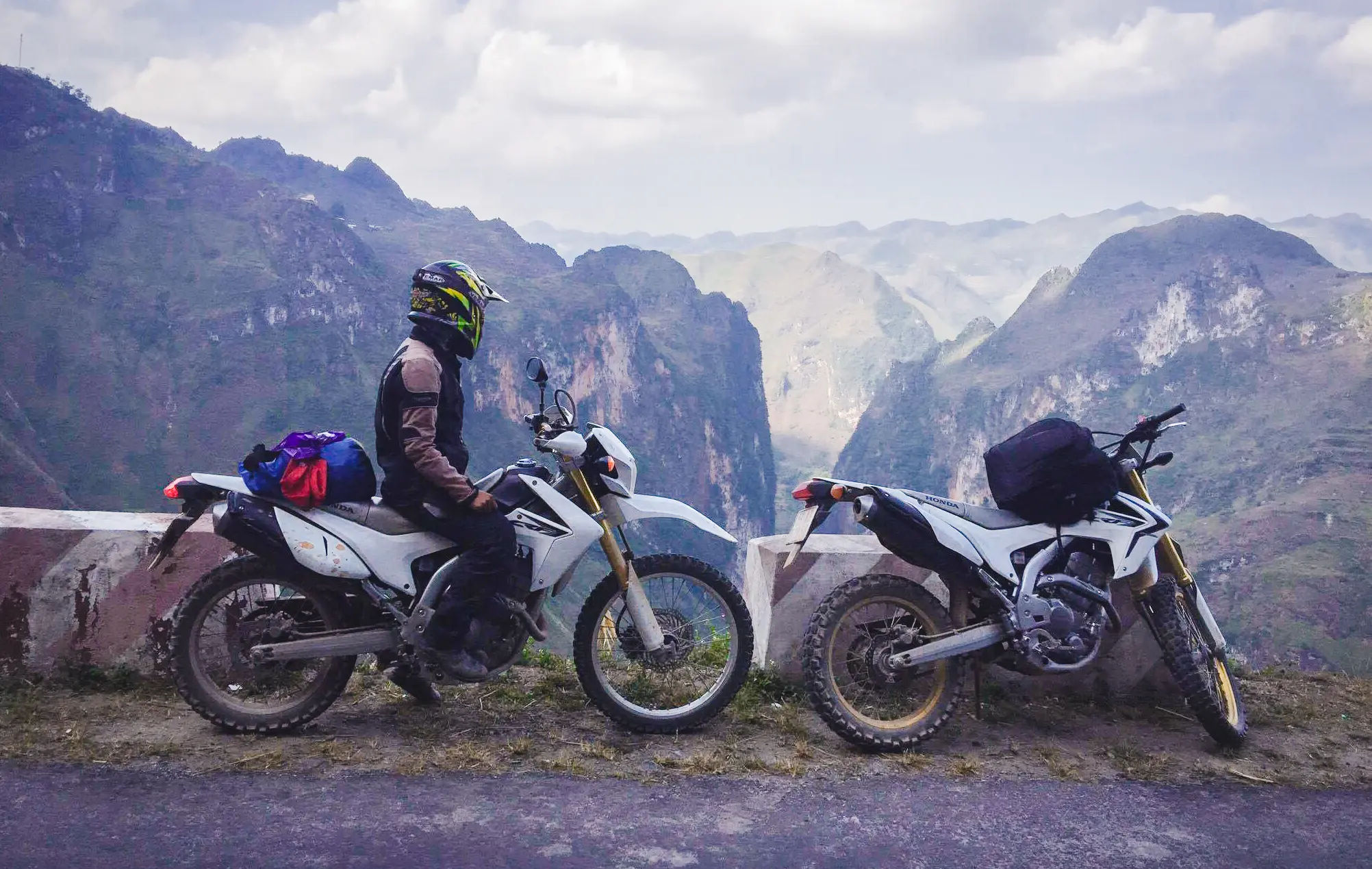
Vietnam’s route along the Nho Que River with a couple of wooden bridge locally known as the monkey bridge, at Ma Pi Leng Pass offers heart-stopping views from 1,500 meters above the turquoise water below, while the gentler Perfume River road from Hue toward the DMZ passes temples and royal tombs under shaded canopies. Laos’ Route 13 traces the Mekong from Vientiane to Luang Prabang, where the river widens and narrows through limestone formations.
Thailand’s Route 1095 follows the Pai River through valleys dotted with hot springs and bamboo bridges. Cambodia’s coastal road from Kep to Kampot runs alongside mangrove rivers where fishing boats cluster at sunset. The bridges themselves become scenic highlights, like the sunset views from My Thuan Bridge over the Tien River or the misty morning crossings of bamboo structures in northern Laos where local villagers wave from riverbanks below. These routes reward early starts when light reflects off water and river fog creates atmospheric conditions perfect for photography and pure riding joy.
Famous River Motorbike Routes in Your Region
Northern Vietnam’s rivers carve the most dramatic riding terrain. The Red River valley from Hanoi toward Sapa offers historical interest alongside natural beauty, passing through Yen Bai province where the river widens between terraced hillsides. The Black River (Da River) route through Mai Chau valley provides gentler riding through Thai and Muong villages, with the Hoa Binh Reservoir creating lake scenery. Further north, the Lo River accompanies riders through Ha Giang province before joining the Red River system.
Central Vietnam’s Thu Bon River road from Da Nang to Hoi An passes rice fields and fishing villages, popular for sunset rides. The Dong Nai River northeast of Ho Chi Minh City offers escape from urban chaos through rubber plantations and fruit orchards. In Laos, the Nam Ou River valley north of Luang Prabang provides adventurous riding on improved roads connecting remote villages, while the Xe Kong River in the south leads to waterfalls on the Bolaven Plateau.
Thailand’s Mae Kok River route from Chiang Rai to Thaton winds through mountainous Golden Triangle territory, and the Kwae Noi River road west from Kanchanaburi penetrates deep jungle toward Myanmar. Each route offers distinct character shaped by the river it follows.
- Check out Cross country motorbike tours: Hanoi to Ho Chi Minh City
- Beginner guide to ride a motorbike in Vietnam
Scenic Views: Waterfalls, Rapids, and Riverside Roads
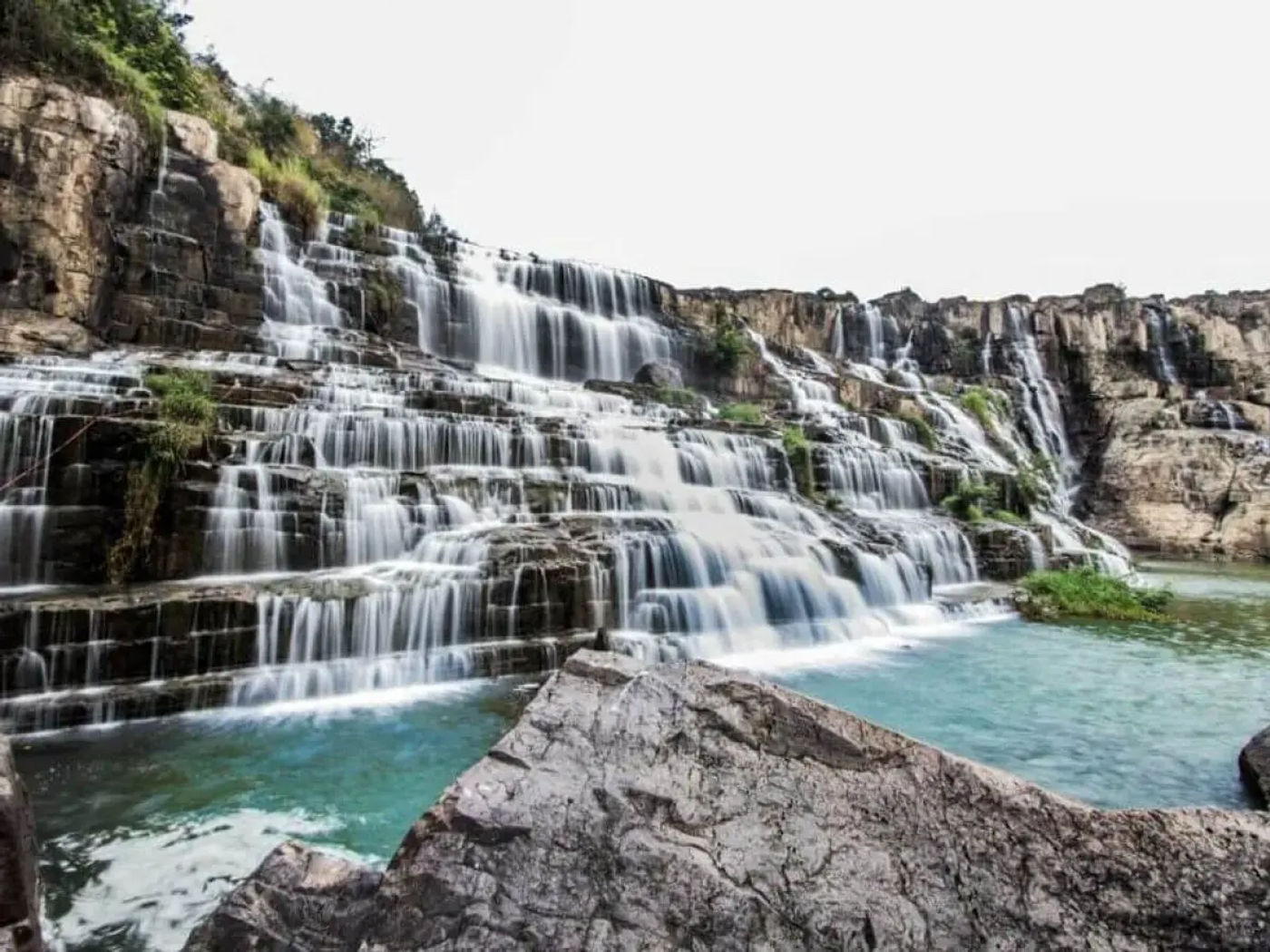
Waterfalls punctuate the best river routes, providing natural rest stops and swimming opportunities. The Bolaven Plateau in Laos concentrates spectacular falls within easy riding distance, including Tad Fane where twin streams plunge 120 meters into jungle, Tad Yuang with its wider curtain formation, and Tad Lo offering village guesthouses right beside the cascade.
Vietnam’s Central Highlands around Dak Lak province feature Dray Nur and Dray Sap waterfalls along the Serepok River, with couple of Monkey bridges, all accessible via red dirt roads through coffee plantations. Northern Thailand’s Mae Sa Waterfall near Chiang Mai and Huay Kaew Falls provide quick escapes, while the multi-tiered Erawan Falls in Kanchanaburi justify a full day of riding and hiking. Rapids add drama where rivers narrow through gorges.
The Nam Ou rapids in Laos create white water visible from clifftop roads, and Vietnam’s Nho Que River rushes through narrow canyons best viewed from Ma Pi Leng Pass lookouts. Riverside roads themselves deliver constantly changing perspectives.
The Mekong River roads in Laos shift between wide valley views and intimate village sections where you ride meters from the water. Thailand’s Mekong routes along the northeastern border offer opposite bank views into Laos across the brown flow. Cambodia’s Tonle Sap lake roads show floating villages and fishing operations on a massive scale, transforming seasonally as water levels change dramatically.
FAQs: Epic river & bridge motorbike routes in Southeast Asia
What is the best motorcycle route planner?
Google Maps works best for Southeast Asia motorbike routes, offering offline maps and accurate road conditions. Riders also use Maps.me for remote areas and Vietnam Coracle blog for detailed route guides with GPS tracks.
How long does it take to ride a motorbike from Ho Chi Minh to Hanoi?
The direct route takes 5-7 days covering 1,800 kilometers via Highway 1. Most riders prefer 10-14 days using the scenic Ho Chi Minh Highway through the Central Highlands, allowing time for stops and side trips.
What are the most scenic river crossings in Vietnam?
Ma Pi Leng Pass over Nho Que River canyon in Ha Giang, Hai Van Pass near Da Nang, Can Tho Bridge spanning the Hau River in the Mekong Delta, and My Thuan Bridge over the Tien River offer Vietnam’s most spectacular river crossing views.
Conclusion: River and Bridge Routes for Motorbiking
Southeast Asia’s river and bridge routes deliver unmatched motorbiking experiences combining natural beauty, cultural immersion, and engineering marvels. From Vietnam’s dramatic Ha Giang Loop along the Nho Que River to Laos’ Mekong valley circuits and Thailand’s Mae Hong Son mountain passes, these waterway corridors showcase the region’s diversity. Whether crossing historic spans like Long Bien Bridge or modern structures like Can Tho Bridge, riders discover authentic village life, stunning waterfalls, and challenging terrain.
Proper preparation, safety awareness, and respect for local conditions ensure memorable adventures. Plan your route carefully, pack essential gear, and embrace the journey along Southeast Asia’s most scenic riverside roads and iconic bridge crossings.
- Check out our most amazing Motorbike tours in Vietnam
About the author
Hamid is an international adventure rider specializing in Southeast Asian river crossings and hidden bridge routes. With years exploring remote waterway corridors from the Mekong to mountain tributaries, he guides riders toward authentic experiences beyond standard tourist circuits, discovering engineering marvels and scenic crossings throughout the region.